
The short version
- A Red X means the lane is closed and you must not drive in it.
- A speed limit in a red circle is mandatory, even if traffic looks clear.
- On all-lane running motorways, the hard shoulder is used as a live lane.
- If you break down, aim for the next exit, services or emergency area if you can.
- Examiners mark planning, lane discipline, speed control and response to signs.
Smart motorways explained in plain English
A smart motorway is a section of motorway where technology is used to manage traffic. You will usually see overhead gantries, variable speed limit signs, lane closure signs, CCTV cameras, and sometimes emergency areas instead of a continuous hard shoulder. The aim is to keep traffic moving and manage incidents by changing speed limits, closing lanes and giving drivers earlier warnings.
For a learner or new driver, the important point is not the engineering behind it. The important point is what you must do from the driver’s seat. If a gantry shows a lower speed limit in a red circle, that is the limit. If a lane shows a Red X, that lane is closed. If there is no hard shoulder, you must know where the emergency areas are and how to react if your vehicle develops a problem.
I often see new drivers treat smart motorway signs like optional advice, especially when the road ahead looks empty. That is the mistake that gets people into trouble. On a driving test, and in real life, the examiner or police will not judge you by whether you thought the sign made sense. They will judge you by whether you responded correctly, safely and promptly.

- Look well ahead to the next gantry, not just at the car in front.
- Check your lane sign as well as the general speed limit sign.
- Move out of a closed lane as soon as it is safe to do so.
- Keep a bigger gap because traffic can slow suddenly after a gantry.
- Do not use emergency areas for rest breaks, phone calls or map reading.
The main types of smart motorway
You may hear different names for smart motorways. A controlled motorway keeps the hard shoulder as a hard shoulder, but uses variable speed limits to manage traffic. You still follow the gantry signs, but the hard shoulder is not a normal running lane unless signs specifically say otherwise.
A dynamic hard shoulder motorway is where the hard shoulder can be opened to traffic at busy times. When it is open, signs above or beside the road show that it may be used. When it is closed, it is not a lane. These sections can confuse learners because the same strip of road can change purpose depending on the signs.
An all-lane running motorway is the one most learners worry about. On these sections, there is no permanent hard shoulder. What used to be the hard shoulder is now a live lane, and emergency areas are placed at intervals. If a vehicle stops in a live lane, the control centre can use signs to warn drivers and close lanes, but you must still drive so that you can react to the unexpected.
- Controlled motorway: variable speed limits, hard shoulder normally remains for emergencies.
- Dynamic hard shoulder: hard shoulder may open or close depending on signs.
- All-lane running: all lanes are live running lanes unless a Red X closes one.
- Emergency area: a refuge for breakdowns or emergencies, not a normal stopping place.
Red X signs, variable speed limits and what they mean
The Red X is the sign learners must take most seriously. Highway Code Rule 258 says you must not drive in a lane closed by a Red X. If you see one above your lane, check your mirrors, signal if necessary, and leave the lane as soon as it is safe. Do not wait until the last second, and do not continue because other drivers are doing it.
Variable speed limits are also common on smart motorways. A number shown inside a red circle is a mandatory speed limit. On a motorway, the national speed limit for cars is normally 70 mph, but a displayed 60, 50 or 40 in a red circle replaces that limit until signs show another limit or the national speed limit sign. Figures such as speed limits and penalties are published in the Highway Code and on GOV.UK, and can change, so always check current official guidance.
In lessons, the fault I see is late reaction. A learner spots a 50 sign, lifts off sharply, then forgets to check the mirrors while traffic behind closes up. The better method is to see the gantry early, check mirrors, ease off progressively and create a safe gap. If you need to move lanes because of a Red X, your mirrors and blind spot checks still matter. A closed lane does not give you permission to cut across another driver.
- Red X: lane closed, do not use it.
- Speed limit in a red circle: mandatory limit.
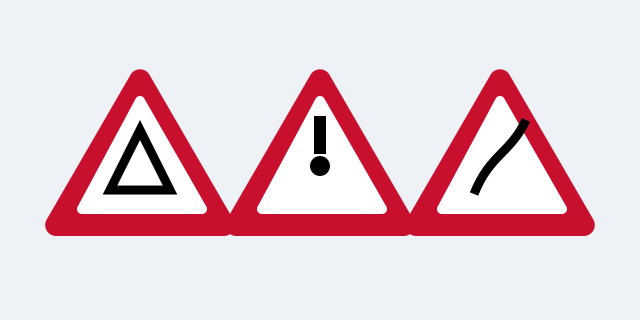
- Flashing amber lights or warning signs: prepare for a hazard ahead.
- Blank sign: follow the usual road markings and national speed limit unless other signs apply.
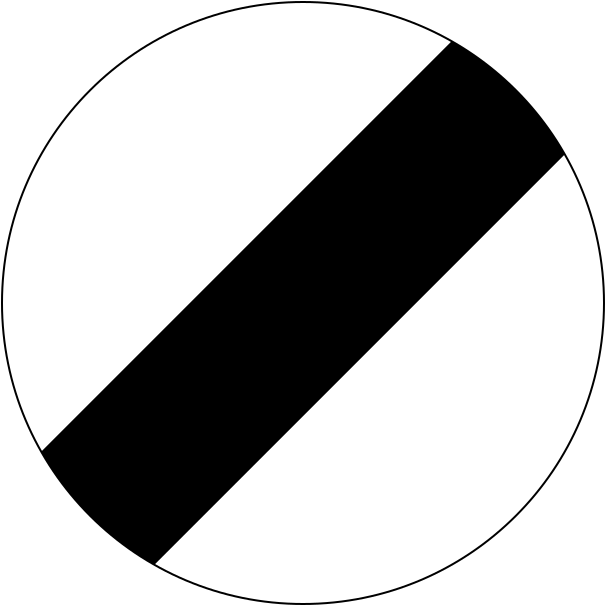
- National speed limit sign: returns you to the normal limit for your vehicle and road type.
How to join, leave and change lanes on a smart motorway
Joining a smart motorway is much like joining any motorway, but the signs can change what you are joining into. As you come down the slip road, look for speed signs and Red X signs on the main carriageway. If lane one is closed, you must not join into it. Build speed on the slip road, match the traffic if it is safe, and merge into an open lane without forcing other drivers to brake.
Lane discipline is where many new drivers lose smoothness. Keep left unless overtaking, but remember that lane one on an all-lane running motorway is a live lane, not a hard shoulder. Do not sit in the middle lane because you feel safer. Examiners mark this under planning, lane discipline and appropriate progress. Staying unnecessarily in a right-hand lane can become a driving fault, and if it affects other traffic badly it can become more serious.
When leaving, plan earlier than you would on a quiet dual carriageway. Smart motorway traffic can bunch up after a reduced speed limit, and lane closures can appear before junctions. I teach learners to start thinking about their exit at least a couple of gantries before the junction. That gives you time to check mirrors, signal properly and move left in stages rather than diving across late.

- 1Check the gantry signs before you join or change lanes.
- 2Use mirrors early, especially the interior mirror before reducing speed.
- 3Signal if it will help other road users understand your plan.
- 4Move one lane at a time unless the road layout clearly directs otherwise.
- 5Cancel your signal and rebuild your following distance after the move.
- 6Keep checking for new signs because the situation can change quickly.
What to do if you break down on a smart motorway
This is general guidance, not legal advice. If your vehicle develops a problem on a smart motorway, your first aim is to get off the motorway if you can do so safely. That means leaving at the next junction, going into a motorway service area, or using an emergency area. Do not stop in a live lane if the vehicle can still move safely.
Highway Code Rules 274 to 278 cover breakdowns and incidents, including motorway emergencies. If you reach an emergency area, use it, stop as far left as possible, put your hazard warning lights on, and get everyone out on the left-hand side if it is safe. Stand behind the barrier and away from the carriageway. Use the emergency telephone if provided, or call for help. If you cannot get out safely, stay in the vehicle with seat belts on and call 999.
If the vehicle stops in a live lane and you cannot reach a place of relative safety, put hazard warning lights on and call 999 as soon as you can. Do not try to push the vehicle. Do not place a warning triangle on a motorway. The safest action depends on traffic speed, your position and whether you can exit safely, so follow the emergency operator’s instructions.
- Best option: leave at the next junction or services if the vehicle can still be driven safely.
- Next best: use an emergency area and get behind the barrier if safe.
- If stuck in a live lane: hazards on, seat belts on, call 999.
- Do not put a warning triangle on the motorway.
- Do not use an emergency area for non-emergency stops.
Emergency areas: how to use them properly
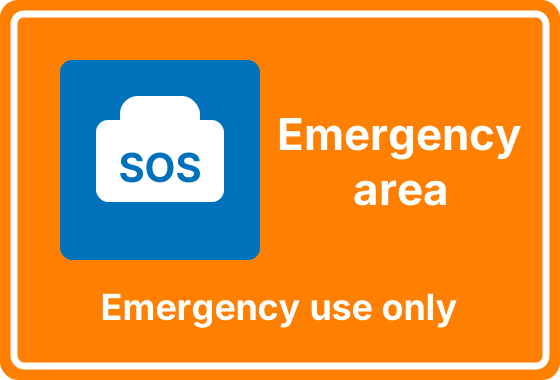
Emergency areas are marked places of relative safety on smart motorways. They are usually signed in advance with blue signs and orange surfacing, although layouts vary. They are for breakdowns and emergencies only. They are not lay-bys, and they are not suitable for swapping drivers, checking a route, or taking a phone call.
When entering an emergency area, signal left, slow smoothly and pull in fully. Stop as far to the left as possible. Put your hazard lights on. If it is safe, get everyone out through the left-hand doors and behind the barrier. Keep pets in the vehicle unless leaving them would be more dangerous, because a loose animal near motorway traffic creates another serious risk.
Rejoining from an emergency area needs patience. You may have to accelerate from a standing start into fast-moving traffic with little space. The Highway Code advises using the emergency telephone where provided before rejoining, because the control centre may be able to assist, for example by setting signs. Do not simply indicate and pull out. Build a safe gap, use full observations, and remember that drivers in lane one may not expect you to move.
- 1Signal and enter the emergency area smoothly.
- 2Stop as far left as possible and switch on hazard warning lights.
- 3Get out on the left if safe and move behind the barrier.
- 4Contact help using the emergency phone if available, or call from a safe place.
- 5Before rejoining, get advice if possible and wait for a safe gap.
- 6Accelerate firmly, check mirrors and blind spot, then merge without forcing traffic to brake.
What the driving examiner is looking for
Learners do not currently drive on motorways during the standard car practical test in Great Britain, but smart motorway skills still matter for post-test driving and for any motorway lesson with an approved driving instructor. Similar habits are assessed on dual carriageways and high-speed roads: observation, response to signs, lane discipline, following distance, speed control and safe planning.
If an examiner sees you miss a clear speed limit sign, react late to a lane closure sign, or change lanes without proper checks, the marking depends on risk. A small delay that does not affect anyone may be a driving fault. Driving under a Red X, forcing another vehicle to brake, or making a dangerous lane change would be treated far more seriously. The exact mark is the examiner’s decision based on what happened at the time.
The specific fault that costs people is not usually lack of steering skill. It is poor scanning. They stare at the vehicle in front and miss the gantry. Then everything happens late: braking late, signalling late, moving late. On smart motorways, late decisions are what make the drive feel rushed and unsafe.
- Observation: you see signs early and keep checking mirrors.
- Response: you obey mandatory signs promptly and safely.
- Lane discipline: you keep left unless overtaking and avoid closed lanes.
- Speed control: you adjust smoothly to displayed limits and traffic flow.
- Planning: you prepare for exits, lane closures and slow traffic early.
Instructor checklist for safer smart motorway driving
When I take a new driver onto a smart motorway after test, I want calm repetition, not drama. The best drivers make it look boring because they are always a few seconds ahead. They know the next gantry, the next lane choice, the vehicle behind, and their escape option if traffic suddenly slows.
Use this checklist before and during your first smart motorway journeys. It is not a substitute for the Highway Code, but it gives you the practical habits that stop most problems from developing. If you are nervous, consider a motorway lesson with an ADI after passing, especially if your local routes include all-lane running sections.
- Before the journey: check fuel or charge, tyre condition, lights, screenwash and route.
- On the motorway: scan gantries early and say the signs to yourself if it helps.
- Following distance: keep at least the Highway Code two-second gap in good conditions, more in rain or poor visibility.
- Lane choice: keep left unless overtaking, but never drive in a Red X lane.
- Breakdown plan: know that emergency areas, services and junctions are your escape options.
- Mental approach: if you miss a lane change, do not panic. Continue safely and reroute.
Common questions
Can learner drivers go on smart motorways?
Learner drivers in England, Scotland and Wales may drive on motorways only with an approved driving instructor in a car fitted with dual controls. That includes smart motorways. Motorway driving is not part of the standard practical test, but taking a lesson after you are ready can build confidence before you drive alone.
What happens if I drive in a Red X lane on a smart motorway?
A Red X means the lane is closed and you must not use it. GOV.UK and the Highway Code state that ignoring a Red X can lead to enforcement, commonly a £100 fixed penalty and 3 penalty points, although penalties and procedures can change. If it creates serious danger, the consequences may be more severe.
Is the speed limit on a smart motorway always 70 mph?
No. For cars, the normal motorway national speed limit is 70 mph, but a lower number in a red circle is a mandatory speed limit. Stay within the displayed limit until another sign changes it or the national speed limit sign appears.
What should I do if there is no hard shoulder and my car loses power?
If the car can still be driven safely, aim for the next exit, services or emergency area. If it stops in a live lane, put hazard lights on, keep seat belts on if you cannot get out safely, and call 999. Do not try to push the vehicle or place a warning triangle on the motorway.
Can I stop in an emergency area to use my phone or check directions?
No. Emergency areas are for breakdowns and genuine emergencies, not convenience stops. If you need to use your phone, rest or check directions, leave at a junction or use motorway services.
How do I know when the hard shoulder is open as a lane?
Use the signs, not guesswork. On dynamic hard shoulder sections, signs show when the hard shoulder may be used, and a Red X or closure sign means you must not use it. On all-lane running sections there is no permanent hard shoulder, so treat lane one as a normal live lane unless signs close it.
Browse driving lessons
Reading about it only gets you so far. Our instructors drill this with you in the car, on the roads around your test centre.