
The short version
- White lines mainly control position, lanes and priority.
- Yellow and red markings usually deal with waiting, loading and stopping.
- Solid white lines are treated much more seriously than broken ones.
- On test, examiners mark the decision and the observation, not just the paint.
- If a marking is unclear, slow down and use signs, traffic flow and road layout.
UK road markings explained: the quick learner view
UK road markings are the painted lines, boxes, arrows, words and symbols on the road that support traffic signs and tell you how to use the road. For a learner driver, the main job is simple: spot the marking early, understand whether it is giving advice or a legal instruction, then act smoothly without surprising anyone behind you.
In the car, I see learners get into trouble when they treat all road markings as if they are the same. A centre line, a stop line, a bus lane boundary and a yellow box junction all ask different things of you. Some markings guide you, some prohibit a move, and some only apply at certain times shown on nearby signs.
The Highway Code is the best everyday reference for this. Rules 127 to 132 cover many lane and line markings, Rule 174 covers yellow box junctions, Rule 178 covers advanced stop lines for cycles, Rule 141 covers bus lanes, and Rule 238 covers waiting restrictions. This article is general guidance for learners and new drivers, not legal advice.
White lines in the middle of the road
Broken white centre lines separate traffic travelling in opposite directions. The length of the line and the gap give you a clue about hazard level. Shorter lines with longer gaps are generally more relaxed; longer lines with shorter gaps warn of a hazard ahead, such as a bend, junction or brow of a hill. Highway Code Rule 127 says you should not cross a hazard warning line unless you can see the road is clear.
Double white lines are a common test trap. Under Highway Code Rule 128, if the line nearest to you is solid, you must not cross or straddle it unless a specific exception applies, such as passing a stationary vehicle, overtaking a pedal cycle, horse or road maintenance vehicle travelling at 10 mph or less, or turning into premises or a side road where it is safe. If the line nearest to you is broken, you may cross it to overtake, but only if you can complete the manoeuvre before reaching a solid line on your side.
What costs learners is not just crossing the line. It is drifting onto it on a bend, cutting a right turn too early, or beginning an overtake without enough view to finish it. An examiner will look at whether your position is safe, legal and planned, not whether you only touched the paint for half a second.
- Broken centre line: separates opposing traffic and may be crossed when safe.
- Hazard warning line: longer paint, shorter gaps, so look further ahead before crossing.
- Solid line nearest you: do not cross or straddle except for limited lawful exceptions.
- Double white lines: check which line is on your side before deciding.
- Common test fault: cutting across a solid line when turning right too early.
Lane markings, arrows and getting into the correct lane
Lane markings guide traffic travelling in the same direction. Broken white lane lines can be crossed when safe, but you must use mirrors, signal if needed, and move gradually. Highway Code Rule 131 explains lane dividers, while Rules 133 and 134 are useful for multi-lane roads and lane discipline. The basic rule I teach is: choose early, check properly, then commit.
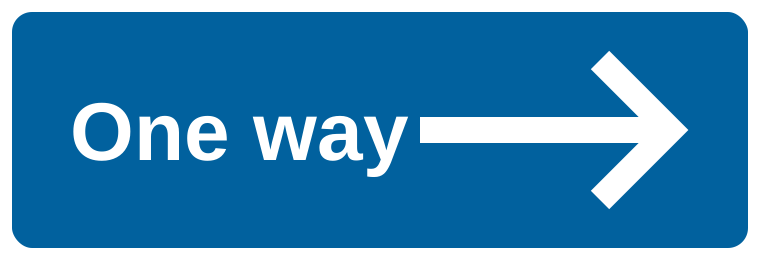
Arrows painted on the road are not decoration. They often appear before junctions, roundabouts and one-way systems to show where a lane goes. If your lane says left only, do not try to continue ahead at the last moment because your sat nav changed its mind. On test, forcing your way across lanes late is far more serious than taking the wrong exit safely.
Learners often stare at the car in front and miss the lane arrows under their own wheels. Lift your eyes earlier. If you are unsure which lane you need, slow slightly, read the road signs above and beside the carriageway, and avoid a sudden swerve. A safe wrong lane is usually a minor navigation issue; a dangerous correction can be a serious fault.
- 1Check the road signs before the lane markings, especially on approach to large junctions.
- 2Use centre and door mirrors before changing lane.
- 3Signal if another road user would benefit from knowing your plan.
- 4Move into the lane smoothly, not at the last second.
- 5If you realise you are in the wrong lane, follow it safely and reroute.
Stop lines, Give Way lines and junction markings
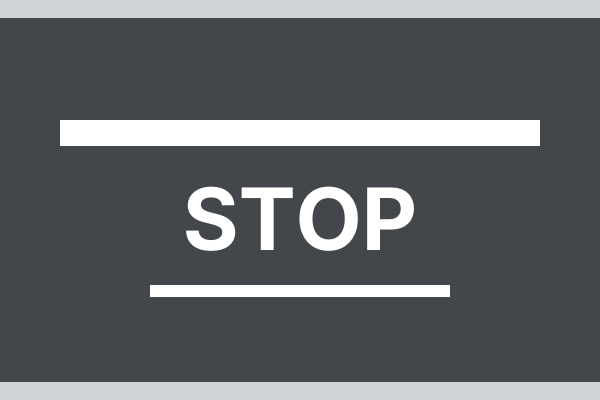
A solid white stop line at a STOP sign means you must stop before the line, even if you can see the road is clear. Highway Code Rule 171 covers STOP and GIVE WAY signs and markings. A stop means the vehicle has fully ceased moving. Rolling slowly over the line is not a stop, and on a driving test it is a fault examiners mark very clearly.
Give Way markings are usually double broken white lines. They mean you must give priority to traffic on the major road where necessary. You do not have to stop if it is clearly safe to proceed, but you must approach at a speed that lets you stop. I often see learners arrive too quickly, then brake sharply with the front of the car already over the line.
At some junctions, the view is poor and the road has a solid stop line with a worded marking, or a give way line set back from the actual edge of the road. Stop or give way at the line first, then edge forward carefully if needed. The skill is separating the legal stop or give way point from the observation position.
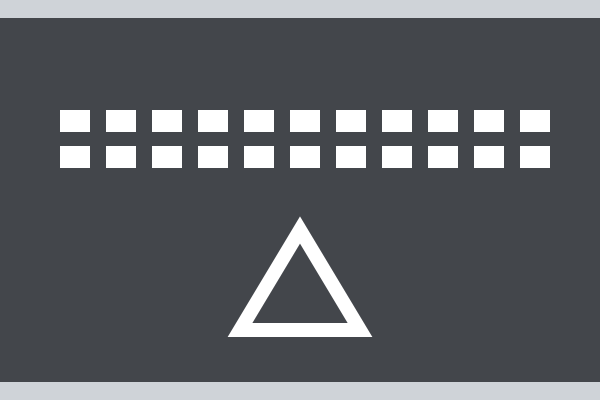
- STOP line: stop fully before the line.
- Give Way line: be prepared to stop and proceed only when safe.
- Triangle marking: warns of a Give Way ahead.
- Worded markings such as SLOW: reduce speed and look for the hazard.
- Examiner watch point: front wheels crossing the line before you have dealt with priority.
Yellow box junctions and Keep Clear markings
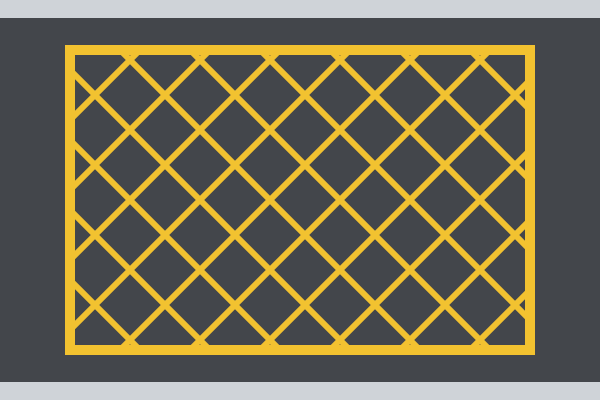
Yellow box junctions are covered by Highway Code Rule 174. You must not enter the box until your exit road or lane is clear. The main exception is when you are turning right and are only prevented from completing the turn by oncoming traffic, or by other vehicles waiting to turn right. The marking is there to stop junctions locking up.
In lessons, the mistake I see most is following the vehicle in front into the box because the traffic is moving. If that vehicle then stops, you are trapped. Before your front wheels enter the box, ask yourself: can my whole vehicle clear the yellow criss-cross area without relying on the car ahead moving again?
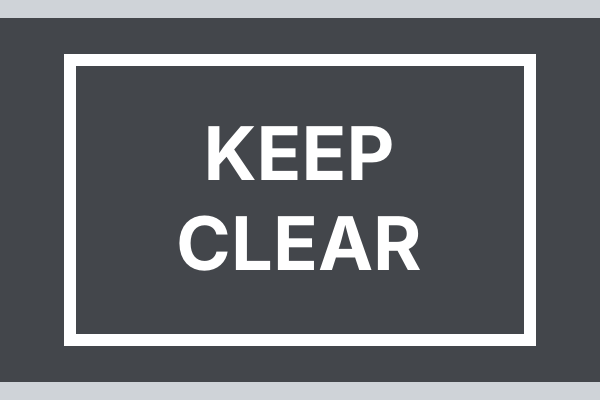
Keep Clear markings are usually advisory rather than the same as a yellow box, but you should still respect them. They are often outside schools, fire stations, side roads or driveways where access matters. On test, blocking one can show poor planning, especially if it prevents another road user from moving safely.
- 1Look across the whole box, not just at the green light.
- 2Identify your exit lane before entering.
- 3Leave space until there is room for your full car beyond the box.
- 4For a right turn, wait in the box only when the right-turn exception applies.
- 5If traffic is queuing beyond the junction, wait before the box.
Yellow lines, red routes and parking bay markings
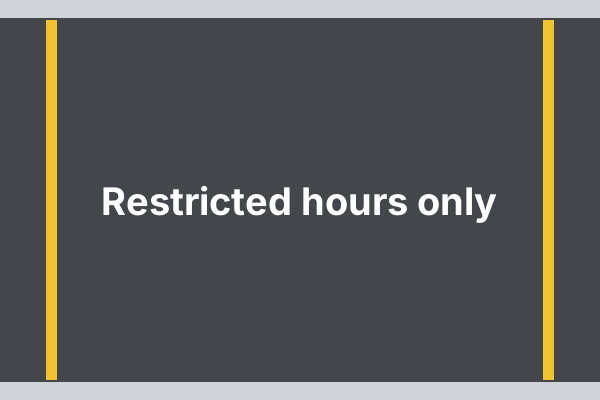
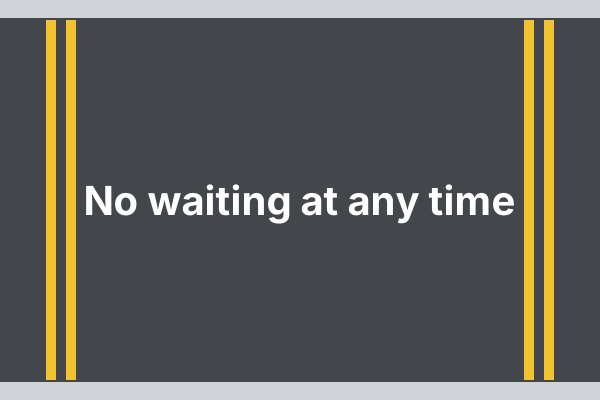
Yellow lines control waiting. A single yellow line means waiting is restricted at the times shown on nearby plates or zone entry signs. Double yellow lines mean no waiting at any time, unless signs say otherwise. Highway Code Rule 238 is the key starting point. Loading restrictions may be shown by yellow kerb marks, so do not rely on the road line alone.
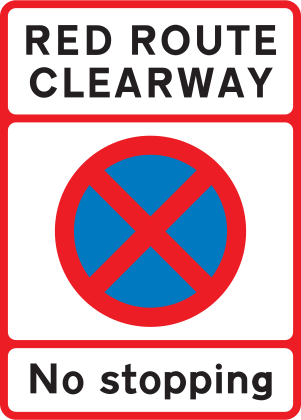
Red routes are used mainly in London and some other areas. Red lines usually mean stricter stopping controls than yellow lines, with details shown on signs. Red route rules can vary by bay and by time of day, so a driver who looks only at the paint can easily get caught out. Always read the upright sign.
Parking bays may be marked with white lines, broken outlines, permit words, disabled symbols, loading bay words or time limits. As an instructor, I teach learners to treat parking as a reading exercise before it becomes a manoeuvre. Pull up safely, check the sign, check the kerb marks, check whether your whole vehicle fits within the bay, then decide.
- Single yellow line: check the sign or controlled parking zone times.
- Double yellow line: no waiting at any time, subject to limited exceptions.
- Yellow kerb blips: loading restrictions may apply.
- Red lines: stopping restrictions apply, so read the red route sign carefully.
- Bay markings: check words, symbols, times and whether a permit is needed.
Bus lanes, cycle markings and pedestrian crossings
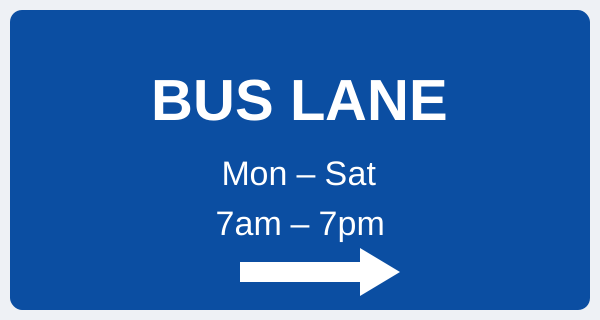
Bus lanes are marked by thick white boundary lines and road words, with signs showing when the restriction operates and which vehicles may use the lane. Highway Code Rule 141 says you should not drive in a bus lane during its period of operation unless signs permit it. Outside those times, it may be available to general traffic, but you still need to check the sign before moving in.
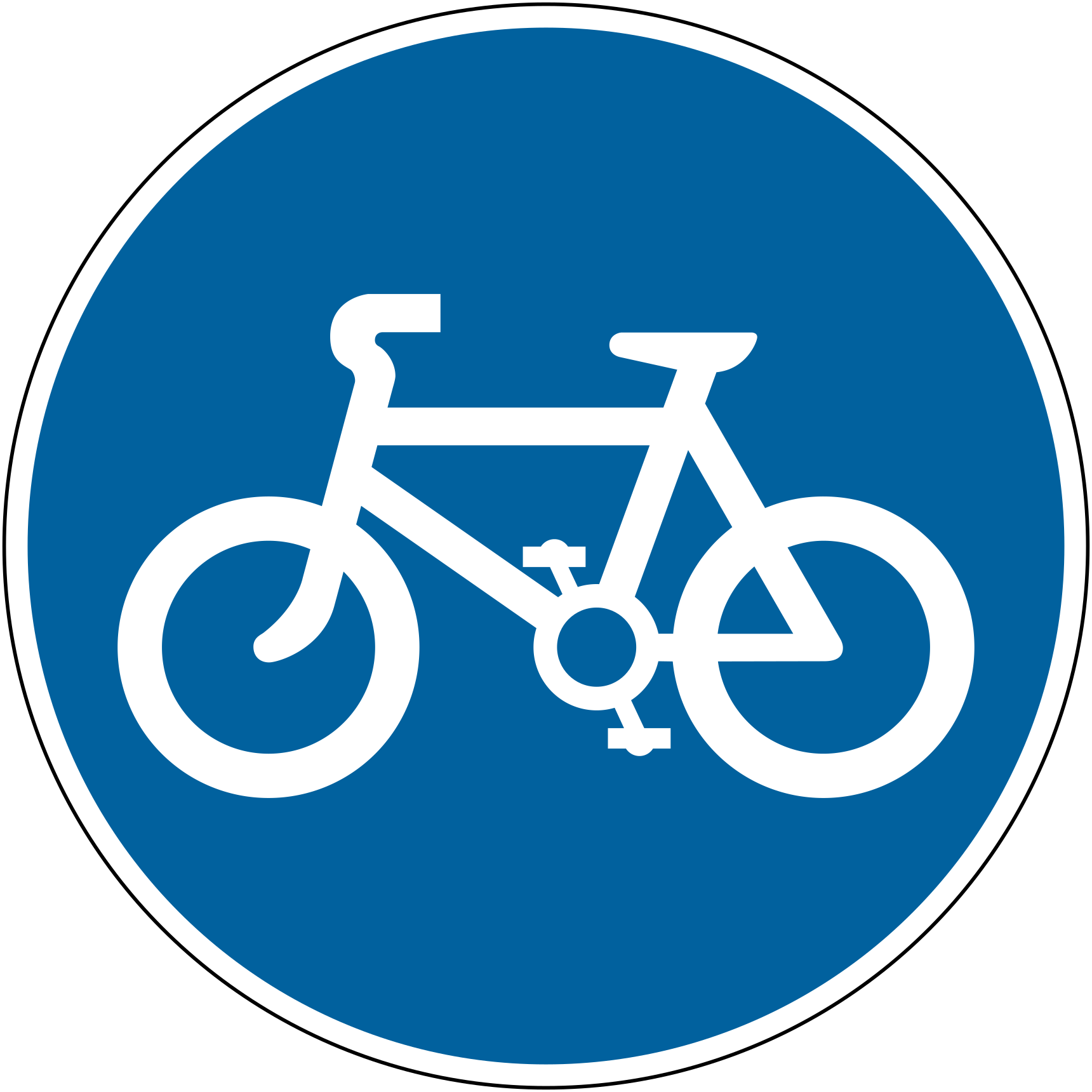
Cycle lanes can be advisory or mandatory. A solid white line beside a cycle lane is stronger than a broken one, and you should not drive or park in it during its times of operation unless unavoidable. Advanced stop lines for cycles, covered by Highway Code Rule 178, create a cyclist waiting area at traffic lights. If the lights change to amber or red, stop at the first line unless it is unsafe to do so. Do not deliberately stop in the cycle box.
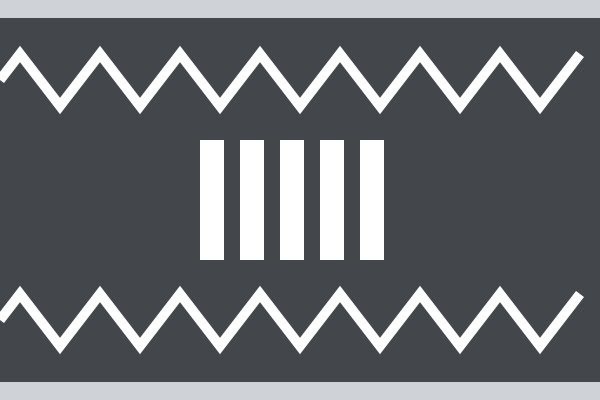
Crossing markings need calm planning. Zig-zag lines on the approach to zebra, pelican, puffin and toucan crossings mean you must not park there, and you must not overtake the moving vehicle nearest the crossing or the leading vehicle stopped for pedestrians. The practical test fault I see is learners accelerating past a slowing bus or van near zig-zags without knowing why it is slowing.
Hatched areas, chevrons and road edge markings
White diagonal stripes or chevrons are used to separate traffic streams or protect space near hazards. Highway Code Rule 130 says if the area is bordered by a broken white line, you should not enter it unless necessary and you can see it is safe. If it is bordered by a solid white line, you must not enter it except in an emergency.
Hatched areas catch learners out on right turns and lane changes. They may look like spare road, but often they are there because vehicles need separation, visibility is poor, or lanes are changing shape. If you use a hatched area to straighten a roundabout or avoid queuing traffic, an examiner may see it as poor discipline or, with solid borders, a legal problem.
Edge markings, including white lines at the side of the carriageway and raised ribs on motorway edges, help you judge the limit of the usable road. In wet or dark conditions, they are vital. If you cannot read a marking because it is worn or covered, reduce speed and use other clues: signs, kerbs, traffic islands, lamp columns and the behaviour of traffic around you.
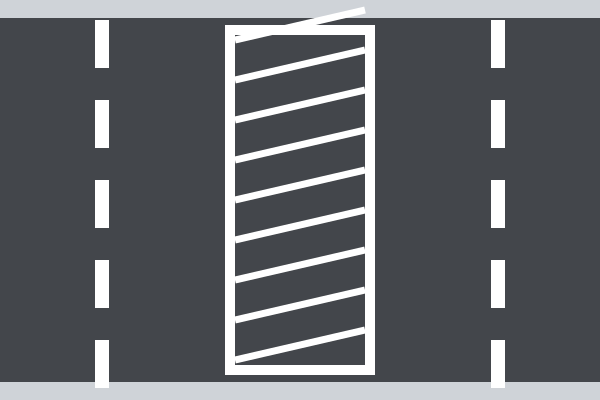
- Broken border around hatching: avoid entering unless necessary and safe.
- Solid border around hatching: do not enter except in an emergency.
- Chevrons at slip roads: keep out unless directed or unavoidable.
- Edge line: helps you maintain position, especially at night or in rain.
- Raised rib line: warns you if you are drifting towards the edge.
How examiners mark road marking mistakes
Driving examiners do not sit there naming every road marking. They assess whether your response is safe, legal and well controlled. A small lane positioning error, corrected early with good observations, may be a driving fault. Ignoring a solid line, stopping beyond a stop line, blocking a box junction or swerving across lanes late can become serious or dangerous, depending on risk.
The specific fault that costs many learners is late decision-making. They see the marking too late, then rush the correction. That creates missed mirrors, harsh braking, poor lane discipline and confused signals. Train yourself to look further ahead, especially at junctions, roundabouts, traffic lights and busier town centres where the paint gives you advance warning.
- Fault table: Rolling over a STOP line usually shows failure to obey a mandatory stop.
- Fault table: Entering a yellow box without a clear exit shows poor planning and may be illegal.
- Fault table: Driving in an operating bus lane shows failure to read signs and markings together.
- Fault table: Straddling a solid white line without an exception is treated seriously.
- Fault table: Ignoring lane arrows and cutting across late can become a serious fault.
- Fault table: Stopping in a cycle box at red lights may show poor anticipation.
Common questions
Do I have to obey road markings if there is no sign?
Some markings stand alone, while others work with upright signs. A STOP line, double white line system or yellow box junction can carry clear requirements, but parking, bus lane and red route markings often need the sign to explain times and exceptions. If you are unsure, slow down and read both the road and the signs.
Can I cross double white lines to pass a cyclist?
Highway Code Rule 128 allows crossing or straddling a solid white line in limited circumstances, including to overtake a pedal cycle travelling at 10 mph or less, if it is safe. You still need enough view, space and time. If you cannot pass safely, wait.
Will I fail my driving test for going into the wrong lane?
Not automatically. If you stay safe, follow the lane correctly and adjust your route, it may not be a serious issue. What usually causes a serious fault is a late, unsafe correction such as cutting across traffic, missing mirrors or ignoring road arrows.
What should I do if road markings are faded or covered by rain?
Reduce speed and use other information, including road signs, kerb lines, traffic islands, lane direction signs and what other traffic is doing. Do not guess at speed. On test, an examiner will expect you to manage the uncertainty safely.
Can I stop in a yellow box when turning right?
Yes, but only in the specific situation described in Highway Code Rule 174: you may enter and wait when turning right if you are prevented from turning only by oncoming traffic or by other vehicles waiting to turn right. If your exit road is blocked by a queue, do not enter.
Are single yellow lines the same everywhere in the UK?
No. A single yellow line means waiting is restricted, but the times are shown on nearby plates or controlled parking zone signs. Double-check local signs because restrictions can change from one street or bay to the next.
Browse driving lessons
Reading about it only gets you so far. Our instructors drill this with you in the car, on the roads around your test centre.