
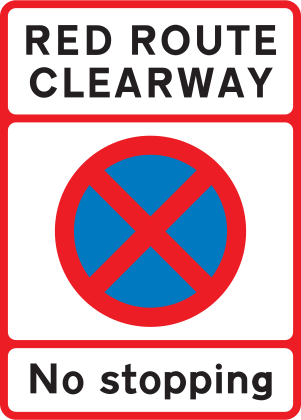
Red routes are strategic urban roads, most visibly in London, where stopping is controlled by red rather than yellow lines. Double red lines mean no stopping at any time and single red lines mean no stopping during the signed hours.
Red route rules are stricter than yellow line rules because they ban stopping outright, not just waiting.
What this sign means
You must not stop to park, load, or set down passengers on a red line during its hours of operation.
Marked red route boxes in the kerbside allow limited loading or parking at signed times.
What to do when you see it
Keep moving unless you are inside a marked red route bay.
- Double red lines mean no stopping at any time.
- Single red lines apply during the times on the plate.
- Use marked red route boxes for loading or parking where permitted.
- Expect camera enforcement rather than a patrolling officer.
How this sign is tested
Questions ask what red lines mean and how they differ from yellow lines, with stopping rather than waiting being the key distinction.
Candidates outside London still see these questions in the national question bank.
Common mistakes
Assuming red lines are simply a stronger version of no waiting and pausing to drop a passenger.
Missing the times plate on a single red line and stopping during controlled hours.
Test yourself on this one
Road and traffic signs is the biggest category in the question bank with 102 questions, and signs turn up inside other categories too. Work through them free, no sign-up needed.
Practise road sign questionsFrequently asked questions
What do double red lines mean?
No stopping at any time for any reason, other than an emergency.
Can I drop a passenger on a red route?
Only in a marked bay where the sign allows it.
Are red routes only in London?
They are most common in London but are used in some other cities too.