
The short version
- Learners may drive on motorways only with an approved driving instructor in a dual-control car.
- Motorway driving is not part of the practical driving test, but the skills are useful for independent driving.
- Keep left unless overtaking, and plan lane changes early with mirrors, signal, position and speed.
- Use the slip road to build speed, judge gaps and join without forcing traffic to brake.
- Never stop on the hard shoulder except in an emergency or if directed.
Can learner drivers go on the motorway?
Yes, learner drivers in Great Britain can drive on motorways, but only in very specific circumstances. You must be with an approved driving instructor, known as an ADI, and the car must have dual controls. The car must also display L plates. You cannot practise motorway driving with a parent, friend or trainee instructor, even if they are an experienced driver.
This rule changed in 2018 to allow learners to build motorway experience before passing the test. It is still voluntary. Your instructor will decide when you are ready, because motorway speeds leave less time to fix mistakes. In my lessons, I only take a learner onto the motorway when they can already control speed, mirrors, signals, lane position and roundabouts without constant prompting.
Is motorway driving on the driving test?
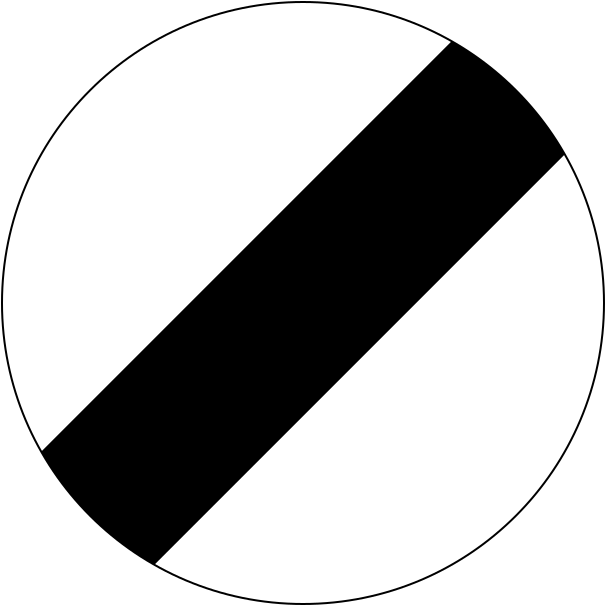
No, motorway driving is not part of the DVSA practical driving test for category B car learners. An examiner will not take you onto a motorway during your test. They may take you on faster roads such as dual carriageways, including national speed limit roads, but that is not the same as a motorway.
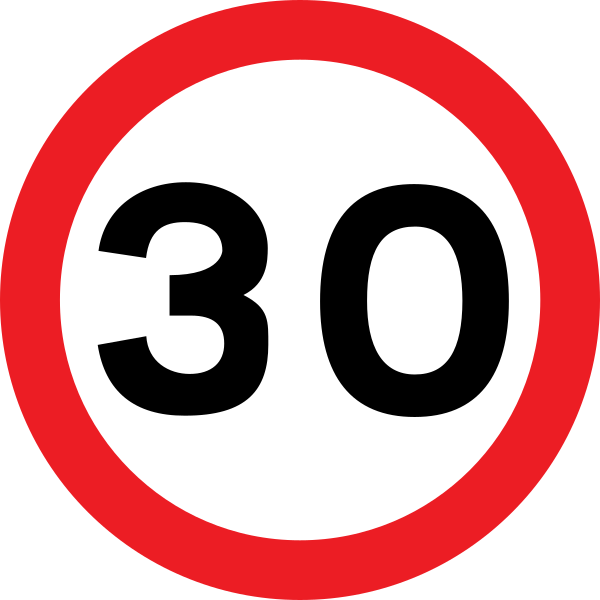
This means you cannot fail your test for not having had a motorway lesson. However, after you pass, you can legally drive on a motorway straight away on your own. That is why it is sensible to practise with an ADI if you have a motorway near you. What I see most often is a pupil who is safe at 30 mph but mentally rushed at 60 or 70 mph, mainly because they have not had enough practice checking mirrors early and making decisions at speed.
When you are ready for a motorway lesson
A good motorway lesson starts before the slip road. I want to see a learner hold a steady speed, maintain lane discipline on dual carriageways, respond properly to signs and judge following distances. If those basics are shaky, a motorway lesson becomes stressful rather than useful.
For Fast Track Driving Lessons intensive courses, motorway practice can be built in where location, licence status, road conditions and instructor judgement allow. Our courses run from 10 to 40 hours at £61.23 per hour, and many learners use part of that time to tidy up faster-road confidence. Theory knowledge matters too, so use the free theory test practice at /theory, especially for motorway signs, lane markings, reflective studs, stopping distances and signals.
- You should be able to change lanes on a dual carriageway without swerving or slowing unnecessarily.
- You should understand national speed limit signs and variable speed limits.
- You should be comfortable using the centre and left mirrors regularly, not just when told.
- You should be able to keep a safe two-second gap in dry conditions and more in the wet.
- You should know how to respond if you miss a turn: carry on safely and re-route.
Joining the motorway from a slip road
Joining is usually the part learners worry about most. The mistake I see in the mirror is not speed itself; it is looking too late. If you wait until the end of the slip road before checking the right mirror, you have already used up your thinking time.
Your job on the slip road is to match your speed to the traffic already on the motorway and choose a safe gap. Traffic on the motorway has priority. You must not force a vehicle in lane one to brake or swerve. Sometimes a driver will move to lane two to help you, but you must not rely on that.
- 1Check the slip road shape, gradient and signs as soon as you enter it.
- 2Build speed progressively, if it is safe, so you can match lane-one traffic.
- 3Use mirrors early, especially the right door mirror, to assess gaps behind and alongside.
- 4Signal right when it will help others understand your intention.
- 5Aim for a space, not a vehicle, and adjust speed gently to fit into it.
- 6Before moving across, check the blind spot over your right shoulder if needed.
- 7Join smoothly, cancel the signal and settle into a safe following distance in lane one.
Lane discipline, overtaking and speed
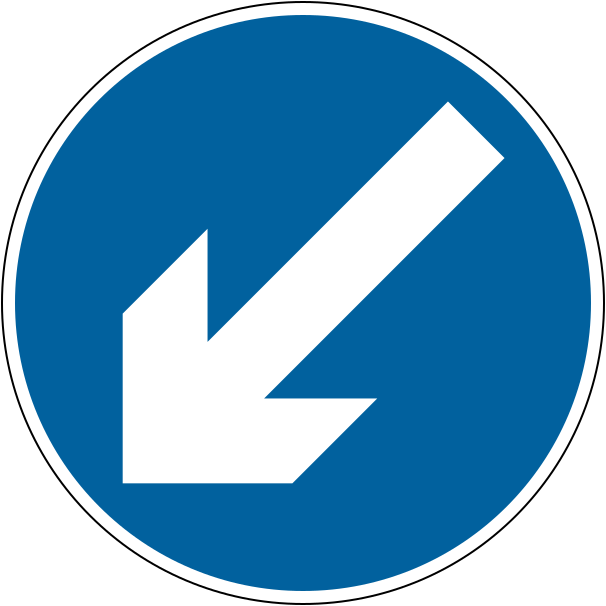
The basic motorway rule is simple: keep left unless overtaking. Lane one is the normal driving lane. Lanes two, three and any further lanes are for overtaking or following signs and road markings. Sitting in the middle lane when lane one is clear is poor lane discipline and can lead to enforcement action.
The maximum speed limit for cars on a motorway is 70 mph, unless a lower limit is shown. Smart motorways may display variable speed limits on overhead gantries, and those limits are legally enforceable when shown in a red circle. Your speed should still suit the conditions, traffic and your experience. There is no requirement to drive at 70 mph, but driving unnecessarily slowly can create risk if it causes other traffic to brake or move around you.
In a lesson, I drill lane changes as a routine rather than a panic reaction. The sequence is mirrors, signal if useful, position, speed and look. We talk through where the next two miles are going, not just the next 50 metres. That planning is what makes motorway driving calm.

- Check mirrors before changing speed, before changing lanes and after joining.
- Do not undertake by moving left to pass, unless traffic in lanes is moving in queues and your lane happens to move faster.
- Leave at least a two-second gap in dry conditions; double it in the wet and leave more in poor visibility.
- Return to the left when you can see the vehicle you passed clearly in your interior mirror and it is safe to move back.
- Obey red X signs above a lane; they mean the lane is closed.
Leaving the motorway safely
Exiting is usually easier than joining, but learners often leave the decision too late. On most motorways you will see countdown markers at 300 yards, 200 yards and 100 yards before the exit. Use them as prompts, not as last-minute warnings.
Move into lane one well before your junction unless signs direct you otherwise. Signal left in good time, enter the deceleration lane, then reduce speed. Do not slow sharply on the main carriageway if you can avoid it; the slip road is there to help you leave safely.
At the end of the slip road, expect a big change of environment. You may go from 70 mph to a roundabout, traffic lights, a tight bend or pedestrians within seconds. I often ask pupils to say the new speed limit aloud as they leave, because it stops motorway speed from carrying into the next road.
- 1Identify your junction early from signs, sat nav or route planning.
- 2Check mirrors and move to the correct lane in good time.
- 3Signal left before the exit where it will help following traffic.
- 4Enter the slip road fully before braking firmly, unless traffic requires earlier slowing.
- 5Check the new speed limit and road layout at the end of the slip road.
Hard shoulders, smart motorways and emergencies
The hard shoulder is for emergencies, breakdowns and directions from the police, traffic officers or signs. It is not a place to stop for a phone call, a rest, a missed turning or to swap drivers. If you break down, follow current Highway Code guidance: get left if possible, use hazard warning lights, leave the vehicle from the left side if safe, get behind the barrier, and call for help. If you cannot leave the vehicle safely, stay belted and call 999.
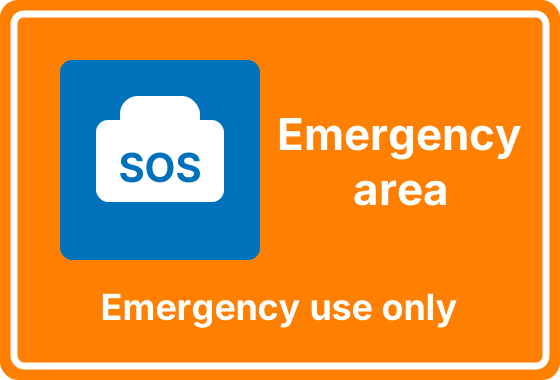
On some smart motorways there may be no permanent hard shoulder, or the hard shoulder may operate as a running lane when signs allow it. Emergency areas are marked in orange and have blue signs with an SOS telephone. Red X signs must be obeyed; driving in a closed lane is dangerous and can be enforced by cameras.
For the driving test, you will not be assessed on actually using a motorway hard shoulder. What does matter is your theory knowledge and your general attitude to safety: reading signs, obeying lane closures, keeping a safe gap and not making sudden moves.
How we teach motorway confidence
A proper motorway lesson is not just ‘go fast for an hour’. I normally start on faster A-roads and dual carriageways, then move to a simple motorway junction, then add overtaking, variable signs and busier interchanges if the pupil is coping well. We keep the language short: mirrors early, space, signal, commit or wait.
Nerves are normal. Most learners relax once they realise motorway driving is structured and predictable when they look far enough ahead. The aim is not to make you a perfect motorway driver in one session; it is to give you safe habits before you pass, so your first solo motorway journey is not also your first ever motorway experience.
Common questions
Can I drive on the motorway with my parents before I pass?
No. A learner can only drive on a motorway with an approved driving instructor in a dual-control car displaying L plates. Private practice with parents, relatives or friends is not allowed on motorways until you have passed your test.
Do I have to do motorway lessons before my driving test?
No. Motorway driving is voluntary and is not included in the practical test. It is still useful training because once you pass, you can drive on motorways immediately without further assessment.
What speed should a learner do on the motorway?
The maximum for cars is 70 mph unless a lower limit is shown, including variable limits on smart motorways. You should drive at a safe speed for the conditions and traffic, but not so slowly that you create unnecessary risk. Your instructor will coach speed choice, spacing and lane discipline together.
Are learner drivers allowed in the outside lane?
Yes, if they are legally on the motorway with an ADI and need to use that lane for overtaking or following signs, but they must return left when safe. The key rule is to keep left unless overtaking. Your instructor will usually build up to using busier lanes only when your observations and control are ready.
What happens if I miss my motorway exit?
Do not brake sharply, cut across lanes or stop. Continue to the next junction or service area and re-route safely. Examiners and instructors care far more about safe decision-making than taking the intended turning.
Browse driving lessons
Reading about it only gets you so far. Our instructors drill this with you in the car, on the roads around your test centre.