
Rural and wooded roads sometimes cross areas where deer or other wild animals regularly move between habitats, creating a collision risk for drivers.
This sign warns of that risk so drivers can slow down and stay alert, particularly at dawn, dusk and night when animals are most active.
What this sign means
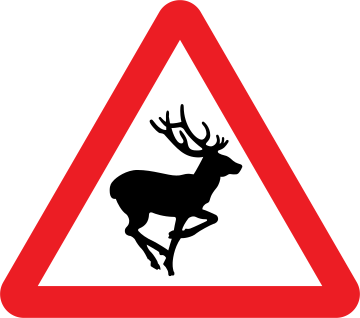
The sign is a red bordered triangle showing a black silhouette of a leaping deer, symbolising the general risk of wild animals crossing the road.
It is placed on roads passing through or near woodland, moorland or nature reserves where animals such as deer are known to cross.
What to do when you see it
Reduce speed and increase your observation, especially in low light.
- Slow down and be ready to brake if an animal appears
- Scan verges and hedgerows ahead for movement
- Take extra care at dawn, dusk and night when animals are most active
- Avoid swerving suddenly, as this can cause loss of control or a more serious collision
How this sign is tested
The theory test includes this sign among warning signs, and questions often ask what to do if an animal crosses the road unexpectedly, emphasising controlled braking rather than swerving.
Hazard perception clips may feature wild animals near the roadside to test how quickly you recognise the developing hazard.
Common mistakes
Some drivers swerve sharply to avoid an animal, which can be more dangerous than a controlled reduction in speed or a straight line stop.
Others ignore the sign on faster roads, not realising animals can appear even where traffic normally moves quickly.
Test yourself on this one
Road and traffic signs is the biggest category in the question bank with 102 questions, and signs turn up inside other categories too. Work through them free, no sign-up needed.
Practise road sign questionsFrequently asked questions
What does the wild animals sign show?
It shows a leaping deer, warning that wild animals may cross the road in that area.
What should I do if an animal runs into the road?
Brake firmly in a straight line if it is safe to do so, rather than swerving, which can cause you to lose control.
When is the risk of wild animals highest?
The risk is greatest at dawn, dusk and night, when animals such as deer are most active.