
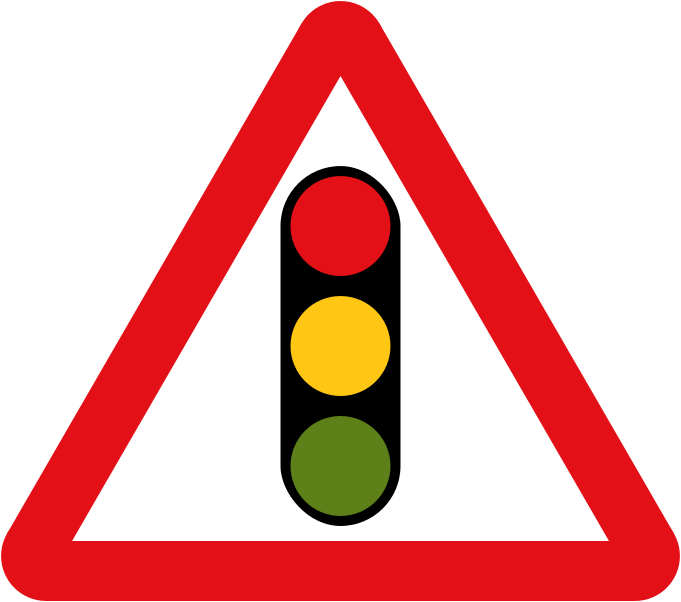
The traffic signals ahead sign displays a red, amber, and green traffic light graphic inside a red warning triangle.
It is placed ahead of junctions, pedestrian crossings, or blind bends where traffic light signals may be unexpected or hidden.
What this sign means
This sign warns drivers that controlled traffic lights operate on the road ahead.
- Red warning triangle
- Coloured tri-light signal symbol (red, amber, green)
- Alerts to upcoming light-controlled control zones
What to do when you see it
Prepare to slow down or stop. Ensure you are travelling at a speed that allows a smooth, controlled stop if lights change to amber or red.
- Check mirrors early to see following traffic distances
- Scan ahead for signal changes
- Avoid acceleration to 'beat' changing lights
How this sign is tested
DVSA theory test questions test correct traffic light sequence understanding, stopping rules, and hazard reaction.
Common mistakes
Speeding up upon seeing the sign rather than preparing for red or amber light signals ahead.
Test yourself on this one
Road and traffic signs is the biggest category in the question bank with 102 questions, and signs turn up inside other categories too. Work through them free, no sign-up needed.
Practise road sign questionsFrequently asked questions
Where is this sign usually positioned?
It is installed where traffic signals are newly installed, obscured by curves, or on high-speed roads.
What is the full light sequence in the UK?
Red, Red & Amber, Green, Amber, then back to Red.
What does amber mean on its own?
Amber means stop at the stop line unless you have crossed it or are so close that stopping safely is impossible.