
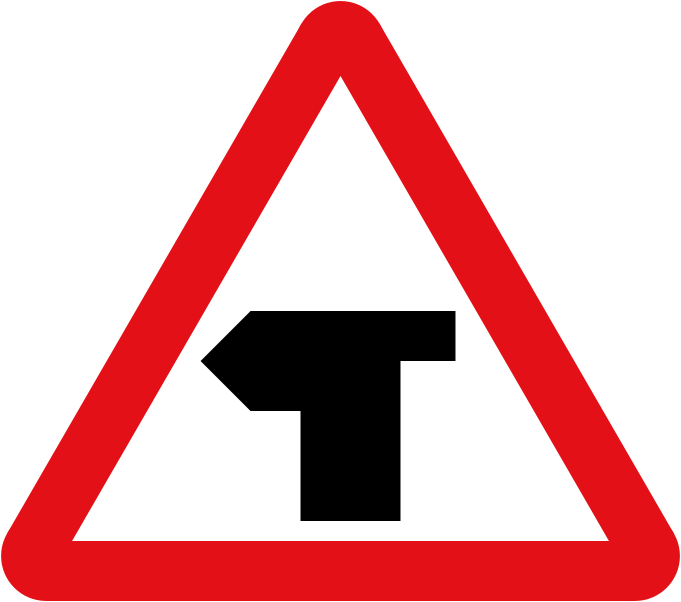
The T-junction warning sign features a bold black 'T' symbol inside a red warning triangle.
It warns that your road meets a perpendicular major road ahead and terminates, forcing drivers to turn left or right.
What this sign means
This sign alerts you that the road you are travelling on comes to an end ahead at a crossway forming a T-shape.
- Red triangle warning boundary
- Black T-shaped intersection symbol
- Indicates the current road terminates ahead
What to do when you see it
Apply the MSM routine (Mirrors, Signal, Manoeuvre) early. Prepare to slow down and stop or yield to main road traffic.
- Check mirrors and signal your intention early
- Slow down smoothly using footbrakes
- Give way to traffic on the main intersecting road unless marked otherwise
How this sign is tested
DVSA theory test questions check knowledge of junction priority, signalling rules, and correct gear choice on approach.
Common mistakes
Approaching too quickly and failing to stop cleanly at give way lines, or signalling late.
Test yourself on this one
Road and traffic signs is the biggest category in the question bank with 102 questions, and signs turn up inside other categories too. Work through them free, no sign-up needed.
Practise road sign questionsFrequently asked questions
Who has priority at a standard T-junction?
Traffic travelling on the major cross road has priority over traffic joining from the terminating side road.
Does a T-junction sign mean I must stop?
Not necessarily a full stop unless accompanied by a STOP sign or double solid line, but you must yield priority.
What road markings should I expect at a T-junction?
Give way dashed lines or solid stop lines with triangular painted markings on the carriageway.