
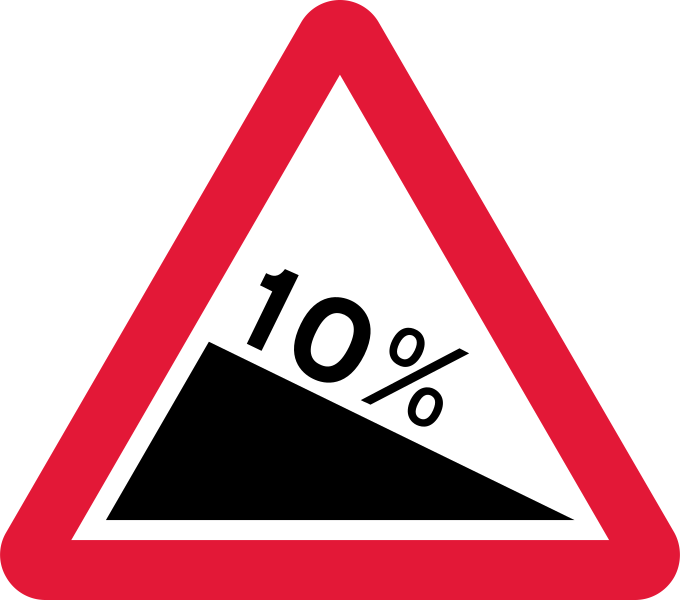
The steep hill downwards sign warns drivers that the road slopes significantly downwards, which increases stopping distances and vehicle acceleration.
Understanding percentage gradients on warning signs helps drivers choose appropriate gears to maintain vehicle control down steep hills.
What this sign means
This sign warns of an impending steep downward slope, often showing the gradient expressed as a ratio or percentage (e.g. 10% or 1 in 10).
- Red warning triangle featuring a black slope descending left-to-right
- Often includes gradient ratio/percentage plates
- Warns of increased momentum and extended braking distance
What to do when you see it
Select a lower gear before starting down the incline to make use of engine braking. Avoid continuous light braking to prevent brake fade.
- Change gear down early before descending
- Use engine braking to assist your main footbrake
- Increase your follow distance from vehicles ahead
How this sign is tested
DVSA theory test questions frequently ask about brake overheating, gear selection, and how steep downhills impact overall stopping distances.
Common mistakes
Relying solely on footbrakes, leading to brake overheating, loss of braking efficiency (brake fade), and poor vehicle speed control.
Test yourself on this one
Road and traffic signs is the biggest category in the question bank with 102 questions, and signs turn up inside other categories too. Work through them free, no sign-up needed.
Practise road sign questionsFrequently asked questions
What does brake fade mean on steep downhills?
Brake fade is the loss of stopping power caused by overheating when footbrakes are applied continuously.
How does engine braking help descending steep hills?
Engine braking uses natural engine resistance in lower gears to control speed without overheating the brakes.
What does a 10% gradient mean on a sign?
It means the road drops 1 unit vertically for every 10 units travelled horizontally.