
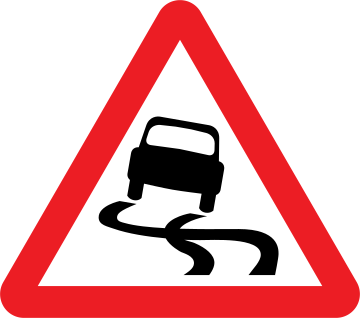
,The slippery road sign shows a car with skidding tyre tracks inside a red warning triangle.
It warns drivers that the carriageway surface ahead presents reduced skid resistance, especially in wet or icy weather.
What this sign means
This sign warns drivers that the road surface ahead is prone to loss of tyre traction.
- Red warning triangle
- Black car icon with squiggly skid marks
- Alerts to slick or slippery surface conditions
What to do when you see it
Reduce your speed smoothly before entering the section. Avoid sudden steering movements, harsh braking, or rapid acceleration.
- Increase following distance significantly
- Drive at a lower, steady speed
- Brake and steer smoothly
How this sign is tested
DVSA theory tests test knowledge of stopping distances, skid prevention, and smooth vehicle control under adverse conditions.
Common mistakes
Braking hard or making sudden steering inputs when encountering a slippery surface, leading to a skid.
Test yourself on this one
Road and traffic signs is the biggest category in the question bank with 102 questions, and signs turn up inside other categories too. Work through them free, no sign-up needed.
Practise road sign questionsFrequently asked questions
By how much does rain increase stopping distance on a slippery road?
Wet conditions double stopping distances compared to dry roads.
By how much does ice increase stopping distance?
Icy roads can increase stopping distances by up to ten times.
What causes a road to become slippery even without rain?
Loose gravel, mud, spilled diesel, or melted tarmac can create slippery surfaces.