
Red routes use single or double red lines painted along the kerb to maintain traffic flow on major arterial roads.
First introduced in London and now used across major UK urban networks, red routes enforce stricter stopping bans than yellow lines.
What this sign means
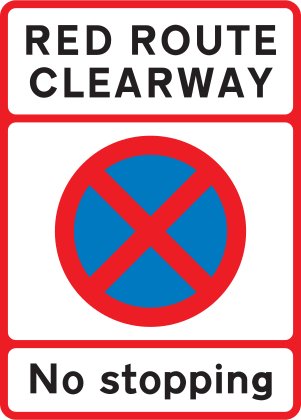
Red routes prohibit stopping, loading, and parking to keep high-density corridors clear of stationary vehicles.
Unlike yellow lines, you cannot stop on a red route even to drop off passengers, unless specific marked bays permit it.
- Double red lines: No stopping at any time.
- Single red line: No stopping during controlled hours indicated on nearby plates.
- Red route bays: Marked areas allowing limited loading or parking.
What to do when you see it
Do not stop your vehicle on double red lines for any reason other than traffic delays or emergencies.
Check upright signs adjacent to single red lines or marked boxes to confirm permitted loading or stopping times.
How this sign is tested
Theory tests evaluate driver knowledge of red route clearway restrictions compared to standard yellow line waiting rules.
Practical driving tests in red route zones require prompt compliance with line prohibitions when choosing locations to stop.
Common mistakes
Assuming drop-offs or quick parcel deliveries are permitted on double red lines.
Confusing red route loading bays (marked in white or red dashed boxes) with general unrestricted parking.
Test yourself on this one
Road and traffic signs is the biggest category in the question bank with 102 questions, and signs turn up inside other categories too. Work through them free, no sign-up needed.
Practise road sign questionsFrequently asked questions
Can licensed taxis stop on red routes?
Licensed taxis and Blue Badge holders are usually permitted to drop off or pick up passengers on red routes.
What is the penalty for stopping on a red route?
Stopping illegally on a red route often incurs a high Penalty Charge Notice enforced by automated cameras.
How do red route parking bays work?
Bays marked on red routes specify permitted uses (such as loading or 20-minute parking) on adjacent sign plates.