
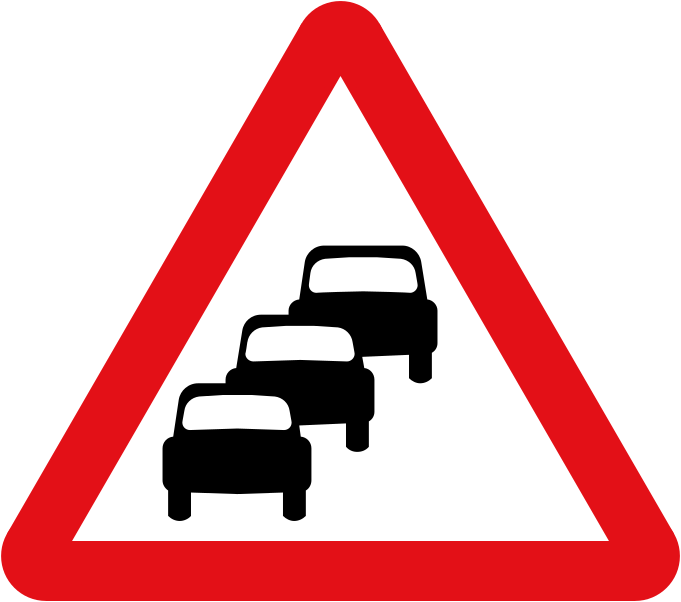
The 'queues likely' sign warns drivers to expect tailbacks and stationary traffic ahead, often due to junctions, roundabouts, or heavy commuter routes.
It gives drivers advance warning to reduce speed smoothly rather than making sudden emergency stops.
What this sign means
This sign shows a line of vehicles in red border triangle, indicating that traffic frequently comes to a standstill further along the road.
It is positioned before blind bends, slip road exits, or busy intersections where tailbacks spill out onto main carriageways.
- Red warning triangle depicting line of queued cars
- Alerts to sudden traffic deceleration ahead
- Common near high-volume junctions and motorways
What to do when you see it
Ease off the accelerator, increase your safety gap, and scan far down the road for brake lights.
- Reduce speed in advance of blind bends or crests
- Check rear mirrors frequently to monitor traffic behind
- Use hazard warning lights briefly if stopping abruptly on fast roads
How this sign is tested
DVSA theory test questions focus on anticipating hazards and managing space when approaching standing traffic.
- Anticipating tailbacks past sharp bends
- Correct use of hazard lights in queuing traffic
- Maintaining safe separation distances on approach
Common mistakes
Failing to slow down until brake lights ahead become visible, which increases the risk of rear-end collisions.
Test yourself on this one
Road and traffic signs is the biggest category in the question bank with 102 questions, and signs turn up inside other categories too. Work through them free, no sign-up needed.
Practise road sign questionsFrequently asked questions
Where are queues likely signs most commonly placed?
Near busy motorway off-slips, complex roundabouts, and road layouts where traffic regularly backs up.
Should I turn on my hazard warning lights if I see a queue ahead?
If traffic is slowing rapidly on a motorway or dual carriageway, brief hazard light use warns trailing drivers.
What is the primary danger indicated by this sign?
Rear-end collisions caused by fast-moving traffic failing to stop in time for queued vehicles.