
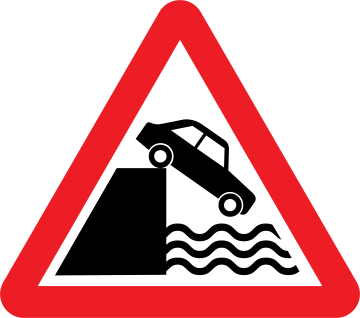
The 'quayside or river bank' warning sign warns motorists that the road terminates at or runs immediately adjacent to open water.
This sign is crucial in dark, foggy, or unlit harbour areas where the road edge might not have continuous physical barriers.
What this sign means
The sign displays a vehicle falling off the edge of a quay into water. It alerts you to the risk of driving off the road into deep water.
It is located near docks, canals, harbors, and river roads where edge protection may be minimal or absent.
- Vehicle and water pictogram inside a red triangle
- Warns of unbarrier edges alongside water
- Common in maritime and riverfront environments
What to do when you see it
Reduce speed, keep well clear of water edges, and pay extra attention to visibility in night or low-light conditions.
- Dips headlights to clearly see edge boundaries
- Avoid reversing without clear visibility or a guide
- Drive slowly in wet or slippery conditions near the edge
How this sign is tested
DVSA theory test questions assess your ability to recognise hazardous road layouts and adjust night driving habits.
- Identifying hazards associated with unlit dock areas
- Choosing safe vehicle positioning near water edges
- Understanding lighting requirements near hazards
Common mistakes
Misinterpreting the symbol as a general flood warning sign rather than an unprotected drop into open water.
Test yourself on this one
Road and traffic signs is the biggest category in the question bank with 102 questions, and signs turn up inside other categories too. Work through them free, no sign-up needed.
Practise road sign questionsFrequently asked questions
Does this sign indicate a ford or water crossing?
No. A ford sign warns of shallow water flowing across the road. This sign warns of open water at the edge of the road or dock.
Is this sign found on high-speed roads?
Rarely. It is mostly found in ports, dockyards, river routes, and coastal access roads.
What lighting should I use in these areas at night?
Use dipped headlights to ensure you clearly spot road edges without blinding other harbour users.