
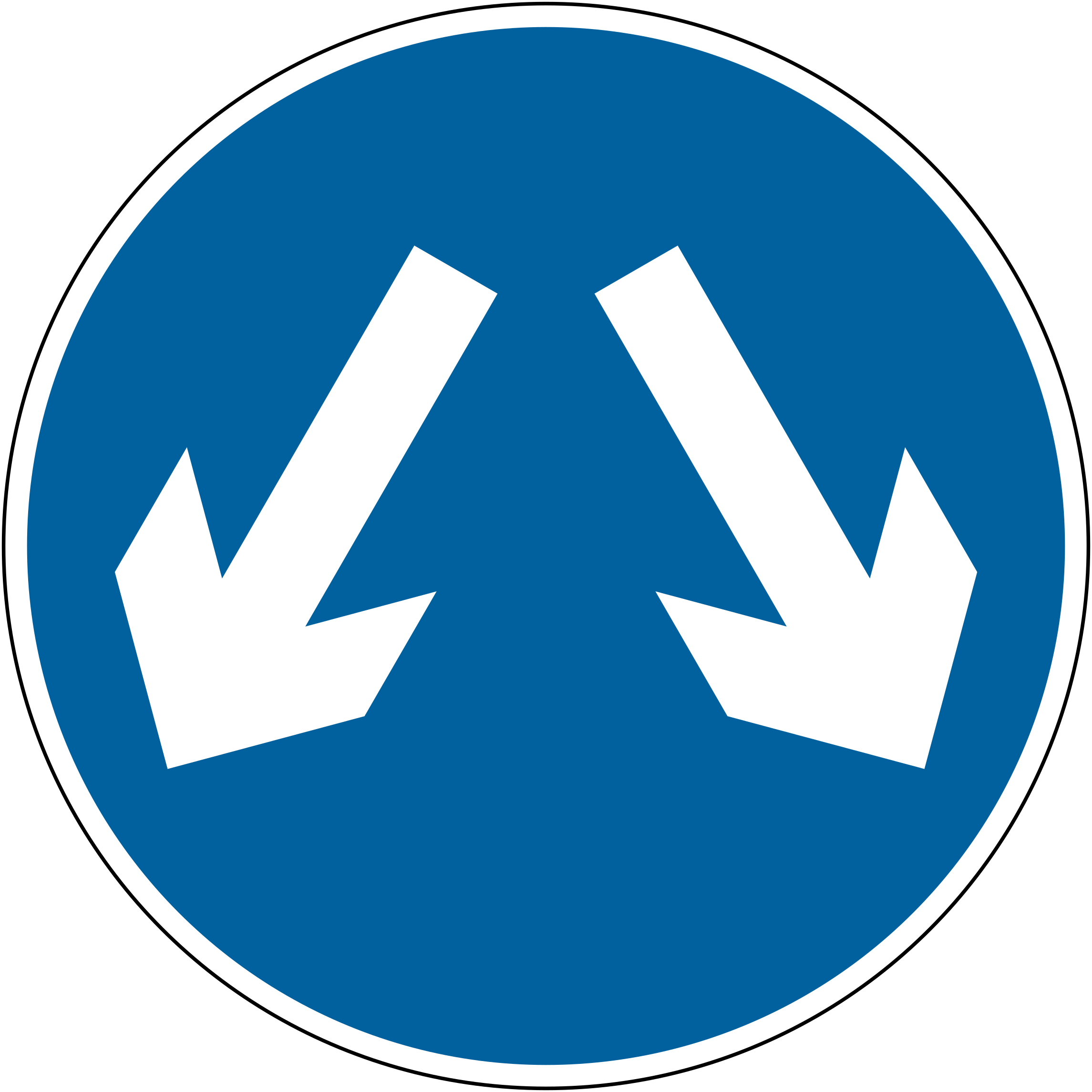
Featuring two white arrows pointing diagonally downward to the left and right on a blue circle, this sign permits drivers to pass on either side.
It is positioned at central traffic islands, lane separators, and entrance channels to gyratories or petrol stations where both paths lead to valid lanes.
What this sign means
Traffic may pass on either the left or right side of the island or obstruction.
Both routes beyond the sign lead to the same destination or continuing traffic stream.
- Blue circular sign with two white downward-diverging arrows.
- Permits passing on either the left or right side.
- Used at island separators, toll plazas, and gyratory approaches.
What to do when you see it
Choose the lane that is clearest and best aligned with your intended destination ahead.
Avoid late lane changes or swerving between lanes when approaching the island.
How this sign is tested
Theory test questions ask candidates to identify the meaning of diverging downward white arrows.
Questions check whether candidates understand that both paths are legal and safe.
Common mistakes
Hesitating or coming to an unnecessary stop because of uncertainty over which side to take.
Confusing this sign with lane split warning signs (triangular warning signs).
Test yourself on this one
Road and traffic signs is the biggest category in the question bank with 102 questions, and signs turn up inside other categories too. Work through them free, no sign-up needed.
Practise road sign questionsFrequently asked questions
Does it matter which side I choose to pass?
No, both sides are legal, but choose the lane that provides the clearest path for your route.
Where are Pass Either Side signs typically installed?
On central refuge islands at multi-lane junction approaches, traffic split points, and petrol station entries.
Is Pass Either Side a mandatory sign?
Yes, blue circular signs give positive mandatory instructions.