
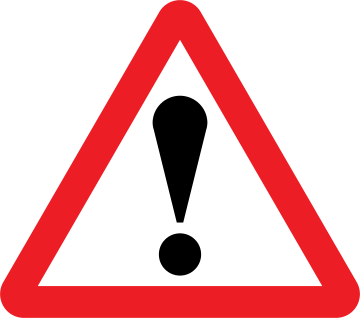
The 'other danger ahead' sign features an exclamation mark within a red warning triangle.
It is used when a hazard exists on or near the road that does not have a dedicated, specific Highway Code symbol.
What this sign means
This sign features a bold exclamation mark symbol. It indicates an unusual hazard ahead.
It is almost always accompanied by a supplementary plate underneath explaining the specific nature of the danger.
- Exclamation mark inside a red warning triangle
- Used for hazards without a custom standard pictogram
- Accompanied by explanatory text plates (e.g. 'Blasting', 'Cross winds')
What to do when you see it
Read the supplementary plate below the sign to identify the hazard, check your mirrors, and adjust your speed appropriately.
- Look for the text plate beneath the sign for details
- Slow down to a speed that allows safe response
- Increase awareness for unexpected road obstacles
How this sign is tested
Theory questions test your ability to interpret warning symbols paired with supplementary text information.
- Identifying general hazard symbols
- Understanding the importance of reading lower plates
- Adapting driving behaviour to uncommon road scenarios
Common mistakes
Dismissing the sign because there is no explicit visual picture, without reading the text plate underneath.
Test yourself on this one
Road and traffic signs is the biggest category in the question bank with 102 questions, and signs turn up inside other categories too. Work through them free, no sign-up needed.
Practise road sign questionsFrequently asked questions
Can this sign appear without a text plate?
It is rarely installed alone; standard traffic regulations usually require explanatory text underneath.
What kinds of hazards does this sign warn about?
Examples include 'Swing bridge', 'Blasting area', 'Blind pedestrians', or 'Emergency vehicles'.
Is this a mandatory command sign?
No. Red triangles are warning signs that alert drivers to hazards rather than ordering actions.