
Regulatory signs restricting waiting and stopping keep key traffic corridors clear of obstructions, improving safety and urban traffic flow.
Understanding the subtle visual and legal differences between no waiting (single red diagonal bar) and no stopping (red cross) is essential for your DVSA theory exam and everyday driving.
What this sign means
A circular blue sign with a red border and red diagonal slash indicates 'No Waiting', prohibiting parking while usually permitting short stops to pick up or set down passengers.
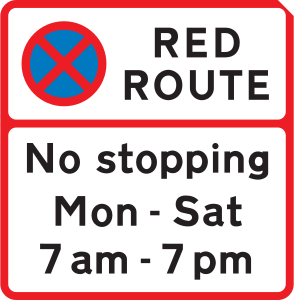
When a red cross replaces the single slash, stopping is completely forbidden. Time plates attached below the sign specify when these regulations are enforced.
- Single diagonal red line: No waiting (parking prohibited).
- Red cross: Absolute prohibition on stopping.
- Supplementary plates indicate active operational hours.
What to do when you see it
Check any supplementary time plates to determine if restrictions are active at the time of your visit.
If restrictions are active, do not park or leave your car unattended, and avoid pulling over unless permitted under specific loading allowances.
How this sign is tested
Theory test questions frequently check whether you can identify the exact symbol for 'No Waiting' versus 'No Stopping'.
Questions may also display supplementary plates and ask whether parking or passenger drop-offs are permitted at specific times of day.
Common mistakes
Confusing the single slash ('No Waiting') with the cross ('No Stopping') is the most common error among theory candidates.
Drivers also frequently forget to read supplementary plates, assuming restrictions always apply 24/7 when they may only cover peak commuting hours.
Test yourself on this one
Road and traffic signs is the biggest category in the question bank with 102 questions, and signs turn up inside other categories too. Work through them free, no sign-up needed.
Practise road sign questionsFrequently asked questions
Can I stop briefly in a no waiting zone?
Yes, you may usually stop briefly to set down or pick up passengers, provided loading restrictions are not in force.
What do yellow double lines on the kerb mean?
Double yellow lines enforce a 'No Waiting' restriction at all times without requiring roadside signs.
Are Blue Badge holders exempt from no waiting rules?
Blue Badge holders can often park on double yellow lines for up to 3 hours, unless loading restrictions apply.