
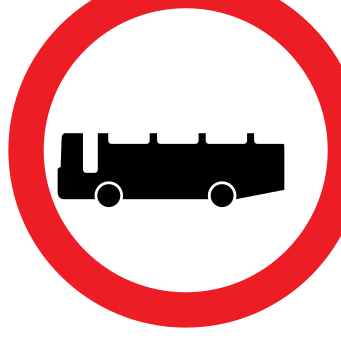
Featuring a black bus icon inside a red circle, the 'No Buses' sign restricts large passenger-carrying vehicles from entering specific roads.
It is installed in narrow streets, quiet residential zones, or historic city centres where large vehicles would cause structural wear or gridlock.
What this sign means
Vehicles constructed to carry more than eight passengers (buses and coaches) are forbidden from passing.
Regular passenger cars, vans, motorcycles, and emergency vehicles are allowed unless restricted by other signs.
- Bus silhouette inside a red circular border.
- Applies to public buses, private coaches, and minibuses with over 8 passenger seats.
- Protects narrow or weight-sensitive urban infrastructure.
What to do when you see it
Bus and coach drivers must re-route using main arterial roads.
Car drivers can proceed with normal driving care while maintaining awareness of local speed limits.
How this sign is tested
DVSA theory test questions ensure candidates understand which vehicle categories are governed by specific prohibitory signs.
Image identification questions test recognition of bus prohibitions versus bus lane priority signs.
Common mistakes
Confusing 'No Buses' (red circle prohibition) with dedicated 'Bus Lane' signs (blue rectangular permissive signs).
Assuming minibuses with 8 or fewer passenger seats are prohibited when they are legally classed as cars.
Test yourself on this one
Road and traffic signs is the biggest category in the question bank with 102 questions, and signs turn up inside other categories too. Work through them free, no sign-up needed.
Practise road sign questionsFrequently asked questions
Does this sign apply to mini-buses?
It applies to minibuses constructed with more than eight passenger seats.
Are tour coaches allowed past a No Buses sign?
No, tour coaches are classified as passenger transport buses and are prohibited.
How does a No Buses sign differ from a Bus Lane sign?
A red circle prohibits buses, whereas a blue rectangle reserves a lane specifically for buses.