
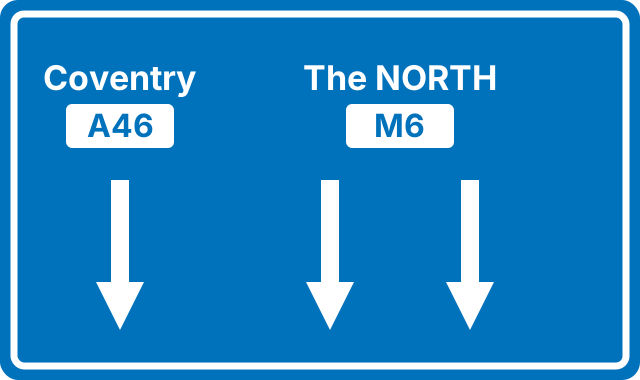
At complex motorway junctions, the blue sign puts each destination directly above the lane that serves it.
Downward arrows show which lanes continue and which lanes leave at the junction.
What this sign means
Each arrow represents one lane of the carriageway ahead, and the wording above it is where that lane takes you.
Sometimes two lanes leave together; sometimes the left lane becomes exit-only.
- Arrow above your lane: your lane serves the destination shown.
- Two arrows under one destination: two lanes leave at that exit.
- No arrow for your destination: change lane in good time.
What to do when you see it
Read the whole sign before moving, not just your town name.
Mirrors, signal, then a smooth single lane change well before the slip road.
How this sign is tested
Questions focus on lane discipline and on choosing the correct lane early at motorway junctions.
Common mistakes
Moving left as soon as a destination is spotted, when that lane actually leaves the motorway.
Crossing hatch markings or solid lines at the last moment to reach the exit.
Test yourself on this one
Road and traffic signs is the biggest category in the question bank with 102 questions, and signs turn up inside other categories too. Work through them free, no sign-up needed.
Practise road sign questionsFrequently asked questions
What does a downward arrow mean?
It identifies the lane below it and confirms the destination that lane serves.
What if I miss the exit?
Carry on to the next junction. Never brake hard or swerve across lanes.