
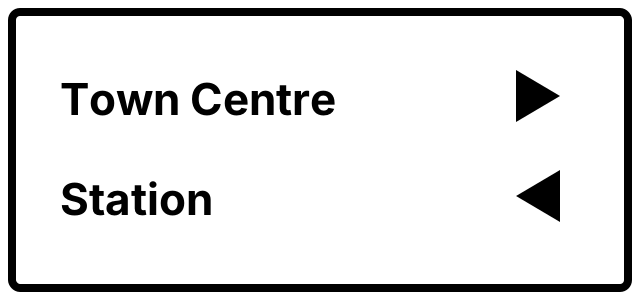
Local direction signs are white with a blue border. They point to destinations within a town such as industrial estates, hospitals, schools and leisure centres rather than to other towns.
The blue border is the detail that separates them from non-primary route signs, which have a black border.
What this sign means
The destinations shown are local facilities reached over short distances on local roads.
These signs are placed by the local highway authority rather than as part of the national route network.
What to do when you see it
Use them for the last part of a journey once you have left the main route.
- Look for the blue border to identify local signing.
- Expect short distances between signs.
- Watch for pedestrians and parked vehicles on local roads.
- Follow hospital signing carefully, as accident and emergency may be signed separately.
How this sign is tested
Questions test the border colour distinction between local and non-primary route signing.
Hospital signing appears in questions about emergency destinations.
Common mistakes
Mistaking a blue-bordered local sign for a motorway sign because of the blue.
Following general hospital signs when accident and emergency has its own route.
Test yourself on this one
Road and traffic signs is the biggest category in the question bank with 102 questions, and signs turn up inside other categories too. Work through them free, no sign-up needed.
Practise road sign questionsFrequently asked questions
What does a blue border on a white sign mean?
It is a local direction sign for destinations within the area.
Is it the same as a motorway sign?
No. Motorway signs have a full blue background.
Are hospitals signed this way?
Often yes, with separate signing for accident and emergency departments.