
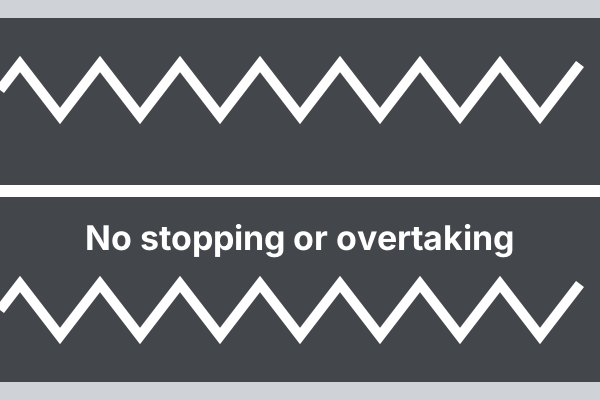
Zig-zag lines are painted on the road on both sides of many level crossings, in the same style as the ones used at zebra crossings.
They exist to keep the approach to the rails clear so that drivers and train crew both have an unobstructed view.
What this sign means
Within the zig-zag area you must not park, wait, or overtake the leading vehicle approaching the crossing.
The markings are usually paired with a give way triangle or a stop line at the crossing itself.
What to do when you see it
Keep the zig-zag zone clear and moving.
- Do not stop or park anywhere on the zig-zags.
- Do not overtake the vehicle nearest the crossing.
- Queue behind the markings rather than within them if traffic is stationary beyond the crossing.
- Leave the area promptly once the crossing is clear.
How this sign is tested
Questions typically show the markings and ask which activities are prohibited, with parking and overtaking as the correct answers.
Others test whether you know the same pattern is used at pedestrian crossings.
Common mistakes
Stopping on the zig-zags to drop a passenger, which is not permitted.
Joining a queue that leaves your vehicle sitting on the crossing or its approach markings.
Test yourself on this one
Road and traffic signs is the biggest category in the question bank with 102 questions, and signs turn up inside other categories too. Work through them free, no sign-up needed.
Practise road sign questionsFrequently asked questions
Can I stop on level crossing zig-zags to let someone out?
No. Stopping and waiting are prohibited within the markings.
Are they the same as zebra crossing zig-zags?
The pattern is the same and the restrictions on parking and overtaking are similar.
What if traffic is queuing beyond the crossing?
Wait behind the markings until there is room for your vehicle on the far side.