
The 'risk of ice' sign warns drivers that the road surface ahead is susceptible to ice accumulation, frost, or compacted snow.
Because ice drastically reduces tyre grip, stopping distances can increase by up to ten times compared to dry bitumen.
What this sign means
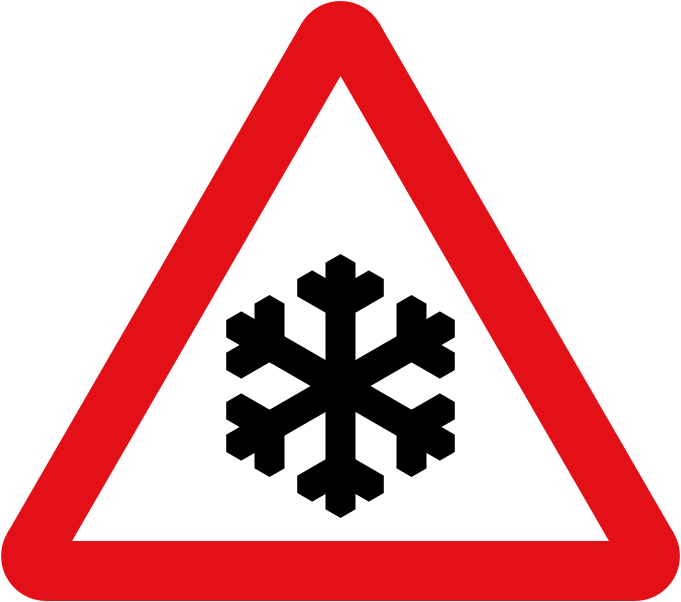
The sign displays a snowflake icon inside a red warning triangle. It highlights routes where freezing conditions frequently cause treacherous ice.
It is often placed on elevated roads, bridges, shaded woodland routes, and areas exposed to severe frost.
- Snowflake pictogram inside a red warning triangle
- Warns of black ice, frost, and slippery conditions
- Commonly accompanied by 'Ice' or 'Frost' sub-plates
What to do when you see it
Smooth out all driving controls. Reduce your speed, select a higher gear to prevent wheelspin, and leave up to 10 times the normal braking distance.
- Increase trailing distance to up to ten times the standard gap
- Steer, accelerate, and brake gently to avoid skids
- Watch out for black ice in shaded areas and on bridges
How this sign is tested
Theory test questions regularly examine braking distances in icy weather and techniques for managing skids safely.
- Knowing stopping distance multiplier in icy conditions (10x)
- Selecting appropriate gears to maintain traction
- Identifying environmental conditions that foster black ice
Common mistakes
Driving at normal road speeds because the surface appears dry, ignoring the risk of invisible black ice in shaded sections.
Test yourself on this one
Road and traffic signs is the biggest category in the question bank with 102 questions, and signs turn up inside other categories too. Work through them free, no sign-up needed.
Practise road sign questionsFrequently asked questions
How much longer does it take to stop on ice?
Stopping distances can be up to ten times longer on ice compared to dry roads.
What is black ice?
A thin, transparent coating of ice on the road surface that looks like wet asphalt and is extremely slippery.
What gear should I use when pulling away on ice?
Select a higher gear (such as 2nd gear) and ease off the clutch gently to reduce wheelspin.