
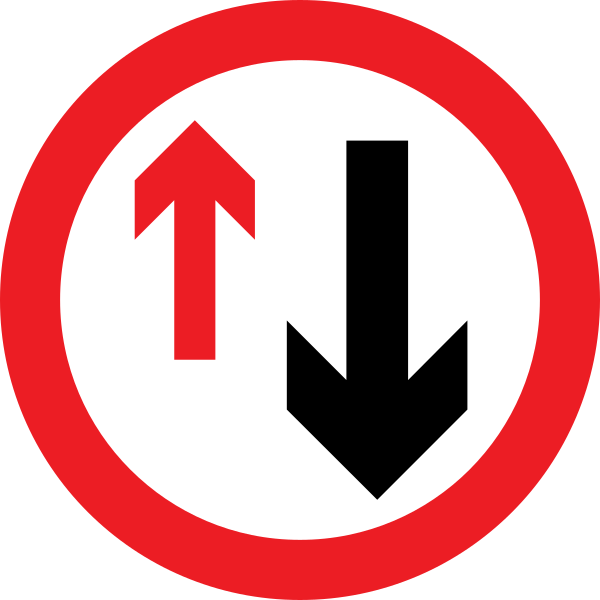
A circular regulatory sign with a red border containing two arrows—a large red arrow pointing forward and a smaller black arrow pointing down—orders drivers to yield to oncoming traffic.
It is installed at narrow bridges, traffic calming chicanes, and roadworks bottlenecks where two opposing vehicles cannot safely pass simultaneously.
What this sign means
You must give way to oncoming vehicles approaching from the opposite direction.
The red arrow pointing in your direction indicates that your stream of traffic does not have priority.
- Red circular order-giving sign.
- Red arrow (your direction) must yield priority.
- Black arrow (oncoming traffic) has priority.
What to do when you see it
Slow down as you approach the narrow hazard point and check for oncoming vehicles.
Stop behind the give way line if an oncoming vehicle is approaching, and wait until the narrow passage is completely clear before proceeding.
How this sign is tested
DVSA theory test questions regularly feature this sign alongside its rectangular counterpart ('Priority over oncoming vehicles').
Candidates are asked which arrow colour represents the direction that must give way.
Common mistakes
Confusing which arrow represents your direction (the red arrow in your direction means you must give way).
Assuming that if you arrive at the narrow point first, you can force oncoming traffic to stop; you must yield priority.
Test yourself on this one
Road and traffic signs is the biggest category in the question bank with 102 questions, and signs turn up inside other categories too. Work through them free, no sign-up needed.
Practise road sign questionsFrequently asked questions
Which arrow indicates my direction on this sign?
The red arrow points in your direction of travel, indicating you must give way.
Do I have to stop if no oncoming vehicles are visible?
No, if the single lane is clear, you may proceed cautiously without coming to a complete stop.
What sign will drivers coming from the opposite direction see?
They will see a blue rectangular 'Priority over oncoming vehicles' sign.