
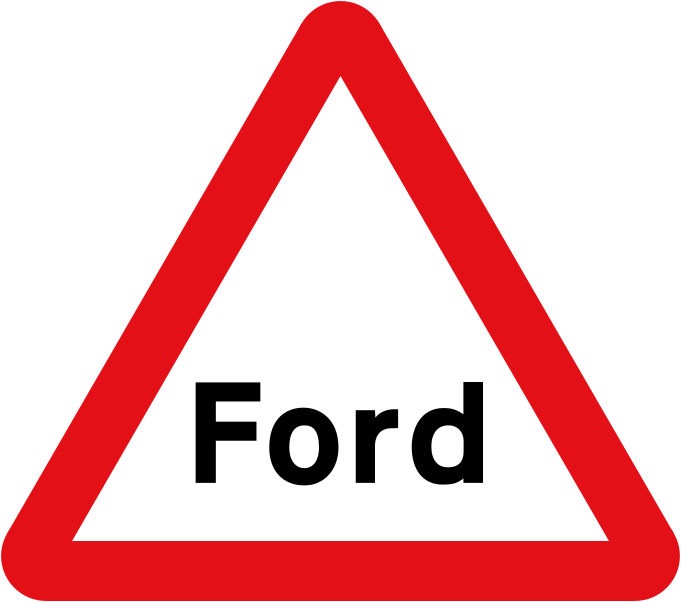
The 'ford' sign warns motorists that the road crosses a shallow river or stream bed without a bridge deck.
Water depth across a ford can vary significantly depending on recent rainfall, posing risks of engine damage or loss of tyre grip.
What this sign means
The sign displays a vehicle driving through water waves inside a red warning triangle, usually accompanied by 'FORD' text or a depth gauge.
It alerts drivers to water flowing across the road surface, which can impair braking performance and float light vehicles if deep.
- Car travelling through water pictogram
- Accompanied by depth gauge boards in feet or metres
- Warns of submerged carriageway ahead
What to do when you see it
Check the depth gauge, select a low gear, drive through slowly in first gear while revving slightly, and test your brakes immediately afterward.
- Check the depth gauge board before entering the water
- Drive through slowly in 1st gear keeping engine revs up
- Test your brakes lightly as soon as you exit the water
How this sign is tested
DVSA theory test questions regularly ask about vehicle control, water hazards, and how to dry wet brakes after a ford.
- Drying wet brakes by applying light pedal pressure while driving slowly
- Choosing low gear to prevent engine stall in water
- Assessing water depth signs before attempting to cross
Common mistakes
Entering fast-flowing water at high speed, stalling the engine, or forgetting to test and dry wet brakes after exiting.
Test yourself on this one
Road and traffic signs is the biggest category in the question bank with 102 questions, and signs turn up inside other categories too. Work through them free, no sign-up needed.
Practise road sign questionsFrequently asked questions
How do I dry my brakes after driving through a ford?
Drive slowly and press the brake pedal lightly until you feel normal braking resistance return.
What should I do if the water looks too deep at a ford?
Do not attempt to cross. Turn around and find an alternative paved route.
Why should I keep revs high when driving through deep water?
Higher engine revs prevent water from flowing back up the exhaust pipe and stalling the engine.