
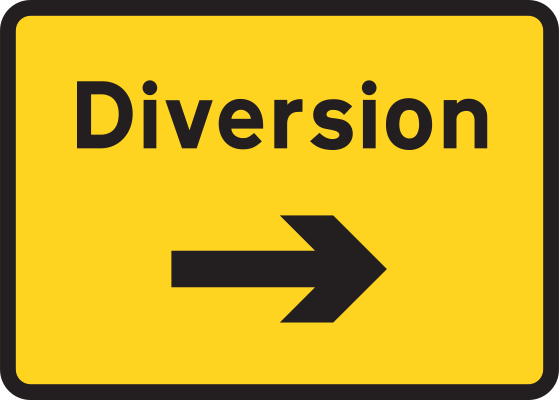
When a road is closed, traffic is routed along a signed diversion marked with a simple black symbol on a yellow patch. Symbols include a solid triangle, a square, a circle and a diamond.
Different symbols allow several diversions to run through the same area without confusion.
What this sign means
Follow the symbol shown at every junction until you rejoin your original route. The symbol, not the destination, is your instruction.
Yellow marks the signing as temporary.
What to do when you see it
Pick your symbol at the start of the diversion and keep following the same one.
- Note the shape of the symbol at the closure point.
- Follow that symbol at each junction, ignoring other shapes.
- Do not try to shortcut back to the closed road.
- Expect heavier traffic on the diversion route.
How this sign is tested
Questions ask what the yellow diversion symbols mean and why several different shapes may appear on the same street.
Motorway diversion symbols are tested alongside them.
Common mistakes
Switching between symbols and ending up on someone else diversion.
Leaving the diversion early and reaching the closure from the other side.
Test yourself on this one
Road and traffic signs is the biggest category in the question bank with 102 questions, and signs turn up inside other categories too. Work through them free, no sign-up needed.
Practise road sign questionsFrequently asked questions
Why are there different diversion symbols?
So that multiple diversions can be signed through the same area without conflict.
What colour are diversion signs?
Black symbols on a yellow background, marking them as temporary.
Do I have to follow the diversion?
It is the signed route around the closure and is normally the only through route available.