
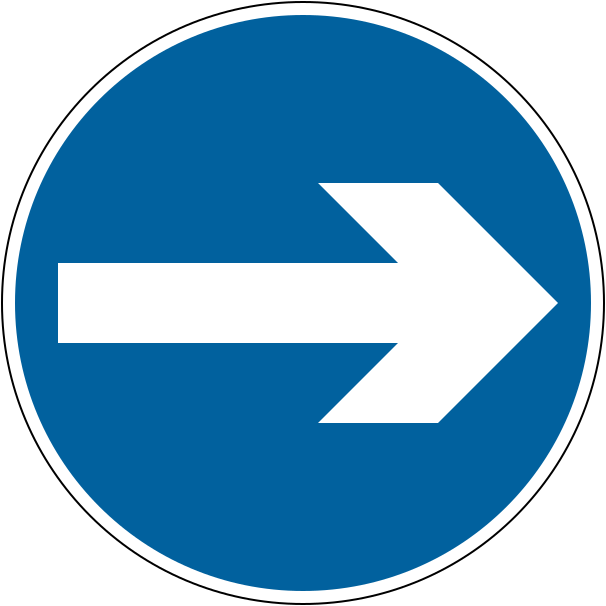
A circular blue sign containing a white arrow pointing to the right commands all drivers to turn right at the approaching junction.
It is installed where proceeding straight ahead or turning left is hazardous, blocked, or restricted to authorized buses and taxis.
What this sign means
All vehicular traffic must turn right at the upcoming junction.
Going straight ahead or turning left is legally prohibited.
- White arrow pointing right on a blue circle disc.
- Mandatory direction command.
- Used at complex junctions, one-way entries, and traffic diversions.
What to do when you see it
Position your vehicle in the right-hand lane early.
Indicate right in good time, slow down, and yield to oncoming traffic or pedestrians crossing the side road if necessary.
How this sign is tested
DVSA theory test questions check candidate ability to recognise order-giving blue circles.
Questions present scenario diagrams where candidates select appropriate junction indicators and lane choices.
Common mistakes
Failing to signal right early enough, causing confusion for following traffic.
Confusing 'Turn Right Ahead' with 'Keep Right' bollards or side road direction signs.
Test yourself on this one
Road and traffic signs is the biggest category in the question bank with 102 questions, and signs turn up inside other categories too. Work through them free, no sign-up needed.
Practise road sign questionsFrequently asked questions
Is 'Turn Right Ahead' mandatory?
Yes, all circular blue signs give mandatory orders that must be obeyed.
What if I need to go straight ahead for my route?
You must follow the right turn and use alternative side roads or roundabouts to re-route.
How far from the junction is the sign placed?
It is usually placed shortly before the junction to allow drivers time to position and signal correctly.