
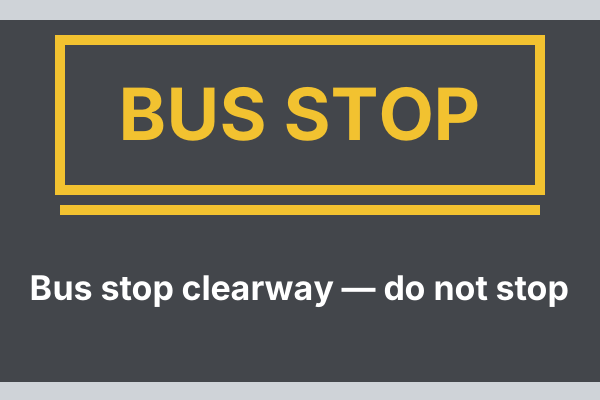
Bus stops are marked with a yellow box on the carriageway and often a bus stop clearway sign. The markings keep the kerb clear so a bus can bring its doors alongside the pavement.
Stopping in the box while the clearway is in force is an offence.
What this sign means
No vehicle other than a bus may stop in the marked area during the hours shown on the sign.
A wide yellow box usually indicates a stop used by long or articulated buses that need extra room.
What to do when you see it
Keep the box clear and give buses room to pull in and out.
- Never park or wait in a bus stop box.
- Give way to a bus signalling to move out from a stop where it is safe.
- Watch for pedestrians stepping out in front of a stationary bus.
- Do not overtake a bus at a stop where you cannot see the pavement.
How this sign is tested
Questions cover both the parking restriction and the courtesy rule about letting buses pull away.
Pedestrian risk around stationary buses is a repeated hazard perception theme.
Common mistakes
Stopping briefly in a bus stop box to drop a passenger.
Passing a bus at a stop without slowing for people crossing in front of it.
Test yourself on this one
Road and traffic signs is the biggest category in the question bank with 102 questions, and signs turn up inside other categories too. Work through them free, no sign-up needed.
Practise road sign questionsFrequently asked questions
Can I stop in a bus stop box to let a passenger out?
No, not while the clearway restriction is in force.
Must I let a bus pull out?
You should give way where it is safe to do so.
Why are some bus boxes longer?
They serve articulated or multiple buses and need extra kerb length.