
The short version
- Red means stop and red and amber also means stop.
- Green only means go if the way ahead is clear.
- Amber means stop unless you are too close to stop safely.
- A green filter arrow lets you move only in the direction shown if it is safe.
- Driving examiners mark late braking, rolling over stop lines and blocking junctions.
The UK traffic light sequence, in order
The standard UK traffic light sequence is: red, red and amber together, green, amber, then back to red. That is the answer most learners are looking for, but the bit that matters in real driving is what you do at each stage. Red means stop. Red and amber still means stop, even though the lights are about to change. Green means you may proceed if the road ahead is clear. Amber means stop at the stop line unless you are already too close to stop safely.
I see learners make the same early mistake again and again: they treat red and amber as a starting signal. It is not. You should prepare to move, find the biting point if needed, check the road, but you must not cross the stop line until the green light shows. On a driving test, moving over the line on red and amber can be marked as a serious or dangerous fault depending on the situation.
This article is general guidance for learner and new drivers, not legal advice. The rules below are based on the Highway Code and UK traffic law, but if you are dealing with an actual offence or penalty notice, get proper legal advice.
 Red and amber traffic lights togetherWhat it means
 Stop lineWhat it means
 Green traffic lightWhat it means
- Red: stop behind the stop line.
- Red and amber: stop, but prepare to go.
- Green: go only if the way is clear.
- Amber: stop unless stopping would be unsafe.
- Back to red: stop and wait for the next sequence.
What the Highway Code says about each light
Highway Code Rule 175 is the main rule learners need for traffic lights. It says you must stop behind the white stop line when the traffic lights are red. It also says red and amber means stop, and you must not pass through or start until green shows. That wording matters because many learners think the car can begin rolling as soon as amber appears with red.
For green, the rule is not simply ‘go’. Green means you may go on if the way is clear. If there are pedestrians still crossing, a blocked junction, an emergency vehicle, or another vehicle cutting across, you wait. In the car, I often say: ‘Green is permission, not a promise.’ You still need observations and judgement.
Amber is the one that catches people. The Highway Code says amber means stop at the stop line, but you may go on if the amber appears after you have crossed the line, or you are so close to it that pulling up might cause a collision. That does not mean accelerating to beat the lights. It means making a safe, controlled decision based on distance, speed, traffic behind and road conditions.
How to approach traffic lights like a test-ready driver
Good traffic light driving starts well before the stop line. I want a learner to spot the lights early, check the mirrors, ease off the gas if there is any chance they may change, and keep enough space from the vehicle in front. If you only react when the light goes amber, you have left yourself with a rushed decision.
The examiner is not just watching whether you stop or go. They are watching your planning. A smooth, progressive approach tells them you have read the road. A late stamp on the brake, a last-second lane change or creeping across the line suggests you are driving to the light itself rather than the whole situation.
Use the centre mirror before slowing, and a door mirror if your position might affect traffic beside you. This is especially important if there is a cyclist, motorcyclist or bus close behind. The aim is not to stare in the mirrors and miss the lights, but to build a quick picture so your braking is safe and predictable.
- 1Spot the lights early and identify your lane.
- 2Check the centre mirror as you approach.
- 3Ease off the gas if the lights have been green for a while.
- 4Cover the brake where appropriate and be ready to stop.
- 5Decide before the amber trap point, not after it.
- 6Stop smoothly behind the stop line if required.
- 7If the light is green, move on only when the road ahead is clear.
Amber lights: the judgement that costs learners
Amber is where I see the most test nerves. Some learners brake sharply every time they see amber, even when the car behind is close and they are almost at the line. Others do the opposite and treat amber as ‘go faster’. Both are wrong because both ignore the same issue: can you stop safely before the stop line?
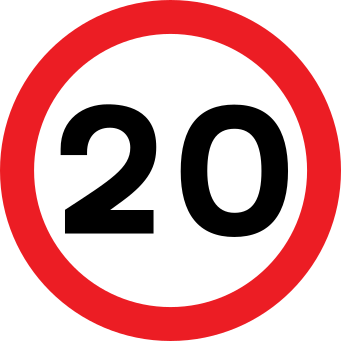
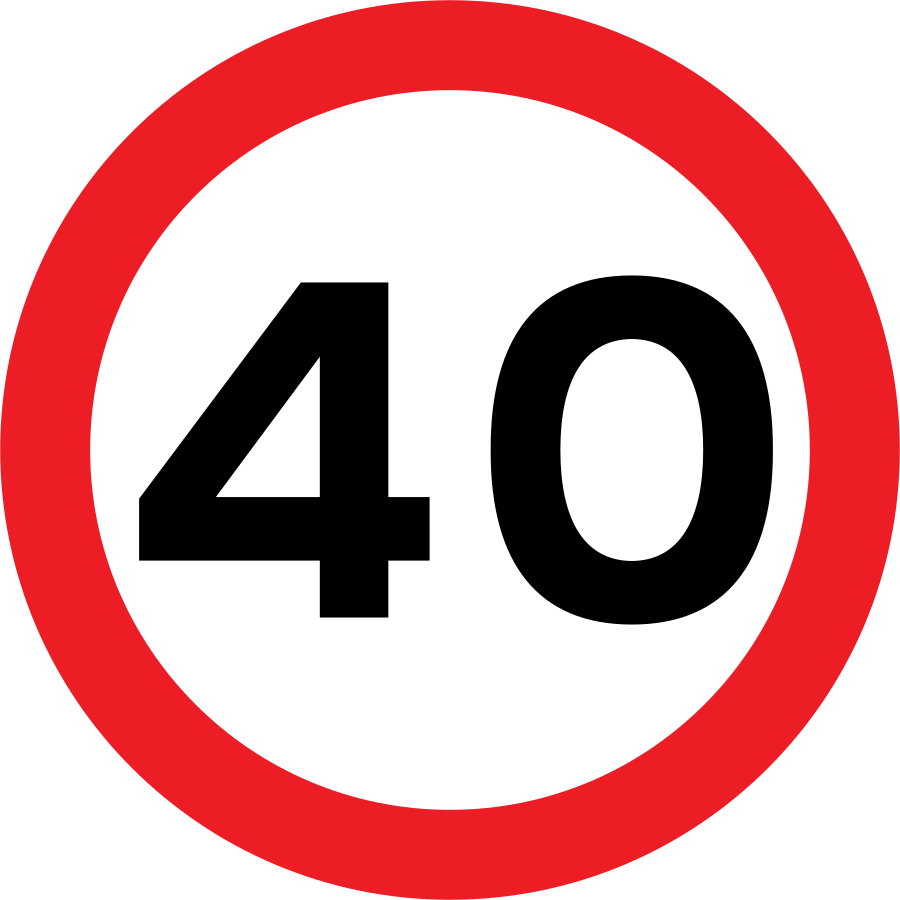
The decision point changes with speed, road surface and following traffic. At 20 mph in a dry town centre, you may have time to stop smoothly. On a wet 40 mph road with a lorry close behind, harsh braking could be unsafe if you are already near the line. Your job is to make the safest legal decision, not the bravest one.
On test, a common serious fault is accelerating towards an amber light when there was clearly time to stop. Another is stopping so late that the front wheels end up over the stop line. Examiners do not expect perfection, but they do expect your decision to be planned, safe and in line with the Highway Code.

- Safe stop: smooth braking, stops fully behind the line, no harsh surprise for following traffic.
- Likely fault: late harsh braking because you failed to plan for a possible change.
- Likely fault: crossing on amber when you had enough distance to stop safely.
- Serious risk: speeding up to beat the lights, especially near pedestrians or a junction.
- Serious risk: stopping beyond the stop line and obstructing a crossing or cycle box.
Red and amber: prepare, but do not go
Red and amber together is part of the UK sequence and it comes just before green. It is there to tell drivers to get ready, not to start moving. In a manual car, you can select first gear, set the gas if needed, find the biting point and check around. In an automatic, you can be ready on the footbrake. But the car must not cross the stop line until the green light appears.
The fault I see is a slow creep. The learner sees red and amber, releases the clutch a little too far, and the car rolls forward. Sometimes they only move a foot, but if that foot takes the vehicle over the stop line, it is a problem. If there is a pedestrian crossing in front, it becomes much more serious.
Being ready does not mean rushing. Before moving off, check that pedestrians have finished crossing, cyclists are not filtering through, and the vehicle ahead has actually moved. If you are second or third in the queue, there is no benefit in launching at the exact instant the light turns green. Smooth and safe beats quick and messy every time.
Green lights, blocked junctions and yellow boxes
Green is permission to proceed only if the way ahead is clear. This is where new drivers sometimes get caught in city traffic. The light changes to green, the car ahead moves two lengths, and the learner follows into a junction with nowhere to go. Then the lights change and they are stuck across the junction, blocking traffic from the side.
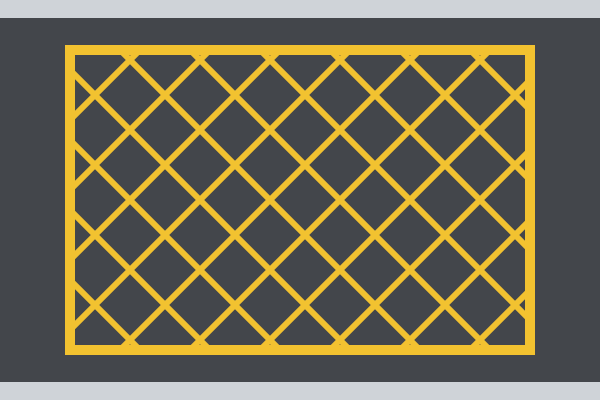
Highway Code Rule 176 covers box junctions. You must not enter the box until your exit road or lane is clear. The main exception is when you want to turn right and are prevented from doing so only by oncoming traffic, or by other vehicles waiting to turn right. Outside a yellow box, the same common-sense planning still applies: do not enter a junction you cannot clear.
On driving tests, blocking a junction can be marked seriously because it shows poor anticipation and affects other road users. I teach learners to look beyond the first car, beyond the lights, and ask: ‘Where am I going to put my car after the junction?’ If you cannot answer that, wait behind the line even on green.
- Do not enter just because the light is green.
- Look at the space beyond the junction before you move.
- Keep pedestrian crossings clear.
- Keep yellow boxes clear unless the right-turn exception applies.
- If in doubt, wait where you are not causing an obstruction.
Filter arrows, turn signals and lane discipline
A green filter arrow means traffic may move in the direction shown, provided it is safe. You may see a right-turn arrow, left-turn arrow or ahead arrow. Sometimes the main signal remains red while a filter arrow is green, meaning only the traffic following that arrow may go. If you are not in the correct lane for the arrow, you must not cut across at the last moment.
Highway Code Rule 177 deals with green filter arrows. The practical point is simple: follow the signal for your lane and your direction. If the ahead signal is red but the left filter arrow is green, left-turning traffic may move, while ahead traffic must wait. If you are turning right and there is a green right arrow, you still check the junction, pedestrians and cyclists before committing.
The test fault here is usually poor lane discipline. A learner realises late that a filter lane is moving, then drifts into it without proper mirror and blind-spot checks. Another common error is waiting unnecessarily at a green filter arrow because they are looking only at the main red light. Read the whole signal head, road markings and lane arrows together.
Pedestrian crossing lights and special signals
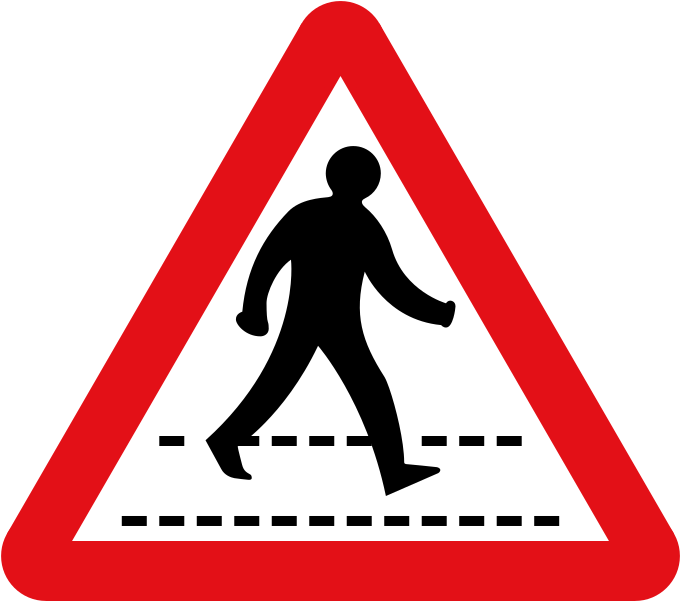
Not every set of lights behaves exactly like a normal junction. Pelican crossings, puffin crossings, toucan crossings and equestrian crossings all manage pedestrians and other users. The basic rule is the same: stop when required and do not move until it is safe and permitted. You must also give way to pedestrians who are still crossing, even if your signal changes.
Pelican crossings are the one learners often ask about because they can show a flashing amber light. At a pelican crossing, flashing amber means you must give way to pedestrians on the crossing, but you may proceed if the crossing is clear. Puffin crossings do not have a flashing amber phase in the same way; they use sensors and the driver signal normally stays red until it is time to go.
Be careful with crossings just after a turn. You might turn left at a green light and immediately meet a pedestrian crossing with its own red signal. Treat it as a separate instruction. I have had pupils correctly move through a junction and then almost miss the crossing lights because they were still thinking about the first signal.
Stop lines, cycle boxes and a learner driver checklist
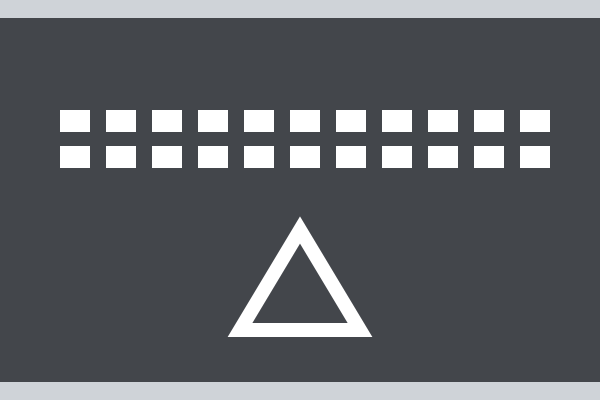
The stop line is the legal line that matters. If there is an advanced stop line for cyclists, Highway Code Rule 178 says motor vehicles must stop at the first white line if the lights are amber or red. Do not sit in the cycle reservoir because you rolled too far. If you cross the first line on green or amber and then the lights change before the second line, the rule allows you to stop at the second line if you cannot safely clear the junction.
Failing to comply with traffic light signals can lead to enforcement action. The government’s published fixed penalty information lists a £100 fixed penalty and 3 penalty points for certain traffic light offences, but penalties and procedures can change and more serious cases can go to court. For a new driver, points matter because the DVLA can revoke your licence if you get 6 or more penalty points within 2 years of passing your first driving test.
Use this checklist in lessons until it becomes automatic. The best drivers are not guessing the light sequence; they are reading the road, planning an escape-free stop, and moving only when the signal, space and safety all agree.
- Know the sequence: red, red and amber, green, amber, red.
- Never cross the stop line on red or red and amber.
- On amber, stop unless you are too close to stop safely.
- On green, check the exit is clear before entering.
- At filters, follow the arrow for your lane and direction only.
- At crossings, wait for pedestrians who are still on the crossing.
Common questions
What is the traffic light sequence in the UK driving test?
The normal UK sequence is red, red and amber, green, amber, then red again. On the driving test, the examiner expects you to know the sequence and apply it safely, especially by stopping on amber when it is safe to do so and not moving on red and amber.
Can I go on red and amber if the road is clear?
No. Red and amber still means stop, even if the road ahead looks clear and even if other drivers move early. You may prepare the car and complete your observations, but you must not pass the stop line until the green light shows.
Is going through an amber light illegal in the UK?
Amber means stop at the stop line unless you have already crossed it or are so close that stopping might cause a collision. If you could have stopped safely but chose to continue, that can be treated as failing to comply with the signal. This is general guidance, not legal advice.
What should I do if the lights change to amber as I reach the line?
If you are already too close to stop safely, continue through with care and do not accelerate harshly. If you have enough space to brake smoothly behind the stop line, you should stop. The key is making the decision early from your speed, distance and mirrors.
Do I have to wait at a green light if pedestrians are still crossing?
Yes. Green means you may proceed if the way is clear, not that you can force your way through. If pedestrians are still on the crossing or the junction is blocked, wait until it is safe.
What happens if I stop in the cycle box at traffic lights?
If the lights are red or amber, motor vehicles should stop at the first stop line before the advanced cycle area. Rolling into the box can be a driving fault and may be an offence depending on the circumstances. On test, it also suggests poor planning and late braking.
Browse driving lessons
Reading about it only gets you so far. Our instructors drill this with you in the car, on the roads around your test centre.