
The short version
- Do not respond to aggression with gestures, shouting, braking or racing.
- Create space, keep a legal speed and let aggressive drivers go when safe.
- If followed, drive to a busy, well-lit place and call 999 if you feel in danger.
- Examiners mark the safety effect of your reaction, not just the other driver's behaviour.
- Staying calm is a driving skill you can practise before you are under pressure.
What to do if you meet road rage
If another driver is shouting, tailgating, sounding the horn, flashing headlights or trying to force their way through, your job is simple: stay legal, stay predictable and get out of the conflict without feeding it. Do not teach them a lesson. Do not brake-check them. Do not race away. As an instructor, the most common mistake I see from learners is trying to answer bad driving with another bit of bad driving, usually a sharp brake, a stare, a hand gesture or a sudden lane change.
Road rage feels personal, but you should treat it like any other hazard. Use your mirrors, check your escape space, keep both hands settled, breathe out, and ask: where is the safest place for this vehicle to go next? If the answer is to let them pass, let them pass when it is safe and legal. If the answer is to continue at the speed limit because there is nowhere safe to move, continue calmly and do not be pressured into speeding.
On a driving test, the examiner will not fail you because another driver behaves badly. They will mark what you do in response. If you lose observation, drift towards parked cars, brake harshly without need, exceed the speed limit or become distracted by an angry driver, that is where a driving fault can become serious.
- Avoid eye contact and gestures, even if you feel provoked.
- Keep a steady speed that suits the limit, the road and the conditions.
- Leave extra room from the vehicle in front so you are not boxed in.
- Signal clearly and early, but only move when it is safe.
- If threatened, head for a public place rather than stopping in a quiet road.
Why learner and new drivers are easy targets
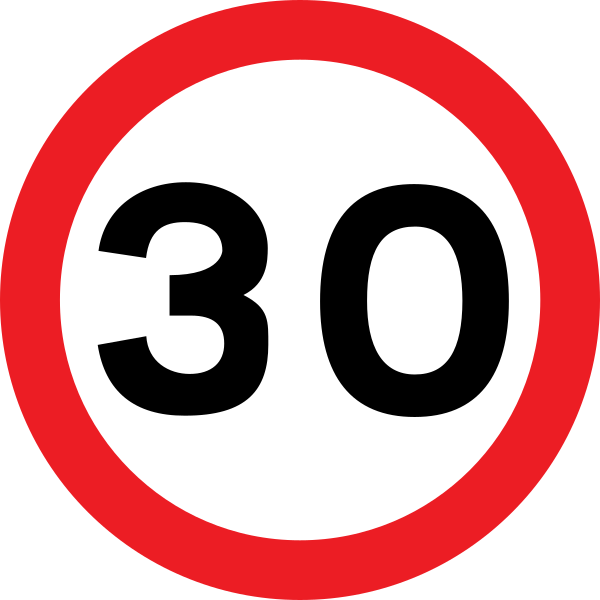
Learners often drive a little more cautiously, especially at roundabouts, meeting situations and faster roads. That is normal. Unfortunately, some impatient drivers see L plates or a hesitant approach as an invitation to intimidate. I have sat beside learners at a perfectly reasonable 28 mph in a 30 mph street while another driver sits close enough that we cannot see their number plate. The learner then starts watching the mirror instead of the road ahead, and that is when the real risk begins.
New drivers face a different problem. After passing, there is no instructor quietly managing the situation and no dual controls. You may also be carrying friends, driving at night for the first time, or using unfamiliar roads. Road rage can make you feel you must prove yourself. You do not. A safe driver does not need to win a contest with a stranger.
The skill is to separate confidence from confrontation. Confidence is taking a safe gap at a roundabout because you have assessed it properly. Confrontation is pulling out just to annoy the person behind. Confidence is maintaining the correct lane and speed. Confrontation is refusing to let anyone merge because they sounded their horn earlier.
What counts as road rage on UK roads
Road rage is not a specific everyday driving manoeuvre. It is aggressive, intimidating or retaliatory behaviour linked to anger on the road. It can come from drivers, riders, cyclists or pedestrians, and it may include tailgating, swearing, threatening gestures, deliberate blocking, chasing, sounding the horn aggressively or using the vehicle to intimidate.
Not every horn or flash is road rage. The Highway Code says the horn should be used only to warn others of your presence, not to express annoyance, and it must not be used while stationary on a road or between 11.30 pm and 7.00 am in a built-up area except when another road user poses a danger. That is Rule 112. Flashing headlights should only be used to let other road users know that you are there, according to Rule 110. They are not an instruction to move, give way or speed up.
This is general guidance, not legal advice. Depending on what happens, aggressive driving can overlap with offences such as careless driving, dangerous driving, using a mobile phone while driving, threatening behaviour or criminal damage. If you are involved in a serious incident, report it to the police and, where appropriate, seek proper legal advice.

- Tailgating to pressure you into going faster.
- Blocking a lane or junction as retaliation.
- Shouting, swearing or making threatening gestures.
- Deliberately braking or accelerating to intimidate.
- Following you after an incident or dispute.
The calm routine I teach in the car
When a learner becomes flustered, long explanations do not help. I use a short routine: mirror, space, breathe, plan. It sounds simple because it has to work when your heart rate goes up. First, check the mirrors so you know where the aggressive road user is. Then build space where you can, usually by easing off gently rather than braking sharply. Then breathe out and loosen your grip on the wheel. Finally, choose the safest plan.
This routine is especially useful with tailgaters. Highway Code Rule 126 reminds drivers to leave enough room to stop safely and gives the two-second rule in dry conditions, doubled on wet roads. You cannot make the vehicle behind follow it, but you can increase your following distance from the vehicle in front. That gives you more time to slow gently if traffic changes, reducing the chance that the tailgater runs into you.
I also tell learners to narrate the hazard in plain words. Saying, quietly, ‘There is an impatient driver close behind, I am keeping space in front,’ keeps your brain in driving mode. It stops you drifting into argument mode, where you start replaying what they did and miss the bus pulling out ahead.
- 1Check interior and door mirrors to locate the problem.
- 2Increase your gap from the vehicle in front if possible.
- 3Ease off smoothly rather than braking to make a point.
- 4Keep your eyes moving back to the road ahead.
- 5Plan a safe place to let them pass if one appears.
- 6Carry on legally if there is no safe option to move.
Tailgating, horns and flashing headlights
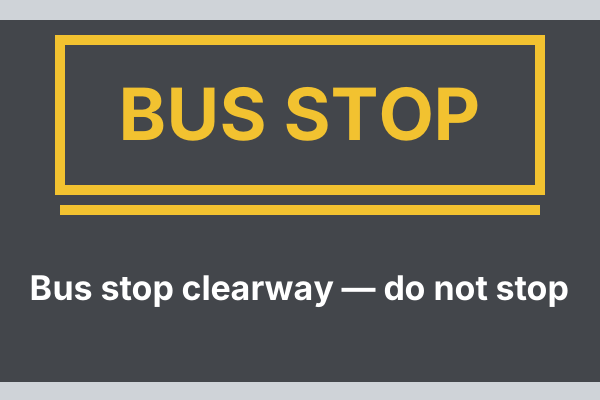
Tailgating is one of the biggest triggers for learner panic. The driver behind wants you to think about them more than the road. Do the opposite. Keep your position normal, maintain a safe speed for the conditions and avoid sudden reactions. If you are on a road with a safe pull-in, bus stop lay-by or wider section, you can let them pass. Do not swing into a risky gap between parked cars just to please them.
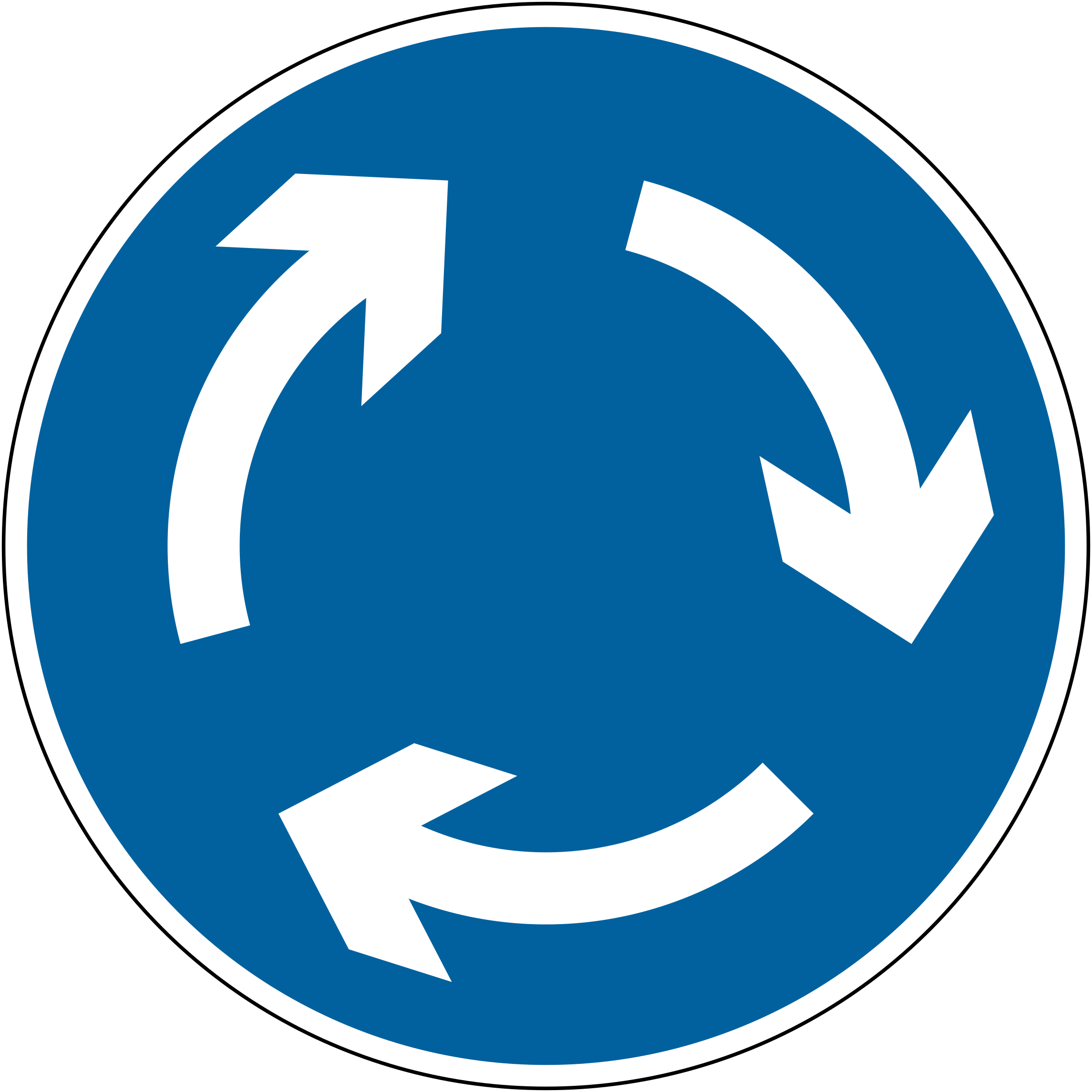
At junctions and roundabouts, aggressive drivers often sound the horn the instant a learner pauses. That horn does not create a safe gap. If your view is blocked or you are not sure, wait. Examiners would rather see a short delay than a dangerous emerge. The fault I see costing pupils is not the wait itself, but moving off because they feel bullied, then forcing another driver to brake.
Flashing headlights can be just as misleading. A driver behind may flash because they want you to go. A driver at a junction may flash and expect you to pull out. Under the Highway Code, flashing is a warning of presence, not a guarantee that it is safe. If you cannot confirm the gap yourself, you should not go.
- Do not speed up beyond the limit because someone is close behind.
- Do not tap the brake pedal to warn them off.
- Do not stare in the mirror for more than brief checks.
- Do not accept a flashed headlight as permission to move.
- Do not let a horn rush your clutch, steering or observations.
If someone follows you or you feel threatened
Most angry moments pass within a few seconds. If another driver follows you, blocks you, gets out of their vehicle or makes you fear for your safety, treat it as a personal safety situation. Keep the doors locked, windows mostly closed and do not get out to discuss it. Drive to somewhere public and well-lit, such as a petrol station, supermarket car park, police station if nearby, or a road with people around.
If you believe you are in immediate danger, call 999 when it is safe to do so. If you have a passenger, ask them to call. If you are alone, use hands-free emergency calling only if you can do so without making your driving unsafe. Otherwise stop somewhere safe and public before calling. For non-emergency reports, use 101 or the local police online reporting system.
Try to remember useful details without turning it into a chase. Registration number, make, model, colour, location, direction of travel and any dashcam footage may help. Do not follow someone to get evidence. That can escalate the danger and may put your own driving under scrutiny.
- 1Do not stop in a deserted place or get out of the car.
- 2Lock the doors and keep windows mostly closed.
- 3Drive steadily towards a busy, well-lit public place.
- 4Ask a passenger to call 999 if there is immediate danger.
- 5If alone, only call while driving if it is safe and lawful to do so.
- 6Record details afterwards while your memory is fresh.
How road rage can affect your licence and test
For learners, the practical test standard is built around safe, legal and responsible driving. If you react to road rage by speeding, intimidating someone back, blocking, cutting in or braking suddenly, the examiner can mark that as a serious or dangerous fault if it creates actual or potential danger. The fact that someone else started it is not a defence on test. The examiner is assessing whether you remain in control.
For new drivers, the stakes are also high. Under the Road Traffic (New Drivers) Act 1995, if you get six or more penalty points within the first two years after passing your first driving test, your licence is revoked and you must apply for a provisional licence and pass both tests again. Government guidance also states that using a hand-held mobile phone while driving can mean a £200 fixed penalty and six penalty points. Figures and penalties can change, so check GOV.UK for the latest position.
Aggressive behaviour can also affect insurance, employment driving and your confidence. I have seen pupils drive beautifully for forty minutes, then almost throw it away because another driver sounded the horn at a mini-roundabout. The examiner marked the rushed emerge, not the horn. The lesson is clear: anger outside the car must not take control inside the car.
- Common test-losing reactions include harsh braking to punish a tailgater.
- Rushing out at a junction because someone beeps can become a serious fault.
- Speeding to escape pressure is still speeding.
- Arguing through the window distracts you from mirrors, signals and road position.
- Using a phone to film while driving can create a separate offence risk.
Building habits that stop you becoming the angry driver
Road rage is not only something other people do. Tiredness, running late, hunger, noise in the car and unfamiliar routes all reduce patience. New drivers often get angry when they feel embarrassed: a stall at traffic lights, a wrong lane, or a missed turning. The safe response is to recover, not retaliate. Missing a turning is usually a small inconvenience. Forcing a last-second lane change is a real risk.
Good planning removes many triggers. Leave earlier, set the sat nav before moving, keep the fuel or charge level sensible, and accept that some journeys will be slow. Highway Code Rule 147 tells road users to be considerate, patient and understanding, especially with learners and inexperienced drivers. You cannot make everyone follow that spirit, but you can.
Use this quick checklist before driving, especially if you know you are already stressed.
- Time: have I left enough time to avoid rushing?
- Route: do I know the first few turns and the parking plan?
- Phone: is it away, silenced or connected legally before I move?
- Mood: am I angry, tired or upset enough to affect judgement?
- Passengers: have I set expectations that I need quiet at tricky points?
- Exit plan: if I feel overwhelmed, where could I stop safely?
Common questions
Should I slow down if someone is tailgating me?
Do not brake or slow suddenly to make a point. Ease off gently only if it helps you create a safer gap ahead, and keep to a speed that is legal and appropriate for the conditions. If there is a safe place to let them pass, use it calmly.
Can I fail my driving test because another driver has road rage?
Not simply because another driver behaves badly. You can fail if your response creates danger, such as rushing a junction, speeding, braking harshly without need or losing observation. Examiners mark your control, planning and safety under pressure.
What should I do if an angry driver gets out of their car?
Stay in your vehicle if it is safer, lock the doors and avoid arguing. If you can drive away safely, go to a busy, well-lit public place. Call 999 if you feel in immediate danger.
Is flashing my headlights to tell someone to move illegal?
The Highway Code says flashing headlights should only be used to let other road users know you are there, not to instruct them or show annoyance. Misusing flashes can confuse other drivers and may contribute to an unsafe situation.
What if I accidentally annoy someone by stalling or hesitating?
Recover the car first: secure it, restart if needed, take proper observations and move when safe. A beep from behind does not change priority or create a safe gap. Most drivers forget the incident quickly if you do not escalate it.
Should I report road rage to the police?
Report it if there were threats, dangerous driving, damage, injury or you felt at risk. Use 999 for immediate danger and 101 or online reporting for non-emergencies. Provide details such as time, location, registration and dashcam footage if you have it.
Find a course near you
Reading about it only gets you so far. Our instructors drill this with you in the car, on the roads around your test centre.