
The short version
- Move left and stop in the safest available place if the car is still controllable.
- Put hazard warning lights on and get out on the side away from traffic when it is safe.
- On a motorway, leave the vehicle and stand behind the barrier if you can.
- Do not use a warning triangle on a motorway.
- Call your breakdown provider, National Highways or 999 if there is immediate danger.
If your car breaks down: the first minute matters
If your car breaks down, stay calm, keep steering firmly, ease off the accelerator and look for the safest place to stop. In lessons, I see learners stare at the warning light or panic about stalling, when the real priority is positioning. Signal left if you can, move out of the traffic flow, and avoid sudden braking unless you must stop immediately.
Put your hazard warning lights on as soon as your vehicle is creating a hazard. The Highway Code, rule 274, says if your vehicle breaks down you should get it off the road if possible, warn other traffic using hazard warning lights, and get help. If it is dark, foggy or visibility is poor, leave sidelights on as well.
This is general guidance, not legal advice. Road layouts, traffic speed and the exact fault with the car all affect what the safest choice is. As an instructor, my advice is simple: a car can be recovered, but you and your passengers must not be standing in a live traffic lane trying to be helpful.
- Keep both hands on the wheel and steer smoothly.
- Avoid harsh braking unless there is an immediate danger.
- Signal left if you have time and it is useful to others.
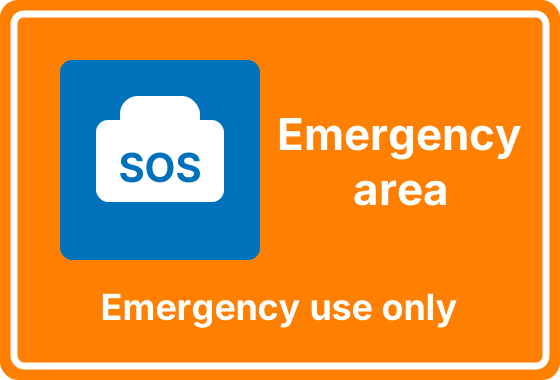
- Aim for a hard shoulder, emergency area, lay-by, side road or wide verge.
- Switch on hazard warning lights once stopped or slowing as a hazard.
Breaking down on a motorway or fast dual carriageway
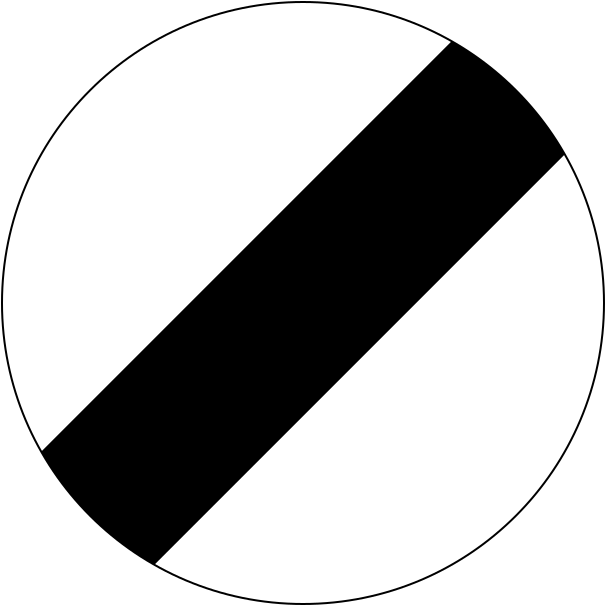
Motorways and high-speed dual carriageways are the breakdown situations that worry learners most, and rightly so. Traffic may be travelling at the national speed limit, which is 70 mph for cars on motorways and dual carriageways unless signs show otherwise, as set out in The Highway Code. At that speed, you do not have time for indecision.
If you can, leave at the next exit or pull into a service area. If you cannot, use the hard shoulder or an emergency area. Stop as far left as possible, with the wheels turned to the left. That wheel position matters because if your vehicle is hit from behind, it is less likely to be pushed back into the carriageway.
The Highway Code, rule 275, says you should get out of the vehicle by the left-hand door if possible and ensure passengers do the same. Move behind the safety barrier and well away from the carriageway. Do not stand in front of the vehicle, do not sit inside waiting unless there is no safe alternative, and do not let passengers wander along the verge.
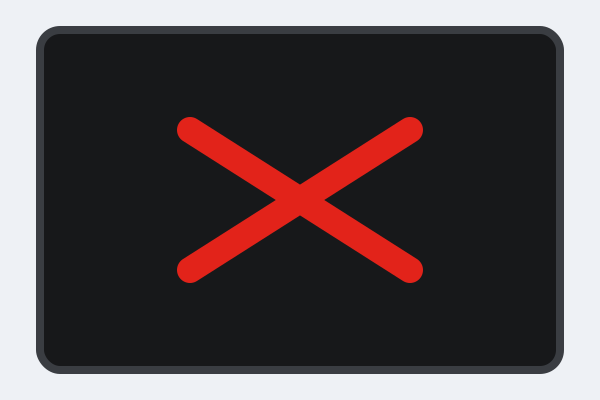
On a smart motorway or any road with lane control signals, a red X means the lane is closed and you must not drive in it. If you break down in a live lane and cannot get out safely, keep your seatbelt on, switch on hazard lights and call 999. If you can leave the vehicle safely, get behind the barrier and then call for help.
- 1Try to leave the motorway at the next exit or service area.
- 2If that is not possible, move to the hard shoulder or emergency area.
- 3Stop as far left as you safely can and turn the wheels left.
- 4Put hazard warning lights on and sidelights in poor visibility.
- 5Leave by the left-hand door if safe and stand behind the barrier.
- 6Call your breakdown provider, use an emergency telephone, or call 999 if in danger.
Breaking down on a normal road, in town or on a rural road
On ordinary roads, the safest stopping place is usually off the carriageway: a lay-by, side road, car park entrance, wide verge or a straight stretch where approaching drivers can see you early. Learners often want to stop immediately as soon as something feels wrong. Sometimes that is necessary, but if the car is still moving and controllable, a few more metres to a safer place can make a big difference.
In town, do not block a junction, pedestrian crossing, bus stop or bend if you can avoid it. If the engine cuts out at traffic lights, put hazards on, secure the car, and think before you move. If there are people nearby who offer to push, only accept help if it can be done safely and without stepping into moving traffic.
On rural roads, bends, crests and narrow verges are the main danger. A vehicle just after a blind bend gives following drivers very little time to react. If you have to stop somewhere poor, get passengers out away from traffic if safe, keep them together, and call for help quickly. Do not stand between your car and oncoming traffic.
- Avoid stopping on a bend, brow of a hill or narrow bridge if you can.
- Use hazard lights, but remember they do not make a dangerous place safe.
- Keep children, elderly passengers and pets under control and away from the road.
- If the car is blocking the road and causing danger, call the police on 999.
- If it is not an emergency but you need police advice, use 101.
Warning other road users without putting yourself at risk
Hazard warning lights are usually your first warning to others. The Highway Code, rule 116, says hazard warning lights may be used when your vehicle is stationary to warn that it is temporarily obstructing traffic. You should not use them as an excuse to stop dangerously, and you should not drive along with them on except in specific situations where you are warning following traffic of a hazard ahead.
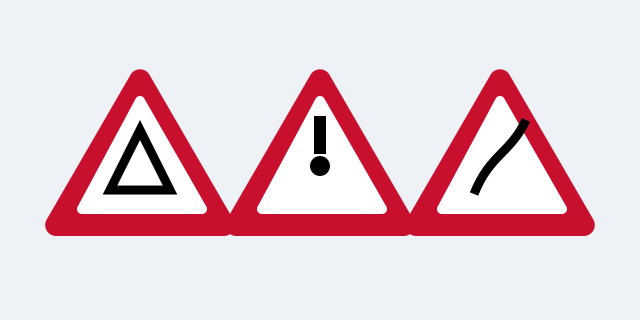
A warning triangle can be useful on some roads, but it must never be used on a motorway. Highway Code rule 274 says you may put a warning triangle on the road at least 45 metres behind your broken-down vehicle on the same side of the road, if it is safe to do so, but do not use one on motorways. If placing it means walking in the carriageway, crossing live traffic, or standing on a blind bend, do not do it.
A reflective jacket or hi-vis vest is sensible, especially at night, although the key point is still where you stand. I would rather see a learner in dark clothing behind a barrier than wearing hi-vis while standing next to the driver’s door in lane one. Visibility helps, but separation from traffic saves lives.
- Use hazard warning lights when stationary and causing an obstruction.
- Leave sidelights on in darkness or poor visibility.
- Only use a warning triangle on suitable non-motorway roads.
- Place a triangle at least 45 metres behind the vehicle if safe.
- Never stand in the road to direct traffic unless instructed by police or traffic officers.
Calling for help: what to say and who to contact
Once everyone is safe, call your breakdown provider if you have cover. If you do not have cover, you can still contact a local recovery service, but check the cost before agreeing where possible. If you are on a motorway and near an emergency telephone, it connects you to the control centre and helps them identify your exact location.
If you are in immediate danger, for example stopped in a live lane, unable to leave the vehicle safely, involved in a collision, or carrying a vulnerable passenger in a high-risk location, call 999. National Highways traffic officers can assist on motorways and some major A-roads in England, while police deal with emergencies and offences. Arrangements differ in Scotland, Wales and Northern Ireland, but 999 is still the emergency number.
When you call, give clear information. New drivers sometimes start with the mechanical story, such as, 'I think the clutch went funny after the roundabout'. The operator first needs to know where you are, whether anyone is hurt, whether the car is blocking traffic, and whether you are in a safe place.
- Road name, motorway number or junction numbers if known.
- Direction of travel, such as M1 northbound or A38 towards Derby.
- Nearest marker post, emergency area number, landmark or postcode.
- Vehicle registration, make, model and colour.
- Whether you are on the carriageway, hard shoulder, lay-by or off the road.
- Any injuries, vulnerable passengers, pets, fuel leaks, smoke or fire.
Common mistakes learners and new drivers make in a breakdown
The most common fault I see in training is late planning. A learner notices a loss of power, but instead of checking mirrors and moving left early, they keep going in the same lane hoping it will fix itself. On test, an examiner is not marking you on your mechanical knowledge; they are watching whether you keep control, observe properly, signal if needed, and stop without creating unnecessary danger.
Another mistake is getting out on the traffic side. It feels natural for the driver to open the driver’s door, especially if you are flustered, but that can put you straight into passing traffic. Build the habit now: secure the car, think, and use the side away from traffic whenever possible.
Do not try roadside repairs unless you are somewhere genuinely safe. Changing a wheel on the hard shoulder of a motorway is not worth the risk. Modern cars often have inflation kits rather than spare wheels, and using one at the roadside while lorries pass close by is not a learner-driver challenge; it is a safety decision. Call recovery.
- Fault: stopping sharply in a live lane when the car could have reached a safer area.
- Fault: forgetting mirrors before moving left, causing danger to cyclists or traffic behind.
- Fault: leaving the vehicle on the traffic side without checking.
- Fault: standing behind the boot or between vehicles while waiting.
- Fault: trying to fix the car in an unsafe place instead of calling for help.
- Fault: focusing on the warning light and letting steering position drift.
If the car breaks down during a driving lesson or driving test
During a driving lesson, your instructor will help manage the situation, but you should still do the driving basics: mirrors, signal if useful, position, speed and control. I will often talk a learner through it calmly because breakdowns are a real driving event, not an interruption to learning. The skill is making safe decisions under pressure.
On a practical driving test, a genuine mechanical problem is not automatically your fault. The examiner will assess what you do as the driver. If you panic, stop dangerously, fail to warn others or ignore instructions, those actions can be marked. If you deal with it safely and the test cannot continue, the DVSA has procedures for terminated tests, but the exact outcome depends on the circumstances.
If your own car is used for a test, it must be roadworthy, taxed, insured for a driving test and meet DVSA requirements. The DVSA publishes current test rules and fees on GOV.UK, and these can change, so always check before test day. A warning light, tyre problem or unsuitable vehicle can mean the test does not go ahead.
Breakdown safety checklist for learners and new drivers
A simple routine helps because breakdowns make people rush. Practise saying it to yourself: control, position, warn, leave, call. That order keeps you focused on the immediate danger rather than the inconvenience of the car.
Keep a small breakdown kit in the boot: reflective vest, torch, phone charger or power bank, warm layer, waterproof coat and your breakdown membership details if you have them. Do not keep the vest buried under luggage if you regularly drive at night. You want safety items easy to reach without standing in the road.
Before longer journeys, especially as a new driver, check tyres, fuel or charge, oil, coolant and screenwash. Basic checks will not prevent every breakdown, but they reduce avoidable ones. The specific offence that catches people out is driving a vehicle in a dangerous or unroadworthy condition; if you know something is unsafe, do not drive it and hope for the best.
- 1Stay calm, steer smoothly and avoid sudden braking unless essential.
- 2Move left and stop in the safest available place.
- 3Apply the parking brake, select neutral or park, and switch off the engine if appropriate.
- 4Switch on hazard warning lights and sidelights in poor visibility.
- 5Get everyone out on the side away from traffic if safe, especially on fast roads.
- 6Stand behind a barrier or well away from the carriageway, never behind the vehicle.
- 7Call for help with your exact location and level of danger.
Common questions
Should I stay in my car if I break down on the motorway?
Usually no. The Highway Code says you should get out by the left-hand door if possible and wait behind the safety barrier, well away from traffic. If you are stuck in a live lane and cannot leave safely, keep your seatbelt on, put hazards on and call 999.
Can I put a warning triangle out if my car breaks down?
On suitable non-motorway roads, you may place a warning triangle at least 45 metres behind the vehicle if it is safe. Do not use a warning triangle on a motorway, and do not put yourself in danger by walking in live traffic or around a blind bend.
What if my car breaks down and I have no breakdown cover?
You can still call a recovery company, but you may have to pay a call-out and recovery charge. If you are in immediate danger, such as stopped in a live lane, call 999 first rather than shopping around for prices.
What should a learner driver do if the engine cuts out at traffic lights?
Secure the car, put hazard lights on if you are causing an obstruction, and try to restart only if it is safe. If it will not restart, stay calm, keep your seatbelt on while traffic is moving around you, and get help to move the vehicle only when it can be done safely.
Is it safe to change a tyre on the hard shoulder?
It is not recommended. On a motorway or fast dual carriageway, leave the vehicle if safe and call for recovery. A tyre can be replaced later; standing next to traffic at high speed is the bigger risk.
Who do I call if I break down on a smart motorway?
If you reach an emergency area or hard shoulder, get out safely and contact help using the emergency telephone if available or your mobile. If you are stopped in a live lane, cannot get out safely, or feel in immediate danger, call 999 and follow the operator’s instructions.
Find a course near you
Reading about it only gets you so far. Our instructors drill this with you in the car, on the roads around your test centre.