
The short version
- Identify the roundabout type before you choose a lane.
- Use MSPSL early: mirrors, signal, position, speed, look.
- Give way to traffic from the right unless signs or lights tell you otherwise.
- On multi-lane roundabouts, follow road markings rather than habit.
- Examiners mark safety, planning and lane discipline, not just whether you get round.
Types of roundabout and how to approach each one
The main types of roundabout UK learners need to recognise are mini roundabouts, standard single-lane roundabouts, multi-lane roundabouts, spiral or lane-guided roundabouts, traffic-light controlled roundabouts, double roundabouts and large complex roundabouts or gyratories. The approach is always built from the same routine: see it early, check mirrors, signal if needed, choose the correct position, reduce speed in good time and look for a safe gap before entering.
Highway Code rules 184 to 190 cover roundabouts. The key point in Rule 185 is to give priority to traffic approaching from your right unless road markings, signs or traffic lights tell you otherwise. Rule 186 explains the usual lane and signal choices, but it also says to watch for signs and markings because local layouts can be different. This is general guidance, not legal advice.
In lessons, the fault I see most is not a dramatic mistake. It is a late decision. A learner arrives too quickly, sees three signs, two lanes and a van on the right, then tries to sort it all out at the give-way line. A good roundabout approach is decided 6 to 10 seconds earlier, when the signs and road markings are still easy to read.
- 1Look well ahead for the roundabout sign, direction board, lane arrows and road markings.
- 2Check centre and relevant door mirror before changing speed or position.
- 3Signal if it will help other road users understand where you intend to go.
- 4Choose the lane shown by signs or markings, not simply the lane you normally use.
- 5Slow to a speed that lets you stop at the give-way line if needed.
- 6Look right, ahead and into your exit, then enter only when it is safe.
- 7After passing the exit before yours, check mirrors and signal left if appropriate.
Mini roundabouts: small space, same rules
A mini roundabout is marked by a painted central circle rather than a raised island. The biggest misunderstanding is that learners treat it like a normal junction and cut across the middle. Highway Code Rule 188 says you must pass around the central markings unless the size of your vehicle or the layout makes it impracticable. In a learner car, that means steer around it properly.
The approach to a mini roundabout is slower and more delicate than many learners expect. Because the roundabout is small, vehicles can appear from the right very quickly and there is often less time to judge priority. I teach pupils to approach in first or second gear depending on visibility, keep the wheels straight while waiting and avoid rolling forward just because the car behind is impatient.
Signalling at mini roundabouts still follows the normal principles, but you may have less time. If turning right, signal right on approach, keep it on as you go round, then signal left if there is time and it would benefit others. If going ahead, usually do not signal on approach unless the layout makes it helpful, then signal left before leaving if practical.
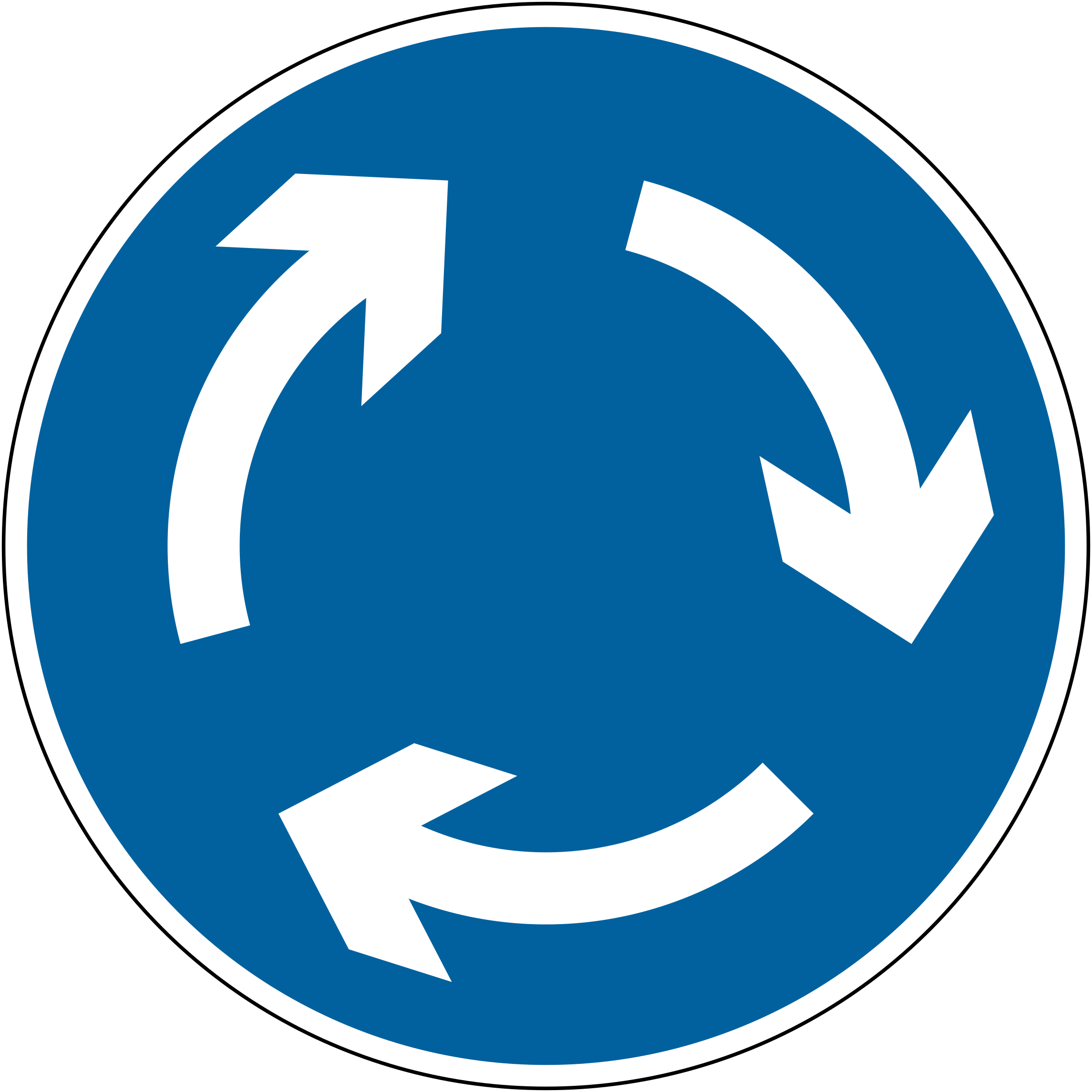
- Do not drive over the painted central circle just to make the turn easier.
- Approach slowly enough to stop, especially where buildings or parked vehicles block the view.
- Watch for drivers using the mini roundabout to make a U-turn.
- Be careful with cyclists and motorcyclists, who can be hidden by your windscreen pillars.
- Avoid waving other drivers on because it can confuse priority and create risk.
Standard single-lane roundabouts: build a repeatable routine
A standard single-lane roundabout is usually the easiest type once you have a routine. There is one lane on approach and one lane around the roundabout, so your job is mainly speed control, observation and signalling. The usual Highway Code position is left lane for left and ahead, and right position or right lane where available for turning right, unless signs or markings say otherwise.
For a left turn, check mirrors, signal left on approach, keep left and leave in the left lane. For straight ahead, normally approach without a signal, keep a steady course and signal left after passing the exit before yours. For right, signal right on approach, position to the right if it is safe and available, keep the signal until you pass the exit before yours, then mirror check and signal left to leave.
On test, examiners are not expecting racing-driver gaps. They want a safe, positive decision. A serious or dangerous fault can happen if you make another vehicle brake sharply, but hesitation can also be marked if you repeatedly miss safe gaps with no good reason. The balance is simple to say and harder to do: be prepared to go, but never gamble.

- 1Left: mirrors, left signal, left position, slow down, give way, enter when safe, keep left to exit.
- 2Ahead: mirrors, no approach signal unless helpful, normal left position, signal left after the exit before yours.
- 3Right: mirrors, right signal, right position, join when safe, keep right until your exit is next, then signal left and move out safely.
Multi-lane roundabouts: choose by signs, not guesswork
Multi-lane roundabouts are where many learners lose confidence because the road can look busy even when the rules are logical. The most important instruction is this: read the lane arrows and direction signs early. Highway Code Rule 186 gives the usual lane advice, but signs and markings can override the general pattern. Sometimes the left lane is for left only, sometimes it is for left and ahead, and sometimes a right-hand lane can also go ahead.
The common test fault is entering in the wrong lane, then trying to fix it with a late swerve. If you realise you are in the wrong lane, do not force the original plan. Follow the lane safely if it is lawful to do so, then let the examiner or your instructor re-route you. Taking the wrong exit safely is usually far better than cutting across someone at the last second.
Lane discipline matters all the way round, not just at the start. Keep within your lane markings, avoid drifting towards the centre line and do not change lanes without a mirror check, signal if needed and a clear gap. I often tell learners to imagine the lane as railway tracks. Once you have chosen the correct track, stay on it until the markings or your exit tell you to leave.
- Look for overhead or roadside direction signs before you reach the arrows on the road.
- Use the lane marked for your destination, road number or exit direction.
- If two lanes go to the same exit, choose the one that matches where you need to be after the exit.
- Do not enter beside a large vehicle if you can avoid it, as it may need extra room.
- If you miss your lane, stay safe and accept a re-route rather than making a sudden correction.
Spiral and lane-guided roundabouts: let the markings lead you
Spiral roundabouts, sometimes called lane-guided roundabouts, are designed so that your lane gradually moves you towards your exit. You may not need to change lanes in the way you would on an older multi-lane layout. The problem for learners is that they expect to steer right round the inside and then move left, so they fight the road markings instead of following them.
On approach, choose the lane for your destination and then trust the lane markings. Your lane may curve outwards or split. Keep your eyes moving between the road markings ahead, traffic to your sides and the exit signs. Do not stare down at the white line immediately in front of the bonnet because you will react too late to the bigger picture.
Examiners are looking for lane discipline and planning here. A driver who enters correctly but drifts over a solid or broken lane line without checking can still be marked. If the lane is taking you somewhere unexpected, continue safely, check signs and markings, and avoid sudden sideways movement. It is better to be calmly wrong than dangerously late.
- Pick the lane by destination before entry.
- Follow the arrows and lane lines even if the lane bends outwards.
- Avoid unnecessary lane changes once you are on the roundabout.
- Check mirrors before any sideways movement, including when a lane splits.
- Watch for drivers alongside who may not understand the spiral layout.
Traffic-light controlled roundabouts: priority changes with the lights
Traffic-light controlled roundabouts can feel easier because you are told when to go, but they still catch learners out. The lights control the line they apply to. Once you pass one set of lights, you may meet another set on the roundabout, so keep scanning ahead. Do not assume that a green light at entry means every part of the roundabout is clear.
On approach, treat it like any signal-controlled junction first: mirrors, correct lane, speed, and be prepared to stop if the lights change. If you are first at the red light, stop before the stop line. When the lights turn green, move off promptly but still check for pedestrians, cyclists, emergency vehicles and any driver who may have failed to stop.
A frequent learner fault is concentrating so hard on the lights that the lane position falls apart. Another is stopping in a yellow box junction on or near the roundabout when the exit is not clear. Highway Code Rule 174 says you must not enter a box junction unless your exit road or lane is clear, except when waiting to turn right and prevented from doing so by oncoming traffic or other vehicles waiting to turn right.


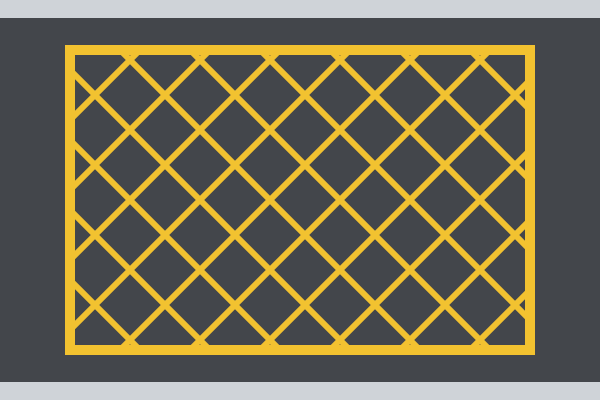
- 1Choose the correct lane before the stop line.
- 2Stop smoothly if the lights require it and keep the car secure.
- 3When green, move off only after a final check that it is safe.
- 4Watch for further lights on the roundabout.
- 5Do not block a yellow box or pedestrian crossing.
- 6Keep following lane markings until you are fully clear of the roundabout.
Double roundabouts and complex junctions: treat them in pieces
A double roundabout is two roundabouts close together, often with a short link road between them. Learners often try to solve the whole junction at once and overload themselves. I teach it as two separate roundabouts: deal with the first, get the car straight and controlled in the middle if there is space, then deal with the second.
The same applies to large complex roundabouts, sometimes linked with slip roads, bus lanes, crossings and multiple exits. Break the job down into small decisions. First, which lane on approach? Second, is it safe to enter? Third, which lane do the markings tell me to follow? Fourth, where is my exit and what is happening after it?
Be especially careful where a pedestrian crossing sits just after your exit. Learners sometimes do a good roundabout, signal correctly, leave safely, then miss the crossing because they mentally relax. Your observation must continue after the exit. Check your mirrors as you leave and be ready for traffic slowing, pedestrians waiting, or a cyclist on your left.
- For double roundabouts, apply the roundabout routine twice.
- Do not block the space between the two roundabouts if traffic is queuing.
- Reset your mirrors and signal after the first roundabout if the second needs a different plan.
- Look for pedestrians and crossings immediately after the exit.
- If overwhelmed, slow early and create thinking time rather than rushing into the junction.
What driving examiners actually mark at roundabouts
On the practical test, roundabout faults usually appear under observations, junctions, signals, position, control or planning. The examiner is not marking whether you look confident. They are marking whether your driving is safe, legal and well planned. A slightly cautious approach can be fine if it is justified by poor visibility or heavy traffic. A rushed approach with a late brake, late signal and last-second lane change is not fine.
The biggest costly fault I see is poor observation to the right. Some learners look once, decide it is clear, then move while a vehicle is already approaching. You need repeated looks as you slow down because the scene changes quickly. Another common one is signalling left too early, which can make another driver think you are leaving at the exit before the one you actually want.
Your goal is to be predictable. That means your mirrors, signal, position and speed should all tell the same story. If your signal says right but your position says left, other road users cannot trust you. If your speed says you are stopping but then you suddenly go, the driver behind and the vehicle on the roundabout both have to guess.
- Fault: late lane choice. Cost: rushed steering or an unsafe lane change near the give-way line.
- Fault: poor right observation. Cost: entering when another vehicle has priority.
- Fault: early left signal. Cost: misleading traffic waiting at the previous exit.
- Fault: drifting lanes. Cost: affecting a vehicle alongside on a multi-lane roundabout.
- Fault: unnecessary hesitation. Cost: missing clear safe gaps repeatedly and holding up following traffic.
- Fault: looking only right. Cost: missing pedestrians, cyclists, queues or blocked exits ahead.
Common questions
Which lane should I use at a roundabout for the second exit?
For a normal roundabout, the second exit is often straight ahead, so you would usually use the left-hand lane unless signs or road markings say otherwise. Always check the direction signs and arrows because some second exits require a different lane, especially on multi-lane or spiral roundabouts.
Do I always signal when going straight ahead at a roundabout?
Usually you do not signal on approach when going straight ahead, unless the layout makes a signal helpful. You should normally signal left after passing the exit before the one you intend to take, as set out in Highway Code Rule 186.
What should I do if I am in the wrong lane on a roundabout during my driving test?
Stay safe and follow the lane if you cannot change safely. Examiners would rather see you take the wrong exit safely than cut across traffic to rescue the route. They will give new directions if needed.
Who has priority at a mini roundabout in the UK?
As with other roundabouts, you normally give way to traffic approaching from your right unless signs, markings or signals say otherwise. Because mini roundabouts are small, approach slowly and be ready for drivers who are already very close to the junction.
Can I fail my driving test for hesitation at roundabouts?
Yes, if the hesitation is repeated or serious enough to affect other traffic when safe gaps were available. You will not normally be penalised for waiting when you genuinely cannot see or when the gap is not safe. The skill is judging the difference between caution and unnecessary delay.
How do I approach a busy multi-lane roundabout as a nervous learner?
Slow down earlier, read the signs before the road markings, and commit to the correct lane in good time. Once you are in lane, focus on safe gaps and lane discipline rather than trying to watch every vehicle at once. If you miss your lane, continue safely and re-route rather than making a sudden move.
Browse driving lessons
Reading about it only gets you so far. Our instructors drill this with you in the car, on the roads around your test centre.