
Waiting and parking rules cover more than just finding a space, they set out where stopping is prohibited altogether, how to park safely and considerately, and what the different road markings mean. This section overlaps heavily with road markings and signs, since yellow and red lines are the visual shorthand for the rules described here.
The theory test uses this section for road sign and marking recognition questions, and for scenario questions about parking near junctions, on bends, or opposite other parked vehicles, where the safest or most legal option isn't always the most obvious one.
Reading yellow and red lines
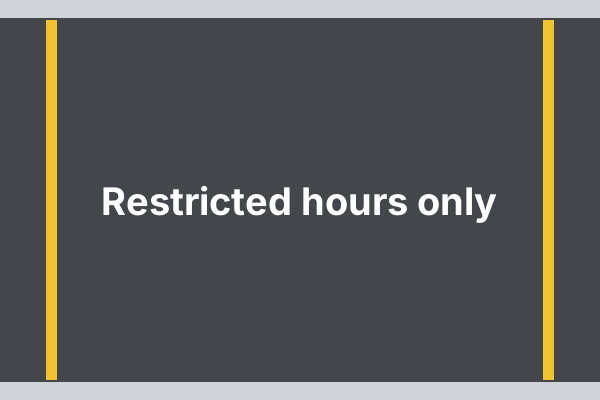
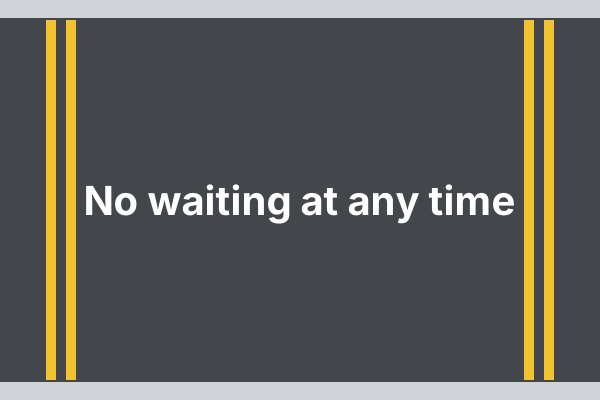
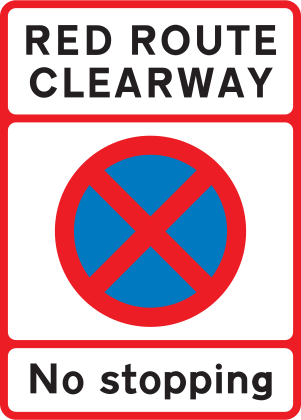
A single yellow line means no waiting during times shown on a nearby sign, which vary by location, while a double yellow line means no waiting at any time unless a specific local exemption applies. Red lines indicate a red route, generally found in busy urban areas, where stopping is even more restricted and often banned entirely during operating hours.
- Single yellow line — restrictions apply at certain times, check the sign.
- Double yellow line — no waiting at any time, subject to local exceptions.
- Red line — red route restrictions, usually stricter than yellow lines.
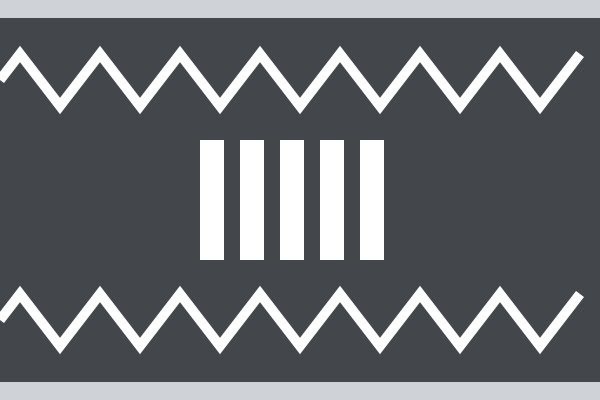
- Yellow zig-zag lines near a school or crossing — no stopping, even to drop someone off.
Where you must not park at all
You must not stop or park on a pedestrian crossing or the zig-zag markings approaching one, within a certain distance of a junction, on a bend, opposite or near a traffic island where it would obstruct the road, or in a way that blocks access such as a driveway. Many of these are legal requirements rather than advisory suggestions.
Parking considerately
Even where parking is technically allowed, the Highway Code encourages leaving enough room for other vehicles to pass, not parking too close to another vehicle in a way that could cause damage, and applying the handbrake and leaving the vehicle in gear or park on a slope. Facing the direction of traffic flow at night without lights is also a specific requirement in some situations.
Loading restrictions
Some yellow lines are accompanied by loading restrictions, marked by kerb markings, which prohibit loading or unloading during certain hours even if waiting is otherwise allowed. Always check nearby signage rather than assuming a line's meaning from memory.
Frequently asked questions
What is the difference between a single and double yellow line?
A single yellow line means waiting restrictions apply at specific times shown on a nearby sign, while a double yellow line means no waiting at any time, subject to any local exceptions such as loading bays. Always check accompanying signs for exact times.
Can I stop briefly on double yellow lines to drop someone off?
Generally you can briefly stop to set down or pick up passengers or for loading unless there are loading restrictions marked separately, but you should not wait or park. Zig-zag lines near a school or crossing are stricter and prohibit stopping altogether.
What do red lines on the road mean?
They indicate a red route, typically in busy towns and cities, where stopping is restricted even more tightly than an ordinary yellow line, often banning stopping entirely during operating hours. Check the accompanying signs for exact rules.
Why can't I park near a junction?
Parking too close to a junction blocks visibility for other drivers and pedestrians trying to see whether the road is clear, creating a serious hazard. This is why it's a specific legal restriction rather than just poor etiquette.
Do I need to leave my handbrake on when parked on a hill?
Yes, and you should also leave the vehicle in gear, or in park for an automatic, and consider turning your wheels towards or away from the kerb depending on the direction of the slope. This prevents the vehicle rolling if the handbrake alone were to fail.