
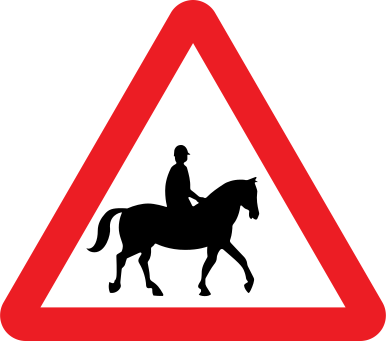
Animals appear on the road far more often than new drivers expect, whether that's a horse rider on a country lane, sheep being moved between fields, or a dog off its lead near a park. The Highway Code sets out how drivers should behave to avoid frightening or endangering animals and their handlers, treating horses in particular as vulnerable road users because a startled horse can be dangerous to everyone nearby.
The theory test draws on this section mainly through hazard perception clips featuring horse riders or livestock, and through case-study style questions on rural and unfamiliar roads. Learners often underestimate how much distance and patience these situations need.
Passing horses safely
When passing a horse and rider, the guidance is to slow right down, give as much room as you would a car, and be ready to stop if asked to by the rider's hand signal. Horses can be startled by noise or sudden movement, so avoid revving the engine, sounding your horn, or accelerating hard as soon as you've passed.
A horse rider may signal for you to slow down or stop, and you should treat that signal the same way you would any other road user's instruction, even though it's not a formal Highway Code signal.
Livestock and animals being herded
On rural roads you may meet livestock being moved by a herder, sometimes with a slow-moving vehicle escorting them. Slow down well in advance, keep a low, steady speed, and follow any directions given by the person in charge of the animals rather than trying to push past.
Animals loose in the road
If a dog, cat, or other domestic animal runs into the road, the instinct to swerve hard can be more dangerous than the animal itself, since a sudden swerve risks losing control or colliding with another vehicle. Brake in a controlled way if it's safe to do so, but don't put yourself or other road users at greater risk to avoid a small animal.
Carrying animals in your own vehicle
If you're driving with a dog or other animal in the car, it must be suitably restrained so it can't distract you or move around the cabin, since an unrestrained animal is treated as a driving hazard in its own right.
Frequently asked questions
How much room should I give a horse rider when overtaking?
Treat a horse like a slow-moving vehicle and give it at least as much space as you would a car, passing slowly and smoothly. Watch for hand signals from the rider asking you to slow down or stop, and never sound your horn or rev your engine nearby.
What should I do if I meet livestock being moved along a road?
Slow down early, keep your speed low and steady, and follow instructions from whoever is herding the animals. Don't try to push through the middle of a herd or overtake without clear guidance that it's safe.
Is it safe to swerve to avoid a small animal in the road?
Not usually. A hard swerve can cause you to lose control or crash into another vehicle, which is more dangerous than the animal itself. Brake in a controlled manner if you can do so safely instead.
Do animals in my car need to be restrained?
Yes, an animal should be suitably restrained, for example with a harness, pet carrier, or dog guard, so it cannot distract you or interfere with your control of the vehicle. This can come up in vehicle safety questions.
What does it mean if a horse rider raises their hand while I'm approaching?
It's usually a request for you to slow down or stop because the horse is unsettled or the road ahead is narrow. Respond promptly and calmly rather than continuing at the same speed.