
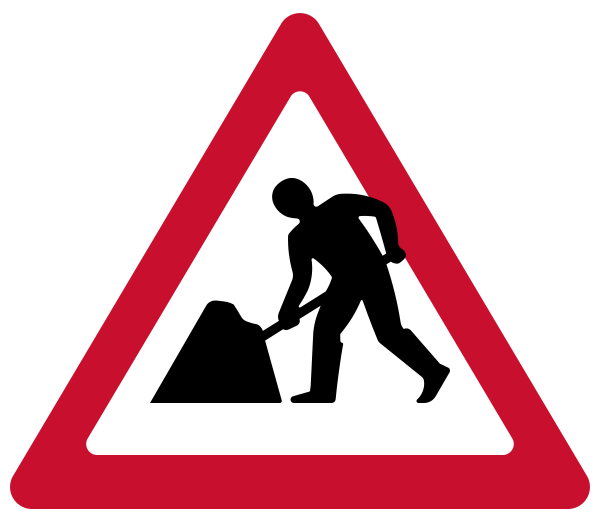
This section groups together three situations that all involve unusual, temporary, or shared infrastructure: road works with altered layouts, level crossings where roads meet railway lines, and tramways where rail vehicles share road space with other traffic. Each has its own signal system and specific rules that differ from ordinary road driving.
The theory test draws on this heavily for sign and signal recognition, particularly level crossing lights, and hazard perception clips sometimes feature road works with narrowed lanes or temporary signals that require careful, early reaction.
Road works
Through road works, reduced speed limits are usually mandatory and enforced, narrowed lanes require earlier positioning and reduced speed, and temporary traffic lights should be treated exactly as permanent ones, including waiting your turn if a one-way system is in operation. Keep a safe distance from the vehicle in front, since queues can start and stop suddenly.
Level crossing signals
A steady amber light followed by twin flashing red lights means you must stop, and an audible alarm may also sound at some crossings; you must not cross once the amber light appears, even if you think you have time. If the amber light comes on while you're already crossing, continue and clear the crossing rather than stopping on the tracks.
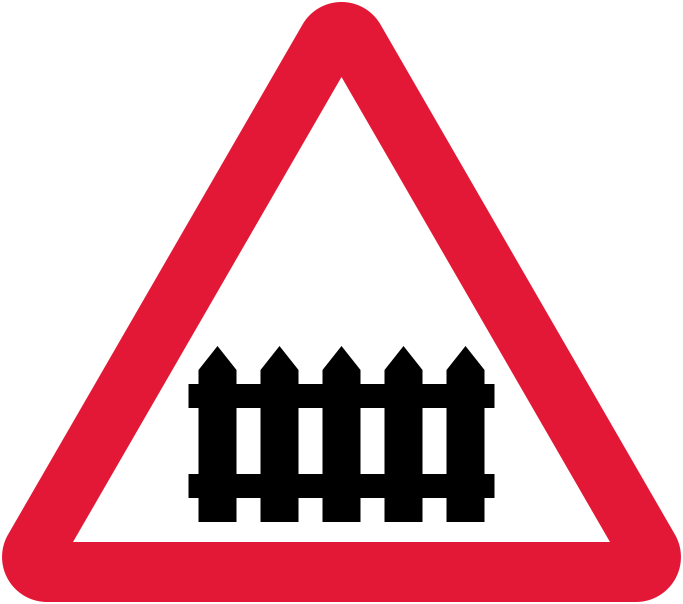

- Flashing red lights and/or an alarm — stop, do not cross.
- Half-barrier down — never try to weave around it.
- A crossing with no barrier — stop, look both ways, and listen before crossing if there's no signal.
- If your vehicle stalls on the crossing — get everyone out immediately and clear of the area, then try to call the signal operator using the phone provided before contacting the emergency services.
Approaching an open or user-operated crossing
Some crossings have no automatic barrier and instead rely on a telephone to check with the signal operator before crossing, particularly on quieter rural lines. Always follow the instructions given and never assume it's clear just because you can't see a train.
Tramways
Trams run on fixed rails and cannot steer around you, so you must never park or drive on tram tracks unless the layout specifically allows it, and you should give way to trams in situations where they can't easily stop or divert. Watch for pedestrians who may cross to reach a tram stop positioned in the middle of the road.

Frequently asked questions
What does a steady amber light at a level crossing mean?
It's a warning to stop, given before the barriers come down and the red lights start flashing. You must not attempt to cross once the amber light has appeared, since a train will be approaching shortly after.
What should I do if my car stalls on a level crossing?
Get everyone out of the vehicle immediately and move well clear of the tracks, then use the emergency telephone provided to alert the signal operator before contacting the emergency services if there's time. Your own and passengers' safety comes before the vehicle.
Can I drive on tram tracks?
Only where the road layout specifically allows shared use, otherwise you should avoid driving or parking on tram rails since trams cannot steer around obstructions. Take extra care crossing tracks at an angle to avoid getting a wheel caught.
How should I treat temporary traffic lights at road works?
Exactly as you would permanent traffic lights, stopping on red and waiting your turn, since road works often create a one-way system controlled entirely by the temporary signals. Don't assume you can push through if the road looks clear.
What should I do at a level crossing with no barriers or lights?
Stop, look both ways, and listen carefully for a train before crossing, since some crossings rely entirely on you to check it's safe. Some also have a telephone to contact the signal operator, which you should use if instructed by signage.