
The short version
- Click when a hazard starts to develop, not just when you first notice it.
- Each scored clip is worth up to 5 marks; one clip has two developing hazards.
- Do not click in a pattern, or you may score zero for that clip.
- Practise scanning, mirror-thinking and early planning, not just mouse timing.
- Use official-style practice and review why each hazard became a problem.
What the hazard perception test is checking
The hazard perception part of the UK car theory test checks whether you can spot developing hazards early enough to take safe action. It is not asking whether you can name every possible danger on the screen. It is checking timing: can you see something starting to affect your driving and respond before it becomes urgent?
For car drivers, the hazard perception test has 14 video clips. Each clip contains at least one developing hazard, and one of the clips contains two. Each developing hazard is worth up to 5 marks, so the total available is 75. The current car pass mark is 44 out of 75. DVSA fees and pass marks can be changed by government, so always check GOV.UK when booking.
What I see most often in lessons is that learners understand danger, but they wait too long to react. On a real road, they say “I saw the cyclist”, but they do not ease off or change position until the cyclist is already forcing the decision. Hazard perception is the same skill in test form.
What counts as a developing hazard
A hazard is anything that could cause you to change speed, direction or stop. A developing hazard is one that is now actually starting to affect your drive. That distinction matters because the scoring window opens when the hazard begins to develop, not when the object first appears in the distance.
For example, a parked van is a potential hazard. If a pedestrian steps out from behind it, that is a developing hazard. A cyclist ahead is a potential hazard. If the cyclist looks over their shoulder and starts moving out to pass a parked car, that is becoming a developing hazard.
The safest drivers do not stare at the hazard only. They ask: “What is likely to happen next, and what would I do with the brake, position, mirrors or signal?” That is exactly how I drill it in lessons. We might approach a row of parked cars and I will ask the learner to tell me, before we get there, where a door could open, where a child could appear, and where we would slow or hold back.
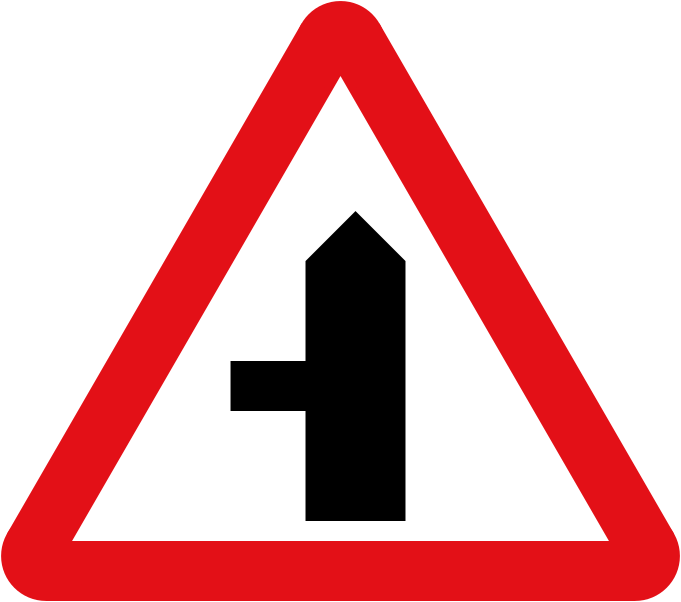
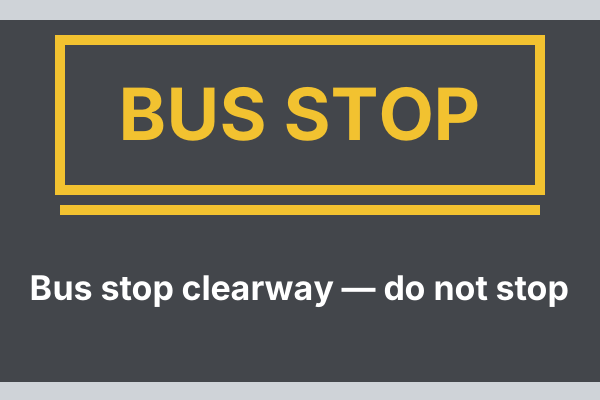
- Potential hazard: something that might become a problem, such as a side road, pedestrian, cyclist, bus stop or parked vehicle.
- Developing hazard: something that is now changing and would make you alter speed or direction.
- Scored response: your click when the developing hazard is within the DVSA scoring window.
How the 5-mark scoring window works
Each scored developing hazard has a marking window. If you click right at the beginning of that window, you can score 5. As the hazard continues to develop, the available marks reduce to 4, 3, 2 and 1. If you click before the window opens, it does not score. If you click after the window closes, it does not score either.
This is why learners sometimes say, “But I clicked on it.” They may have clicked when the clue was only a potential hazard, then did not click again when it started to affect the driver. Or they clicked too late, when the driver in the clip would already be braking or steering away.
You are allowed to click more than once if the situation develops. Sensible repeated clicks are normal: one when you first see the clue, and another when it clearly becomes a developing hazard. What does not work is machine-gunning the mouse or tapping rhythmically through the clip.
- 1Scan well ahead and notice possible hazards early.
- 2Keep watching the same area for change, not just appearance.
- 3Click when the hazard begins to develop and could affect your driving.
- 4If it develops further, a second click can be sensible.
- 5Return your eyes to the whole scene: mirrors, junctions, pavements, road position and traffic ahead.
When to click: real examples learners recognise
The best timing is neither panicky nor delayed. You are trying to click at the point where a safe driver would begin planning or adjusting. In the car, that often means easing off the gas, checking mirrors, holding back, covering the brake, changing position or preparing to stop.
Take a side road on the left with a car waiting. The car itself is a potential hazard. If its wheels start turning, it creeps forward, or the driver begins to emerge into your path, it is a developing hazard. That is when your click is likely to be within the scoring window.
With pedestrians, do not wait for someone to be directly in front of you. A person walking along the pavement is usually just a potential hazard. A person turning towards the road, stepping between parked cars, looking the wrong way, or hurrying towards a crossing may be developing into something you must respond to.
- Bus at a stop: click when it signals or starts moving out, not simply because it exists.
- Parked cars: click when a door opens, a vehicle starts moving, or a person appears from between cars.
- Cyclist ahead: click when their road position changes, they wobble, or they move out around an obstruction.
- Junction: click when another vehicle starts to emerge or cuts across your priority.
- Brow of a hill or bend: the hazard develops when a vehicle, queue, animal or obstruction appears and affects your path.
What can make you score zero on a clip
DVSA software looks for unacceptable response patterns. If you click continuously, click in a fixed rhythm, or click so many times that it looks like you are trying to cheat the scoring window, you can receive zero for that clip. That does not usually fail the whole test by itself, but it wastes marks you may need.
You do not lose marks for clicking on non-scoring potential hazards in a normal way. A few sensible clicks in response to changing risks is fine. The problem is over-clicking without judgement. The test is designed to reward observation and anticipation, not random tapping.
What does not matter is whether you identify the exact category of hazard in your head. You are not asked to label it as a pedestrian hazard, vehicle hazard or environmental hazard. You are marked on when you click, not on whether you can explain it afterwards.
- Avoid clicking every second throughout the clip.
- Avoid double-clicking everything automatically.
- Avoid using a rhythm such as click-pause-click-pause.
- Do not wait until an emergency is obvious; that is usually too late.
- Do not focus only on the centre of the screen; hazards develop from pavements, side roads and behind parked vehicles.
How to practise so it transfers to real driving
Good practice is not just doing clip after clip until you remember the videos. Use practice that feels like the DVSA test, but review each mistake. Ask yourself: did I click before it developed, during the scoring window, or after the driver would already need to brake? That review is where the learning happens.
In lessons, I use commentary driving to build the same habit. I will ask a learner to say short phrases such as “parked cars, child possible”, “van door, hold back”, or “cyclist may move out”. The words are not for the test; they train the brain to look ahead and predict movement.
Fast Track Driving Lessons includes free theory test practice at /theory, which is useful alongside your practical training. If you are taking an intensive course, usually 10 to 40 hours at £61.23 per hour, do not leave hazard perception until the night before. The learners who improve fastest connect the clips with what they are seeing on actual roads.
- 1Practise in short sessions of 15 to 20 minutes so your concentration stays realistic.
- 2After each clip, review the official explanation or replay if available.
- 3Write down the trigger: wheels turning, pedestrian stepping out, cyclist moving right, brake lights, bus signal.
- 4On your next driving lesson, ask your instructor to recreate the same type of risk on normal roads.
- 5Practise again after driving, while the real examples are fresh.
Common myths about hazard perception
One myth is that you should click only once per clip. That is not true. There may be several possible hazards, and one clip in the car test has two scored developing hazards. Sensible clicking when a situation changes is part of the skill.
Another myth is that you must click the moment you see anything dangerous. If you click too early, before the scoring window opens, it may not score. You are looking for development: movement, change, commitment, or something that now affects your space or speed.
A final myth is that computer gamers automatically do well. Quick reactions can help, but the test is more about road reading than hand speed. The best results come from calm scanning, early prediction and well-timed clicks, which are the same habits examiners want to see later in your practical driving test.
A simple clicking routine for the test
Before the test starts, settle your mouse hand and watch the whole road scene. Treat it like driving, not like a hidden-object game. Look far ahead, then sweep back through the middle distance, pavements, junctions, mirrors shown in the clip, road markings and traffic movement.
During the clip, click for meaningful change. If a clue becomes more serious, click again. Then stop clicking and continue scanning. That rhythm is calm, deliberate and safe.
If you miss a hazard in one clip, let it go. You cannot go back during the real test, and worrying about it can cost you the next clip. In the practical test, examiners are looking for recovery and judgement; the same mindset helps here.
- 1Watch the full scene, not one vehicle.
- 2Notice potential hazards early.
- 3Click when one begins to affect your driving.
- 4Click again only if it develops further.
- 5Reset your attention immediately for the next hazard or clip.
Common questions
How many clicks should I make in each hazard perception clip?
There is no set number. A few sensible clicks for developing situations is normal, especially if a hazard changes in stages. Too many clicks or a regular pattern can lead to zero for that clip.
Can I click too early on hazard perception?
Yes. If you click before the scoring window opens, that click may not score. If the same situation then clearly develops, click again rather than assuming your first click was enough.
What is the pass mark for the car hazard perception test?
For the car theory test, the hazard perception pass mark is currently 44 out of 75. Government rules, fees and test details can change, so check GOV.UK when you book.
Does every clip have only one hazard?
Each clip has at least one scored developing hazard. In the car test, one of the 14 clips has two scored developing hazards, so keep scanning after you think you have spotted the first one.
Do I need to practise hazard perception if I drive well in lessons?
Yes, because the timing and screen format take practice. Real driving helps you understand risk, but you still need to learn when the scoring window is likely to open and how to click without over-clicking.
Will clicking on the wrong hazard lose marks?
You do not lose marks for a normal click on a non-scoring hazard. The risk is that random or patterned clicking can trigger the anti-cheat system and give you zero for that clip. Keep your clicks linked to real changes in the road scene.
Practise theory free
Reading about it only gets you so far. Our instructors drill this with you in the car, on the roads around your test centre.