
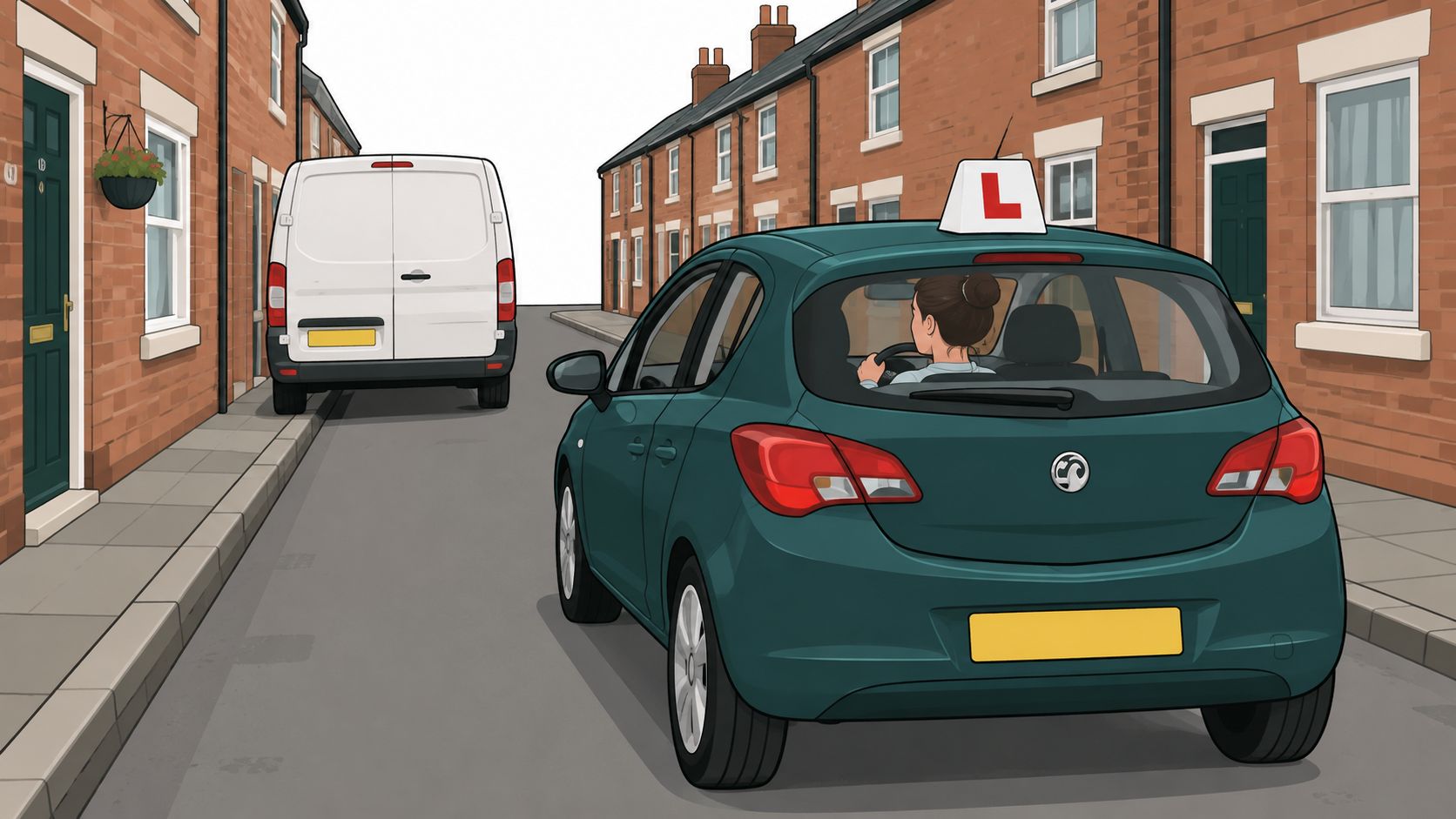
You're halfway along a narrow terraced street when a parked van blocks the way ahead. There's no obvious side road to reverse into, traffic is light, and turning around feels less intimidating than continuing into an even tighter space. Knowing how to do a turn in the road becomes a useful piece of everyday driving, provided the location is suitable and the manoeuvre can be completed without creating risk.
Table of Contents
- What a Turn in the Road Actually Is
- Choosing the Right Spot and Setting Up
- The Three Movements in a Manual Car
- Doing It in an Automatic
- The Faults Examiners Actually Mark
- Practice Drills That Build Real Consistency
- Troubleshooting When the Manoeuvre Goes Wrong
What a Turn in the Road Actually Is
A turn in the road, often called a three-point turn, is a foundational UK low-speed manoeuvre. You move the car across the carriageway, reverse while maintaining effective observation, then complete the turn without mounting the kerb. The aim is not just to point the bonnet in the opposite direction. You're managing space, speed, steering and the changing position of everyone else on the road.
The DVSA no longer uses it as a standard car practical-test manoeuvre. Current examiner guidance focuses on reversing exercises such as reverse parking and reversing while pulling up on the right, following changes announced by the government in 2016. The classic turn remains worth learning because a narrow residential road may offer no roundabout, no suitable side road and no safe opportunity to continue forwards.
Think of the manoeuvre as a controlled rotation in three broad movements:
- Move forwards towards one side of the road.
- Reverse towards the other side.
- Move forwards into the new direction.
That description is simple, but it hides the skill that catches learners out. Observation must continue throughout. A clear road when you started can change while you're steering, stopping or selecting another gear. Pedestrians, cyclists, motorcyclists, parked vehicles and approaching cars all need fresh consideration.
Practical rule: The manoeuvre is successful when every movement is safe and controlled, not merely when the car changes direction.
You should be travelling at very low speed, leaving space from both kerbs and stopping whenever another road user needs priority. If a roundabout or reversing into a side road would be easier and safer, government learning guidance says you should consider those options first. Use a turn in the road when those alternatives aren't available or suitable.
Choosing the Right Spot and Setting Up
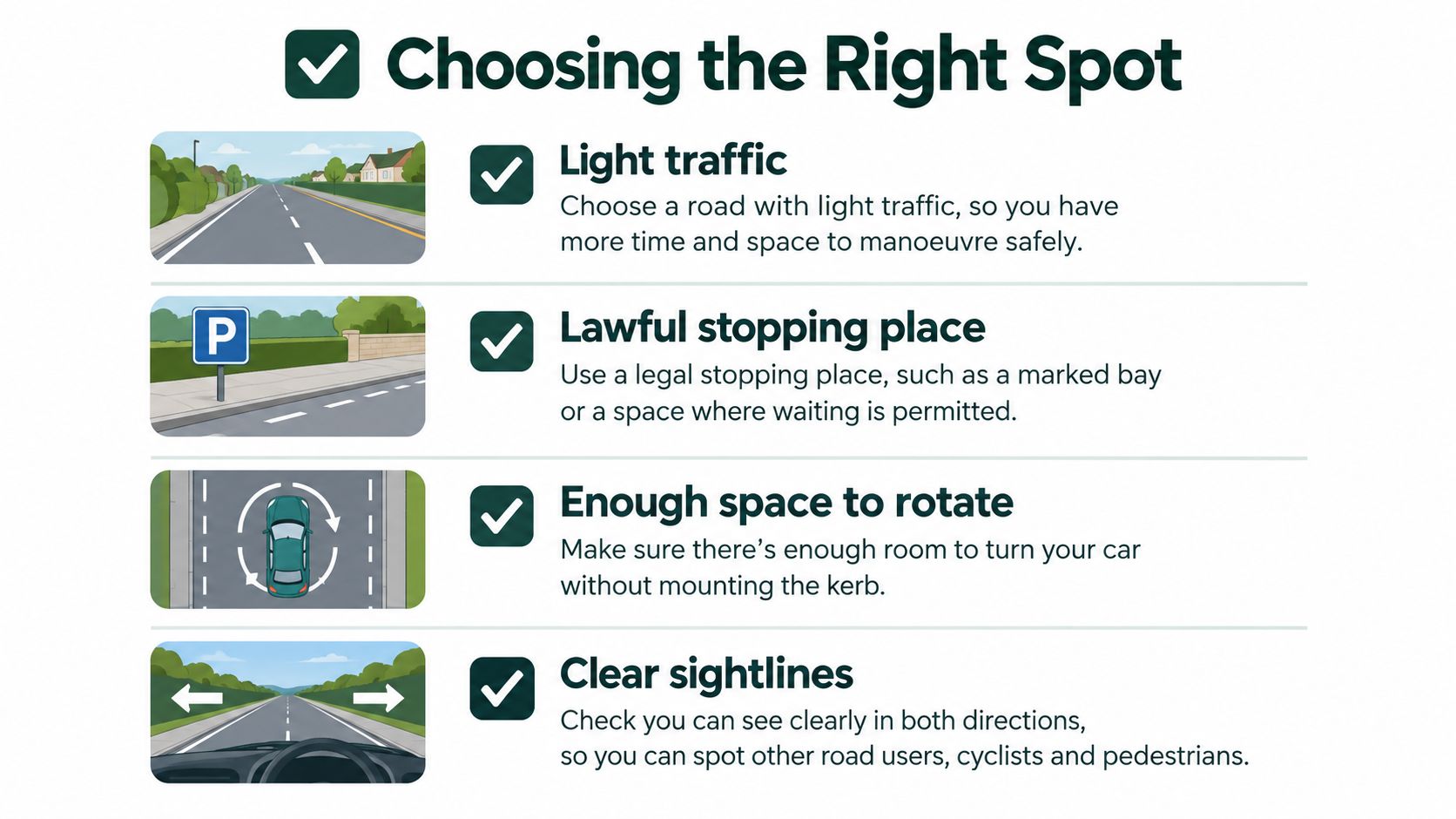
The road comes first. Before touching the clutch or moving the selector, decide whether the space gives you enough room to turn without climbing the kerb or obstructing people who have priority.
Look for a quiet, legal place to stop with good visibility in both directions. Avoid a bend, the crest of a hill, a road narrowed by parked cars, or a location where a pedestrian crossing or junction would make your position confusing. You need enough width to rotate the car with controlled steering, but you shouldn't assume that a familiar street is automatically suitable.
Run the setup as a deliberate routine:
- Check the mirrors. Know what's behind and beside you before changing direction or position.
- Check blind spots. Look over the relevant shoulders rather than relying only on glass.
- Assess the road ahead. Check the kerb, parked vehicles, driveways and any approaching users.
- Signal only if helpful. A signal should clarify your intention, not mislead someone into thinking you're turning into a side road.
- Position without obstructing. Keep the car controlled and leave approaching traffic a clear chance to respond.
The Highway Code principle is straightforward. Drivers should check mirrors before changing direction, signal where appropriate and wait for a safe gap rather than assuming others will yield. The initial scan is only the beginning, so build a fresh check into every pause and every change of direction.
Good observation at a junction uses the same habit of looking, assessing and acting rather than glancing automatically. The guidance in this observation at junctions lesson is useful because the same active scanning matters here.
If a roundabout is nearby, or you can safely reverse into a side road and drive out forwards, compare those options before committing. A turn in the road is a fallback manoeuvre, not a performance you need to demonstrate whenever the road is wide enough.
The Three Movements in a Manual Car
In a manual car, the sequence should feel like three calm movements separated by proper stops. You don't need to rush the steering or squeeze the whole manoeuvre into the smallest possible space.
The first movement
Select first gear and complete your all-round observation. When the road is clear, move forwards under clutch control and steer briskly towards the nearer kerb. Use a suitable amount of steering, but keep checking the front corner, the opposite side of the road and anything approaching from behind.
As the car nears the kerb, stop before the tyre touches it. Keep the wheels turned. If the road is cambered or you need extra security while stationary, apply the handbrake. The important point is that the car must be fully stationary before you select reverse.
Now repeat the observation routine. Check mirrors, blind spots and both directions. A vehicle that was distant during the first movement may now be close enough to affect your decision.
The reverse movement
Select reverse only when stationary. Steer in the opposite direction and reverse slowly towards the other side of the road. Look through the rear window, check both shoulders and monitor the kerb. Don't stare at one reference point for the whole movement. Your view needs to move because the car's position and the surrounding risk are changing.
Stop just short of the opposite kerb. Touching it isn't a target, and mounting it is a control problem. If your alignment isn't right, pause and make a safe correction rather than forcing the car into the final movement.
The final movement
Complete another all-round observation check before selecting first gear. When the road is clear, steer into the new direction and drive away smoothly. Straighten the steering as the car lines up, check your mirrors and regain normal road position.
A learner I've coached once stopped too early on the first movement, then tried to compensate by turning the wheel faster during reverse. The car wobbled, but the learner paused, checked again and adjusted with a small steering input. The result took an extra correction, yet it was safer and more controlled than trying to rescue the position at speed.
In a manual car, use the clutch to regulate the walking pace. Find the biting point, release the clutch gradually and avoid holding the pedal fully down while the car is rolling. Use the brake when needed, particularly on a slope, and never allow the car to roll while changing direction.
The full method depends on a suitable road, all-round observation, signals that don't mislead, low-speed clutch control, stopping before the kerb, selecting reverse only when stationary and repeating the observation routine. These are the principles set out in the DVSA assessment guidance.
Here's a visual reminder of the small control habits that make the sequence repeatable:
Doing It in an Automatic
An automatic removes clutch control, but it doesn't remove the need for precision. You still need the same setup, the same pauses and the same repeated observation. The difference is that the car may creep as soon as you select drive or reverse, so your brake control becomes central.
Use the brake to settle the car before each movement. In a confined space, some automatic candidates use the left foot on the brake and the right foot for the accelerator. DVSA guidance allows both feet while manoeuvring in confined spaces, but speed must remain properly adjusted without large throttle openings or heavy braking. Smoothness matters more than making the car move quickly.
Creep can be useful because it gives you a low-speed starting point. It becomes a problem if you allow the vehicle to roll towards the kerb before you've finished looking. Keep your foot ready over the brake, steer progressively and stop completely before changing from drive to reverse or reverse to drive.
On a hill, the parking brake can provide an extra layer of security while you pause and observe. It isn't a substitute for the foot brake or observation, and you still need to release it smoothly before moving.
Automatic control should feel deliberate. If the car starts moving faster than you can observe, stop and reset rather than trying to steer through the problem.
The same errors appear in both transmissions: turning too late, watching only one direction, selecting the next gear before stopping and allowing the car to approach the kerb too closely. Practise the timing of brake, steering and observation as one routine, not as separate actions.
The Faults Examiners Actually Mark
Historical DVSA data shows why control and observation deserve most of your practice time. In 2012, turn-in-the-road exercises were recorded 443,321 times without a fault, 133,552 times with a minor fault, 23,665 times with a serious fault and 559 times with a dangerous fault, representing about 73.8%, 22.2%, 3.9% and 0.09% respectively, as recorded in the government's DVSA information. These figures are historical, not a current national pass-rate statistic, and they exclude ADI Part 3 tests.
In practical terms, a minor fault is an imperfection that doesn't create immediate serious risk. One driving fault doesn't automatically fail a test. A serious or dangerous fault does, as does reaching 16 or more driving faults, according to the DVSA driving-test result guidance.
| Fault type | What it means | Typical example |
|---|---|---|
| No fault | The movement is controlled and observed safely. | You stop short of each kerb and rescan before moving. |
| Minor fault | A small lapse occurs without creating serious risk. | Your steering is untidy but the car remains safe and controlled. |
| Serious fault | The error creates significant risk or shows inadequate control. | You move without effective observation when another road user is affected. |
| Dangerous fault | Actual danger occurs during the manoeuvre. | You continue moving when a pedestrian is directly at risk. |
The DVSA's categories make the priorities clear. Control faults include kerb contact, over-steering, coasting and poor use of the pedals. Observation faults include missed mirrors, missed blind spots and failing to reassess after stopping.
The test itself changed after the government announced 2016 trials replacing the traditional turn in the road and left-reverse exercises with alternatives such as reversing into a parking bay, pulling up on the right and reverse parking. The marking principles did not disappear. Examiners still assess control, observation, positioning and consideration for other road users during the manoeuvres selected for the test.
For a plain-language explanation of how driving faults are classified, use this guide to driving-test faults.
Practice Drills That Build Real Consistency
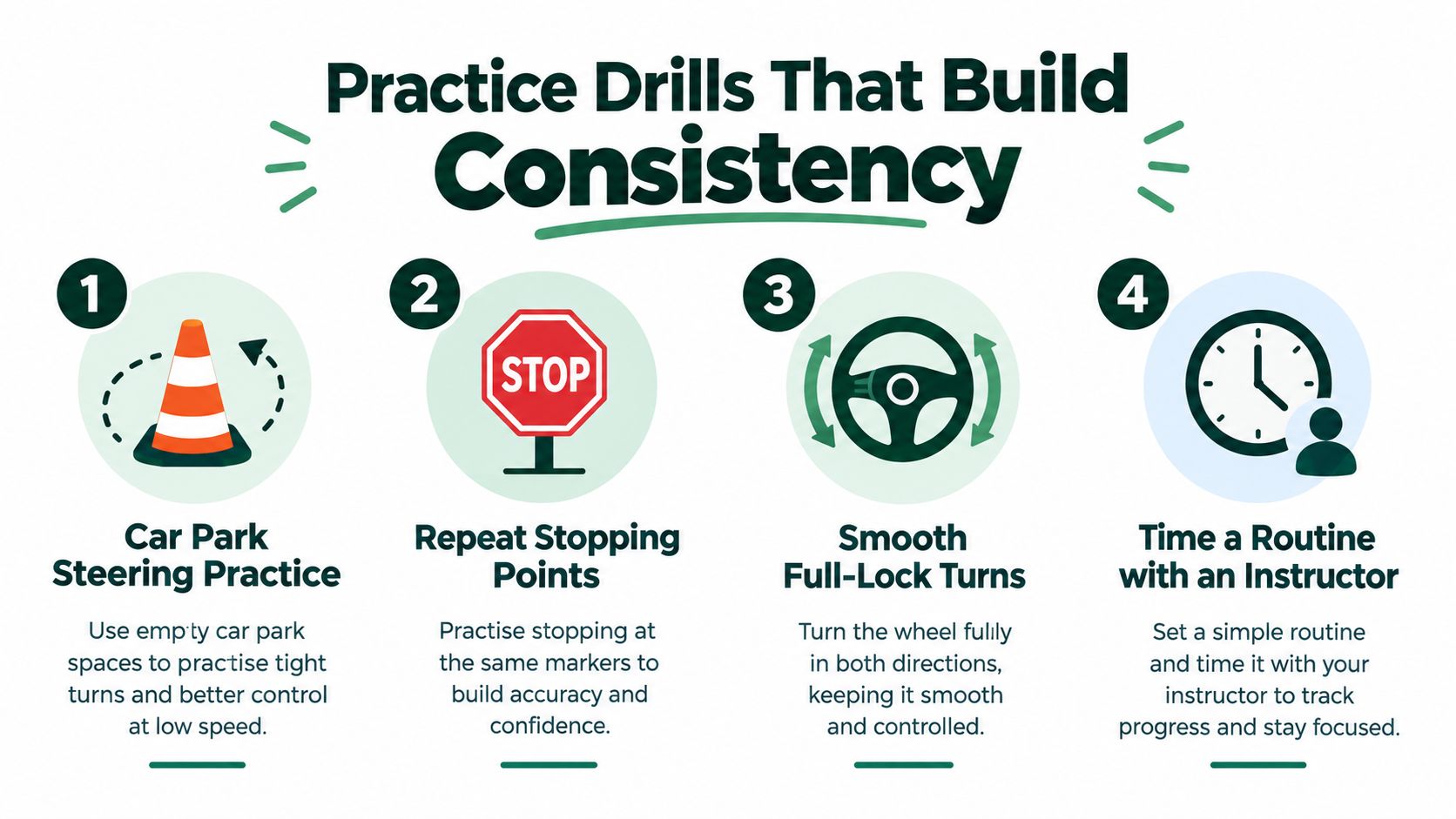
Start away from traffic. In a quiet car park, use suitable markers to represent the kerbs and practise stopping points without trying to make the car turn in the smallest space. This isolates steering and control before you add the pressure of real road users.
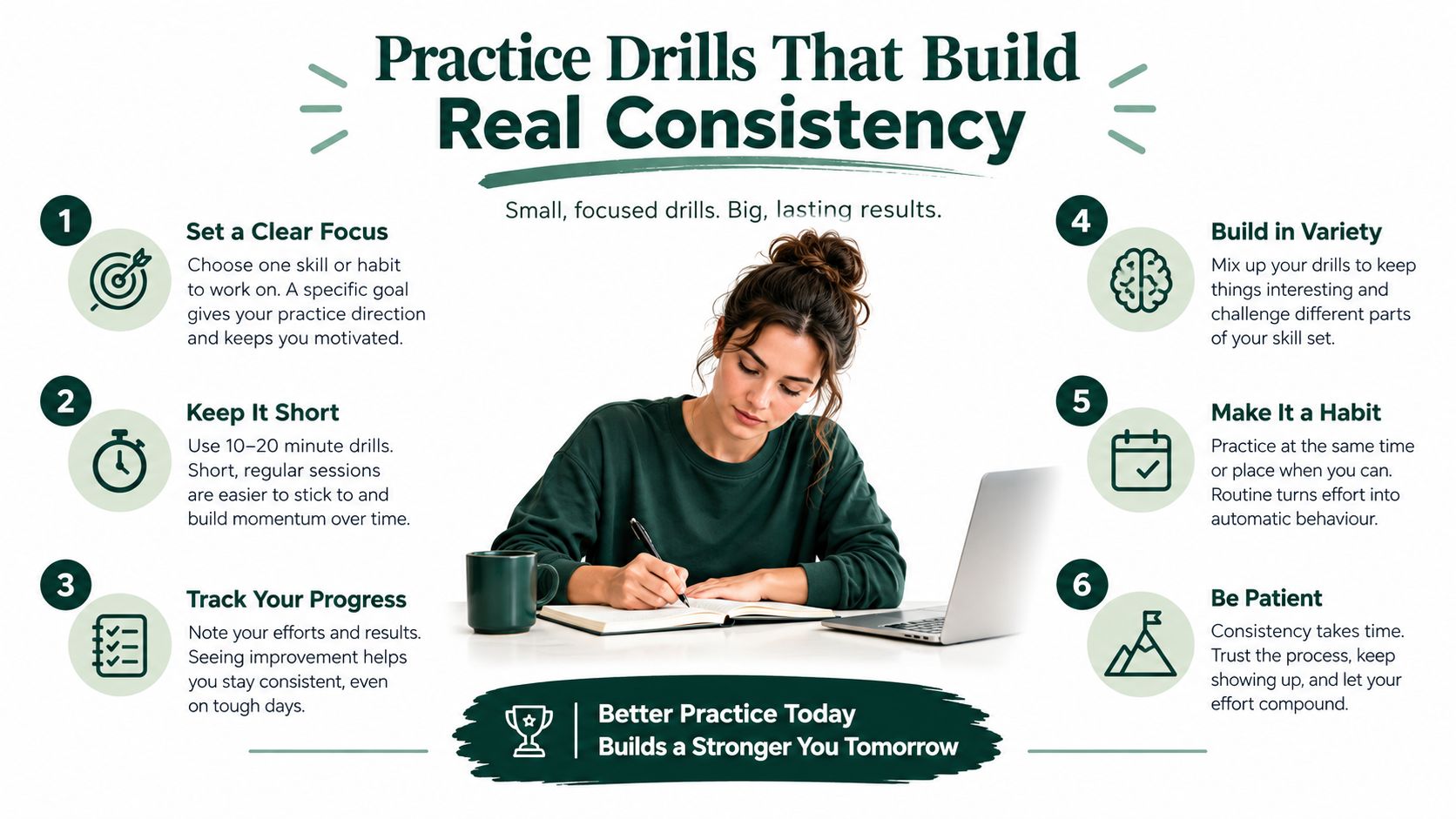
Use a progression that gives each practice run a purpose:
- Steering drill: Practise smooth full-lock turns and return the wheel without snatching.
- Stopping drill: Repeat the first and reverse movements, stopping before the markers every time.
- Observation drill: Say the checks aloud before each movement, including mirrors, shoulders, front and rear views.
- Road drill: Move to a quiet residential road with light traffic and reassess the location before starting.
- Mock-test drill: Ask an instructor to observe without prompting, then review control, observation and positioning afterwards.
If you mount the kerb halfway through, don't panic or jerk the wheel away. Stop safely, secure the car, check all around and reposition only when the next movement is safe. The DVSA specifically identifies over-steering and mounting the kerb, coasting with the clutch depressed, selecting the wrong gear and incorrect braking as common manoeuvring faults, as described in its ADI assessment guidance.
Score each attempt against four simple questions:
- Did the car avoid kerb contact?
- Did you repeat observation before every movement?
- Was the speed slow enough to remain fully controlled?
- Did you stop completely before selecting another gear?
A fourth point or an extra pause isn't automatically a failure. Forcing a poor position because you feel committed is the riskier choice. Practise the decision to stop as deliberately as the steering itself.
Troubleshooting When the Manoeuvre Goes Wrong
Most problems become manageable when you stop treating them as emergencies. The car can be stationary while you think, observe and decide.
If the car reaches the kerb
Stop before the tyre climbs it. Apply the foot brake, secure the car if necessary and look all around. If you've already mounted the kerb, don't reverse or drive away blindly. Reassess the space, reposition when safe and accept that a correction is preferable to continuing with poor control.
Remember: Stop first, then solve the position.
If a pedestrian approaches
A pedestrian has priority if your movement would affect their path. Stop and allow them to pass, keeping the car secure while you continue to observe. Don't assume that a person standing near the kerb has seen you, especially while you're reversing.
A similar rule applies to a cyclist, motorcyclist or approaching vehicle. Their position can change while you wait, so keep checking rather than treating the first gap as permanent.
Remember: Anyone entering your path gets time and space.
If the car stalls
A stall is a loss of engine drive, not a reason to rush. Apply the foot brake, secure the car, select neutral if needed and restart using your normal routine. Before moving again, repeat the observation cycle because the surrounding road may have changed during the pause.
The same applies if the car rolls. Stop it with the brake, regain control and only continue when the vehicle is secure. Guidance on dealing with a stall during a test is available in this explanation of stalling on your driving test.
Remember: A stationary car gives you time to recover.
If you run out of space
Don't force the final movement. An additional correction may be needed if the road is narrower than expected or your first steering input was late. Stop, observe, select the correct gear only when stationary and use another slow movement if the road remains suitable.
You should never use the kerb as a routine reference point or let the car roll while you change direction. Stopping fully protects your control and gives other road users a clear signal that you're waiting.
Remember: More movements are safer than one rushed movement.
If you feel pressured by traffic
Stop in a safe position and let approaching traffic pass when possible. Keep the car secure and continue checking mirrors and blind spots. A driver behind you may be impatient, but their impatience doesn't make an unsafe gap acceptable.
This is why the manoeuvre is best treated as a real-world road skill rather than a set piece. The classic three-point pattern still matters, but setup, controlled movements and recovery matter more than producing three perfectly tidy points.
Structured intensive or semi-intensive tuition, mock tests on local routes and consistent practice with an ADI can help you turn the routine into a reliable habit. Fast Track Driving Lessons matches learners with vetted local instructors and supports mock-test preparation, giving learners another route to organised practice.
You can master this manoeuvre. Keep the speed low, repeat the observation, stop before each gear change and choose safety over neatness whenever the space becomes uncertain.
Fast Track Driving Lessons offers manual and automatic tuition, intensive and semi-intensive courses, local DVSA-approved instructor matching and mock-test preparation. To practise turn-in-the-road control and observation with structured support, visit Fast Track Driving Lessons and find an option that suits your area and availability.
Written by Fast Track editorial team.