
This section brings together groups who may need more time, patience, or awareness from other drivers, including children, older pedestrians, disabled road users, and other drivers who are new, learning, or less experienced. It overlaps with the pedestrian and hierarchy sections but focuses specifically on adjusting your own driving behaviour rather than on crossing rules.
Theory test questions in this area tend to be attitude and hazard awareness based, asking you to identify the most considerate or safest response to a learner driver stalling, a disabled badge holder parking, or children near a school.
Children and school areas
Children can behave unpredictably and may not judge vehicle speed accurately, so extra caution near schools, playgrounds, and residential streets is expected, including reducing speed for signs, patrols, and 20mph zones. Never wave a child across the road, since your view of other traffic may be limited.
Older and disabled pedestrians
Older pedestrians may take longer to cross and may not hear or see an approaching vehicle as readily, so patience rather than close following or horn use is expected. Someone with a mobility impairment might use a wheelchair, a mobility scooter, or simply walk more slowly, and drivers should never assume a pedestrian will speed up to suit traffic flow.
Learners and newly qualified drivers
Other drivers showing L plates, or displaying a P plate after passing, may be slower to react, hesitate at junctions, or stall, and the expected response is patience rather than close following or overtaking impatiently. It's worth remembering you were, or will be, in that position yourself.
Blue badge holders and parking
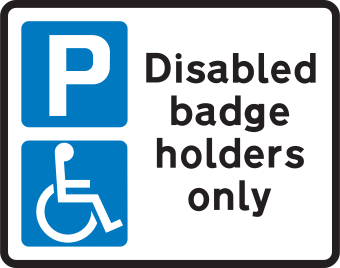
Disabled badge holders are permitted certain parking concessions, such as parking on yellow lines for a limited time in some circumstances or in designated disabled bays, and other drivers should respect these spaces rather than using them without a valid badge.
Frequently asked questions
What should I do if a learner driver stalls at a junction ahead of me?
Be patient, keep a safe following distance, and avoid sounding your horn or showing frustration, since this can increase their stress and the chance of another mistake. Everyone passes through this stage of driving.
Why does the Highway Code mention older pedestrians specifically?
Because they may take longer to cross the road or may not notice an approaching vehicle as quickly, so drivers are expected to allow extra time and avoid pressuring them by revving or edging forward.
Is it correct to wave a pedestrian across the road?
No, you shouldn't wave anyone across, including children, because it can create a false sense of safety while your view of other traffic may be restricted. Let people decide for themselves when it's safe to cross.
Can blue badge holders park on yellow lines?
In some circumstances, yes, for a limited time, though rules vary by location, so always check local signage and current guidance rather than assuming a blanket rule. This is one area where the Highway Code advises confirming specifics with local authorities.
What extra care is expected near schools?
Reduce speed, watch for signs and crossing patrols, and be ready for children to appear suddenly from between parked cars. Many school zones also have specific 20mph limits during certain hours, which you must observe.