

Motorways operate under a distinct set of rules because of their higher speeds, one-way traffic flow, and specific restrictions on who can use them, and this section of the Highway Code, roughly rules 253 to 273, covers joining and leaving, lane discipline, and how smart motorways work. Learner drivers aren't permitted to practise on motorways at all unless accompanied by an approved instructor in a dual-control car, which is a relatively recent change.
Motorway questions are common in the theory test's safety margins and vehicle handling categories, and smart motorway rules in particular catch learners out since the format varies between different sections of the network.
Joining and leaving a motorway
When joining from a slip road, use the acceleration lane to match your speed to the traffic already on the motorway rather than forcing your way in at a much lower speed. When leaving, move into the left-hand lane in good time and reduce your speed on the slip road itself, not while still on the main carriageway.
Lane discipline on a motorway
Keep to the left-hand lane unless overtaking, and don't remain in a middle or right-hand lane once you've passed slower traffic. The right-hand lane is for overtaking only, not for cruising, and lorries and other large vehicles may be restricted from using the outermost lane on a three-or-more-lane motorway.
Smart motorways
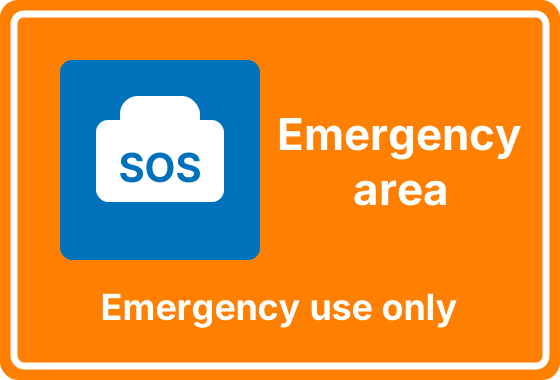
On some motorways, the hard shoulder is used as a running lane either permanently or at busy times, indicated by overhead signs, and red X signs mean a lane is closed and must not be used under any circumstances. Where there's no permanent hard shoulder, emergency refuge areas are provided at intervals and should be used if you need to stop.
- A red X over a lane means it's closed — driving in it is illegal and dangerous.
- Variable speed limits shown on overhead gantries are legally enforceable, not just advisory.
- Emergency refuge areas are marked and should be your target if you need to stop on a smart motorway without a hard shoulder.
Breaking down on a motorway
If you break down, try to reach the hard shoulder or an emergency refuge area, put your hazard lights on, and exit the vehicle from the passenger side away from traffic if it's safe to do so, standing behind a barrier where possible. Contact for help using a roadside emergency phone or your mobile if you have reliable signal, giving your exact location.
Frequently asked questions
Can learner drivers use motorways?
Yes, but only when accompanied by an approved driving instructor in a car fitted with dual controls, following a change to the rules some years ago. Learners cannot practise on motorways unsupervised or in an ordinary lesson car without dual controls.
What does a red X above a motorway lane mean?
It means the lane is closed, usually due to an incident or roadworks ahead, and you must not drive in it. Ignoring a red X is both illegal and puts you at serious risk from oncoming hazards or recovery vehicles.
Which lane should I normally drive in on a motorway?
The left-hand lane, moving out only to overtake and returning left again once it's safe. The right-hand lane is for overtaking, not for sustained driving, even if traffic feels lighter there.
What should I do if I break down on a smart motorway without a hard shoulder?
Try to reach the nearest emergency refuge area, put your hazard lights on, and if it's safe, exit on the passenger side away from traffic. If you can't reach a refuge area, stay in the car with your seatbelt on and hazards flashing, and contact for help.
Are variable speed limits on motorway gantries compulsory?
Yes, when shown within a red circle on an overhead sign, they are legally enforceable speed limits, not just suggestions. This is a common theory test point, since some drivers assume they're advisory.