
Junctions and roundabouts are where most of the genuine decision-making in driving happens, and it's one of the most heavily examined areas in both the practical and theory tests. The Highway Code sets out how to approach different junction types, who has priority, and how to choose the correct lane on a roundabout well before you reach it.
In mock tests, this area produces some of the highest error rates, particularly around mini-roundabouts, staggered junctions, and understanding that a roundabout is still subject to the standard give-way-to-the-right rule unless signs say otherwise.
Approaching a junction
Well before reaching any junction, you should be checking mirrors, choosing the correct lane and position, and matching your speed to what you can see, since junctions are where restricted visibility and multiple road users combine. A give way or stop sign has a specific legal meaning: give way means slow and only proceed when it's clear, while stop means come to a complete halt regardless of how clear the road looks.

Roundabout basics
The general rule on a standard roundabout is to give way to traffic already on the roundabout approaching from your right, unless road markings or signs direct otherwise. Choose your lane based on the exit you plan to take: broadly, left lane for the first exit or straight on at a simple roundabout, right lane if you're going more than halfway round, though larger or multi-lane roundabouts often have specific lane markings you should follow instead of this general rule.
- Signal left just after passing the exit before the one you want.
- Mini-roundabouts still require you to give way to the right, even though the island is small or flat.
- Some roundabouts have separate traffic-light phases that override the ordinary give-way rule.
Staggered and multiple junctions
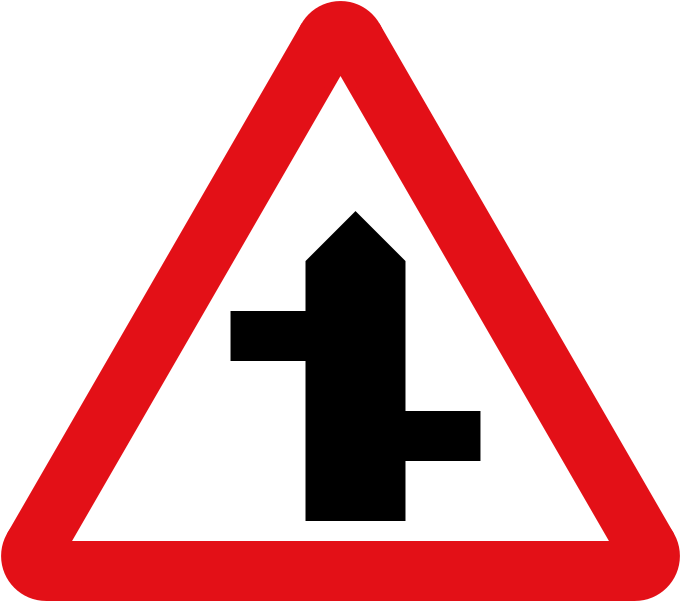
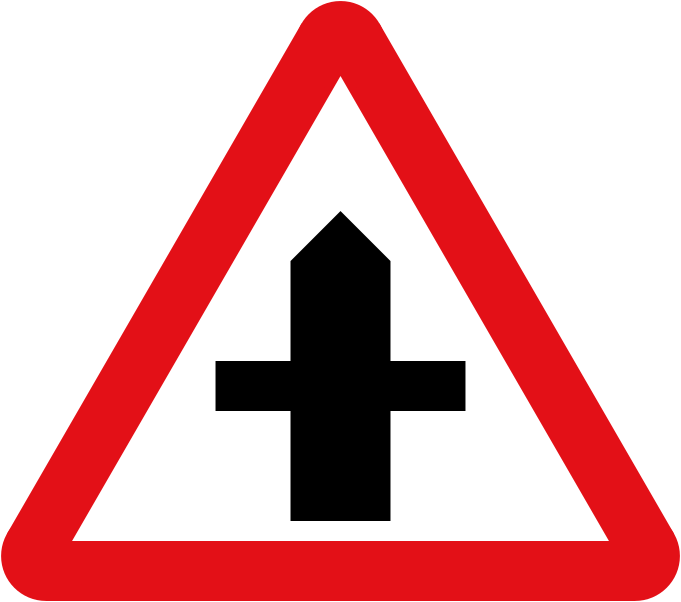
A staggered junction, where two side roads meet the main road slightly offset from each other, requires careful reading of signs and markings to work out which give-way lines apply to your movement. Don't assume it behaves like a simple crossroads just because it looks similar at a glance.
Common practical and theory mistakes
The most frequent examiner and mock-test faults in this area are emerging without a proper look, misjudging the speed of traffic on a roundabout, and choosing the wrong lane too late, forcing a last-second lane change across the roundabout. Reading the road and any advance direction signs well before you arrive avoids most of these.
Frequently asked questions
Who has priority on a roundabout?
Generally, traffic already on the roundabout approaching from your right has priority, and you must give way to it before joining. Some larger roundabouts use additional signs, markings, or traffic lights that can override this general rule, so always check what's signed.
Do mini-roundabouts follow the same priority rules?
Yes, even though the island is small and sometimes just a painted circle, you still give way to traffic approaching from the right, exactly as on a full-sized roundabout. Treat it with the same care rather than assuming it's less formal.
What is the difference between a give way sign and a stop sign?
A give way sign means you should slow down and only proceed if the road is clear, without necessarily stopping. A stop sign is a legal requirement to come to a complete stop, even if the junction appears clear.
How do I choose the correct lane on a roundabout?
As a general guide, use the left lane for the first exit or straight on, and the right lane if you're going more than halfway around, though you should always follow road markings where they're provided, since they can differ from this general rule.
What is a staggered junction?
It's where two side roads meet a main road at slightly different points rather than directly opposite each other, effectively forming two separate junctions close together. You need to check give-way markings carefully rather than treating it like a simple crossroads.