
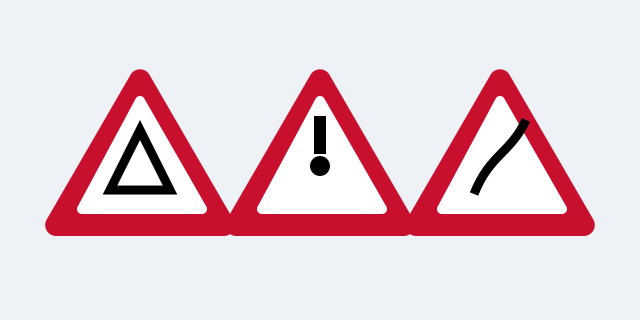
This section covers two related but distinct situations: your own vehicle breaking down, and coming across a collision or incident involving other road users. Both require calm, methodical actions, and the Highway Code sets out a fairly specific sequence for each, which the theory test often examines through scenario-based questions.
This is one of the areas where learners guess rather than know the answer, because it's rarely covered in lessons focused on vehicle control. Learning the sequence properly avoids losing marks on what are actually quite formulaic questions.
If your vehicle breaks down on an ordinary road
Try to move off the road if possible, switch on hazard lights, and use a warning triangle if you have one, positioned a reasonable distance behind the vehicle on the same side of the road, but never on a motorway. If you must stay near a moving carriageway, keep passengers away from the vehicle and traffic where it's safer to do so.
Breaking down on a motorway
This is covered in more detail in the motorways section, but the key points are to aim for the hard shoulder or an emergency refuge area, use hazard lights, and get yourself and passengers behind a barrier if possible before calling for help.
What to do at the scene of an incident
If you're first on the scene of a collision, the priorities are to warn other traffic, for example with hazard lights and a warning triangle placed well back, switch off engines where it's safe to approach a vehicle, and call the emergency services giving an accurate location. Don't move injured people unless they're in immediate danger, such as from fire, since incorrect movement can worsen injuries.
- Make the area safe first — warn oncoming traffic before approaching casualties.
- Call 999 or 112 and give exact location details, including motorway markers if relevant.
- Do not remove a motorcyclist's helmet unless it's essential to keep them breathing.
- Stay calm and keep casualties warm and reassured until help arrives if it's safe to remain with them.
Reporting requirements after a collision
If a collision causes injury, damage, or involves another person's vehicle or property, you must stop and provide your details, or report the incident to the police within a set time if you weren't able to exchange details at the scene. Failing to do so is a legal offence.
Frequently asked questions
What should I do first if my car breaks down on an ordinary road?
Try to get it off the road if you can do so safely, switch on your hazard lights, and use a warning triangle placed a sensible distance behind the vehicle if you have one. Keep yourself and any passengers away from moving traffic.
Should I move an injured person after a collision?
No, not unless they're in immediate danger, such as from fire or further traffic, since moving them incorrectly can make injuries worse. Keep them warm, reassured, and still until trained help arrives.
Is it correct to remove a motorcyclist's helmet after a crash?
Only if it's essential to help them breathe, since removing it unnecessarily can risk further injury, particularly to the neck or spine. Leave it in place otherwise and wait for paramedics.
What must I do if I'm involved in a collision that damages another vehicle?
You must stop and exchange details with anyone involved, or if that's not possible at the scene, report the incident to the police within the legally required time frame. Failing to stop or report is a criminal offence.
Can I use a warning triangle on a motorway?
No, warning triangles must not be used on a motorway because placing or retrieving one is too dangerous at motorway speeds. Rely on hazard lights and reaching a refuge area instead.