
The short version
- The Highway Code is the foundation of the theory test, not just background reading.
- Read it in sections and link each rule to a real driving situation you can picture.
- Road signs and rules for junctions, motorways and vulnerable road users are common weak areas.
- Use official DVSA practice questions alongside the Highway Code, not instead of it.
- Revisit the Highway Code again once you start driving lessons, since real roads make the rules click.
Why the Highway Code matters more than question banks
Some learners try to pass the theory test by memorising the answers to practice questions without understanding why those answers are correct. This can work for the exact questions practised, but it falls apart when a real test question is worded slightly differently, or when the hazard perception clips ask you to apply judgement rather than recall.
The Highway Code is the actual source of the rules being tested. If you understand the reasoning behind a rule, such as why you give way to a pedestrian who has started to cross at a junction, you can answer any version of that question, not just the one you have seen before.

Reading it in manageable sections
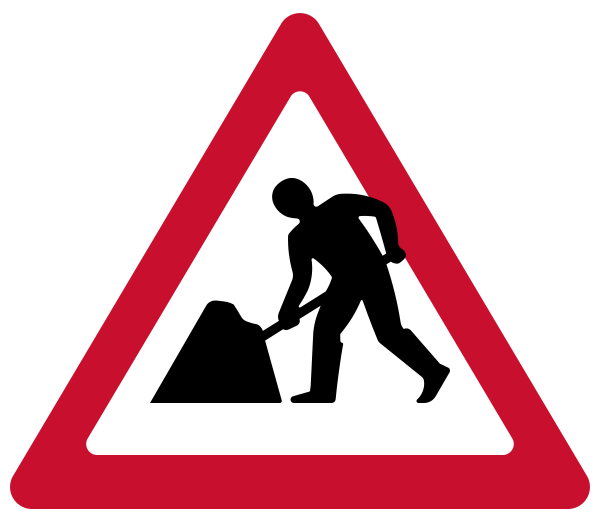
The Highway Code is long, and trying to read it cover to cover in one sitting rarely sticks. Instead, work through it in themed sections: rules for pedestrians, rules for cyclists and motorcyclists, general rules for drivers, road signs, and rules for specific situations such as motorways, level crossings and roadworks.
After each section, close the book and try to explain the key points out loud or write a short summary from memory. If you cannot summarise a section, that is a sign you need to reread it more slowly rather than moving on.
- Rules for pedestrians, cyclists, motorcyclists and horse riders.
- General rules for all drivers and riders.
- Using the road: junctions, roundabouts, overtaking, and lane discipline.
- Road signs, signals and road markings.
- Specific situations: motorways, breakdowns, level crossings and tunnels.
Linking rules to situations you can picture
The Highway Code is easier to remember when you connect a rule to a scene you can picture rather than a rule in isolation. Instead of memorising “you must not overtake at a pedestrian crossing”, picture yourself approaching a zebra crossing with a car stopped ahead, and ask what could go wrong if you pulled out to pass.
This is also useful preparation for hazard perception, since that section is testing exactly this kind of situational thinking rather than pure recall. If you have already pictured why a rule exists, you are more likely to spot the related hazard developing on screen.

Road signs need separate attention
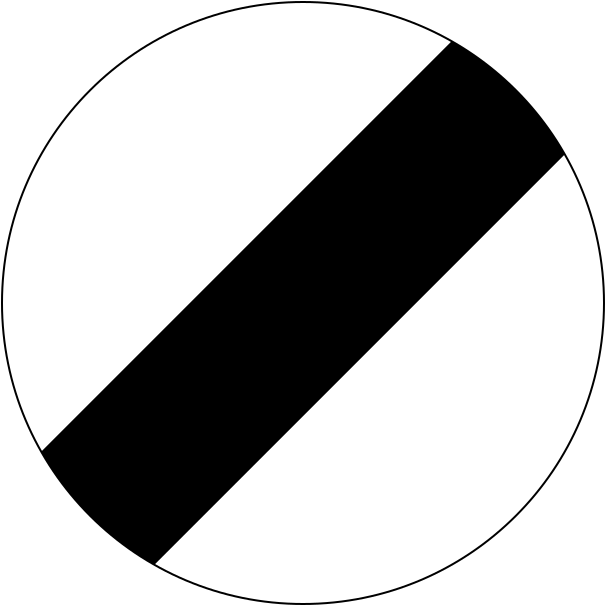
Road signs are a distinct part of the Highway Code and a common area where learners lose marks. Signs are grouped by shape and colour for a reason: circular signs generally give orders, triangular signs generally warn, and rectangular signs generally inform or direct.
Rather than trying to memorise every sign individually, learn the shape and colour rules first, then focus on signs that look similar but mean different things, such as give way versus stop, or the various speed limit and national speed limit signs. These are the ones that catch people out under exam pressure.
Common weak spots learners revise less
Certain sections of the Highway Code tend to get less attention because they cover situations learners have not yet experienced, such as motorway driving, towing, or driving in adverse weather. These sections still appear regularly in the theory test question bank, so do not skip them just because you have not driven on a motorway yet.
Rules around vulnerable road users, including cyclists, horse riders and pedestrians with prams or mobility aids, are also frequently tested and frequently under-revised. Read these sections with the same attention as the sections on general driving rules.
- Motorway rules, including lane discipline and joining or leaving.
- Rules for towing a trailer or caravan.
- Driving in adverse weather, including reduced visibility and stopping distances.
- Rules protecting cyclists, motorcyclists, horse riders and pedestrians.
- Documents, insurance and vehicle condition requirements.
Combining the Highway Code with practice questions
Once you have read a section of the Highway Code, test yourself using official DVSA-style practice questions on that same topic. This checks whether your understanding actually transfers into answering questions correctly under test-like conditions.
If you get a question wrong, go back to the relevant part of the Highway Code and reread it, rather than just noting the correct answer and moving on. The aim is to fix the gap in understanding, not just to memorise that one answer.
- 1Read one themed section of the Highway Code.
- 2Summarise the key rules from memory in your own words.
- 3Answer official-style practice questions on that topic.
- 4For any wrong answers, reread the relevant Highway Code section.
- 5Repeat with the next section rather than trying to cover everything in one go.
Revisiting the Highway Code once lessons start
Many learners find the Highway Code makes far more sense once they are actually driving. Seeing a real give-way line, a real cyclist filtering past parked cars, or a real motorway sliproad turns an abstract rule into something concrete.
It is worth rereading key sections of the Highway Code partway through your driving lessons, not just at the very start. Your instructor's explanations in the car and the Highway Code's written rules should reinforce each other, and rereading with real experience behind you often clears up points that did not make sense on first reading.
Where to practise for free
Fast Track Driving Lessons offers free theory test practice at /theory, which is a useful way to test your Highway Code knowledge against realistic multiple-choice and hazard perception style questions before you book your official test.
Always use the current edition of the Highway Code and check GOV.UK for any updates to rules, since the code is reviewed periodically and the theory test question bank is updated to reflect it.
Common questions
Do I need to memorise the whole Highway Code word for word?
No. You need to understand the rules and the reasoning behind them well enough to apply them to different situations, rather than reciting exact wording.
Is the Highway Code enough on its own to pass the theory test?
It is the essential foundation, but combining it with official DVSA-style practice questions and hazard perception practice gives a more complete preparation.
Which parts of the Highway Code do learners often neglect?
Motorway rules, towing, adverse weather driving, and rules protecting cyclists, horse riders and pedestrians are commonly under-revised, despite appearing regularly in the test.
How should I learn road signs?
Start by learning the shape and colour rules, such as circular signs giving orders and triangular signs warning of hazards, then focus on signs that look similar but have different meanings.
Should I revise the Highway Code before or during driving lessons?
Both. Early revision helps you book your theory test, but rereading key sections once you are driving often helps the rules make more practical sense.
Where can I find the official Highway Code?
The current Highway Code is published on GOV.UK. Always use the current edition, since rules are reviewed and updated periodically.
Can I practise theory test style questions for free?
Yes, Fast Track Driving Lessons offers free theory test practice at /theory, covering multiple-choice and hazard perception style questions.
Practise theory free
Reading about it only gets you so far. Our instructors drill this with you in the car, on the roads around your test centre.