
The short version
- Examiners use the same DVSA standard at every test time.
- An 8am test often means school-run and commuter pressure.
- Weekend tests can be quieter but not always simpler.
- Early tests may suit confident learners who drive well from cold.
- Choose a time based on your driving habits, not rumours.
Are early, weekend and 8am driving tests actually easier?
No, not in the way many learners hope. Early, weekend and 8am driving tests are not easier because the examiner is more relaxed, the route is shorter, or the marking is kinder. DVSA examiners assess the same skills and use the same fault categories whenever your test starts. A serious fault at 8am is still a serious fault at 11.11am, and a dangerous fault on a quiet Saturday is still dangerous.
What does change is the driving environment. An 8am test can bring commuter traffic, school-run pedestrians, delivery vehicles, buses and cyclists. A weekend test may have lighter town-centre traffic but more parked cars, shoppers, unfamiliar leisure traffic and people crossing between vehicles. An early test may mean lower sun, damp roads, misted windows and a learner who has not fully woken up yet.
As an instructor, I do not tell pupils to chase a supposedly easy time. I ask: can you drive safely when other road users are impatient, when the road is busy, and when the sat nav or examiner takes you somewhere you were not expecting? If the answer is yes, the time matters far less. If the answer is no, a different test slot will not hide that for long.
What examiners mark, whatever time you take the test
The practical test is about safe, legal and independent driving. The examiner is not looking for a perfect drive with no tiny imperfections. They are looking for whether you can control the car, make safe decisions, observe properly, respond to signs and road markings, and share the road with others without causing risk. The time of day may change the situations you meet, but not the standard.
The faults that cost learners are often ordinary mistakes made under pressure. I see pupils drive nicely for 35 minutes, then lose the test because they rush a roundabout gap, fail to check a blind spot before moving away, drift over a lane marking, or react late to a change of speed limit. At 8am, these faults can appear faster because the road is busier and other drivers are less patient.
This article is general guidance, not legal advice. For the rules themselves, use the Highway Code and GOV.UK as the primary sources. Highway Code Rule 160 is especially relevant: once moving, you should keep to the left unless road signs or markings indicate otherwise, keep well within lane markings, and be aware of other road users.
- Driving faults: less serious errors that do not create significant risk on their own.
- Serious faults: errors that could be dangerous, even if nobody had to take avoiding action.
- Dangerous faults: errors that involve actual danger to you, the examiner, another road user or property.
- Repeated faults: several similar driving faults can become serious if they show a pattern.
- Examiner intervention: verbal or physical help is usually marked seriously, depending on the situation.
8am driving tests: the real pros and cons
An 8am driving test sounds attractive because you can get it done early and avoid spending the whole day worrying. For some learners that is a genuine advantage. If you are alert in the morning and you have practised in commuter traffic, an 8am slot can feel normal. You may also prefer taking the test before work, college or other commitments crowd your head.
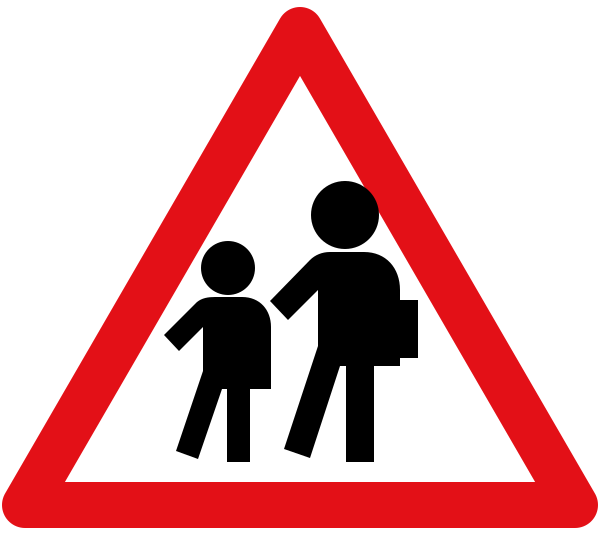
The downside is that 8am is often one of the most demanding times to drive. In many towns you will meet school traffic, parents stopping in awkward places, children crossing between parked cars, cyclists filtering past queues, buses pulling in and out, and drivers trying to get to work. None of that is unfair, but it gives you less thinking time. Planning, mirrors and speed control have to be sharp from the first junction.
The specific fault I see around 8am is poor anticipation near schools and busier residential roads. A learner keeps the speed legal but not suitable, gets too close to parked cars, then reacts late when a door opens or a pedestrian appears. The examiner is not impressed by the speedometer showing 28mph if the safe speed for that street was clearly lower.
- Good for: morning people who are used to busy local roads.
- Good for: learners who want less waiting and fewer hours to overthink.
- Risky for: pupils who need 20 minutes to settle before they drive well.
- Risky for: anyone who has avoided school-run practice.
- Watch for: bus lanes, yellow boxes, cyclists, pedestrian crossings and keep-clear markings.
Early driving tests before the rush: calm roads, cold starts
Very early test slots, where available, can feel calmer than the main commuter period. You may find fewer parked delivery vans, fewer pedestrians and less general traffic. That can help if your main weakness is feeling boxed in by other vehicles. However, a quieter road does not automatically mean an easier test. It can simply expose different weaknesses, such as speed choice, lane discipline and reading signs without a traffic flow to follow.
Early tests also magnify your first five minutes. Learners often make avoidable mistakes before they have settled: pulling away with a misted rear window, forgetting dipped headlights in poor light, not adjusting mirrors properly after a last-minute seat change, or driving too quickly on cold, damp tyres. If you book early, your routine before the test matters as much as the drive itself.
Highway Code Rule 226 says you must use headlights when visibility is seriously reduced, generally when you cannot see for more than 100 metres. In winter or heavy rain, that may affect an early test. It is the sort of simple decision that shows the examiner you are thinking like a driver, not just trying to complete a route.
- 1Arrive early enough to use the toilet, sort documents and breathe before the drive.
- 2Demist all windows properly before leaving the car park.
- 3Check mirrors, seat, head restraint and steering position without rushing.
- 4Use dipped headlights when conditions need them, not just when it is dark.
- 5Drive the first road as carefully as the last one, especially near parked cars and junctions.
Weekend driving tests: quieter does not mean simpler
Weekend driving tests can be a good choice, but they are often misunderstood. Some test centres run weekend tests when DVSA staffing allows, and availability varies. GOV.UK lists the car driving test fee as £62 on weekdays and £75 for evenings, weekends and bank holidays, although fees can change, so check the official booking page before paying.
A Saturday or Sunday test may remove the school run and some commuter pressure, but it can bring different hazards. Shopping areas may be busier. Retail parks can be awkward. Families may cross roads unpredictably. Drivers looking for parking may stop suddenly. On rural or faster roads, leisure drivers, cyclists, horse riders and motorcyclists may be more common, especially in good weather.
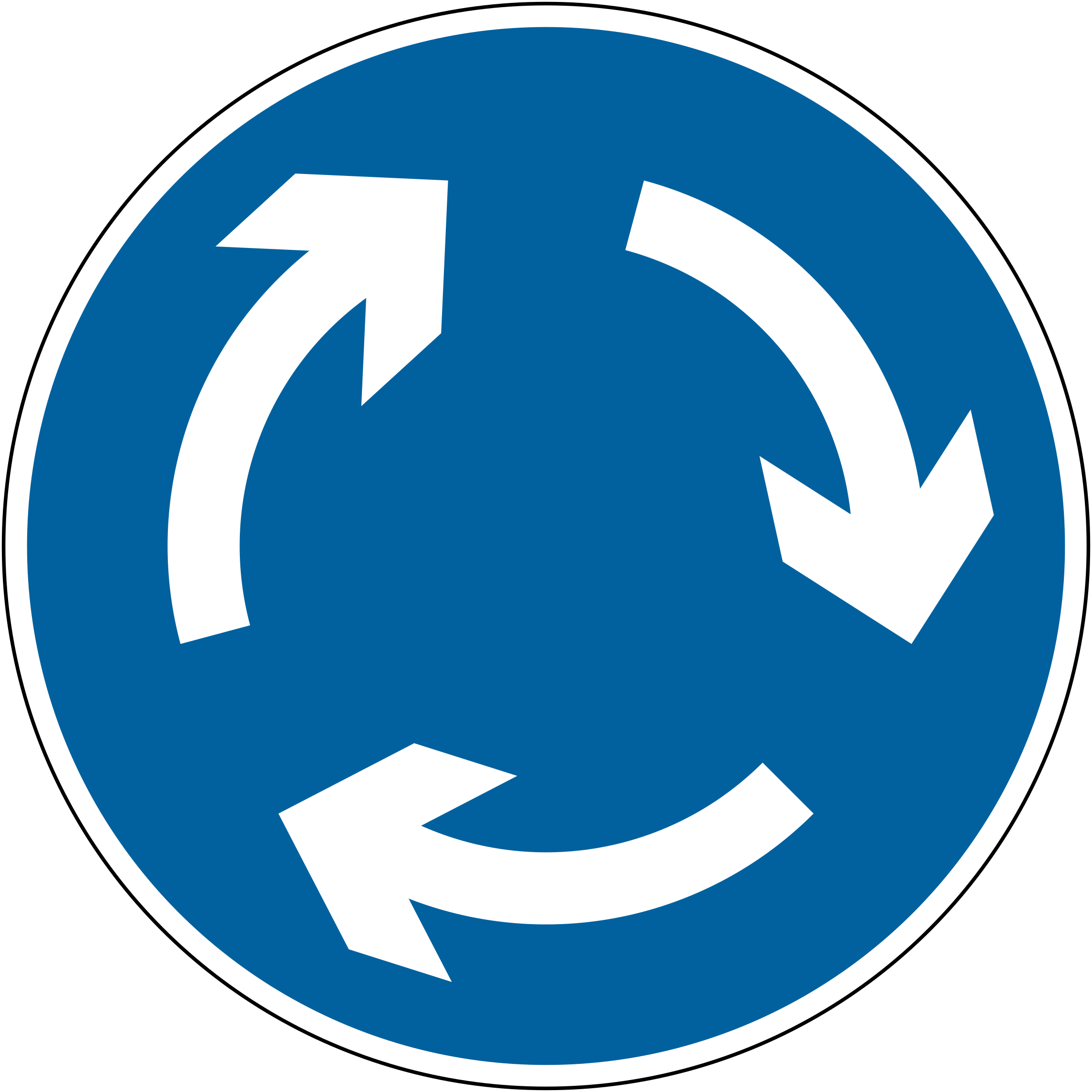
I have seen learners fail on weekends because they relaxed too much. They expected empty roads, then treated a mini-roundabout casually, missed a pedestrian waiting at a zebra crossing, or swung wide round parked cars without checking the right mirror. The examiner marks the same outcome: did your decision create risk or make another road user change speed or direction?

- Expect more activity near supermarkets, leisure centres and high streets.
- Do not assume bus lanes are inactive: read the signs and times.
- Watch car park entrances where drivers may brake or turn without much warning.
- Give cyclists and horse riders enough room, following Highway Code Rule 163.
- Keep your normal mirror routines even when the road looks quiet.
How traffic conditions can create different test faults
The same pupil can look excellent at 10am and untidy at 8am, not because they have forgotten how to drive, but because the workload changes. More traffic means more observations, more planning and more decisions per minute. If your routines are not automatic, you start dropping pieces: mirror checks become late, gear changes get rushed, and junction approaches become reactive rather than planned.
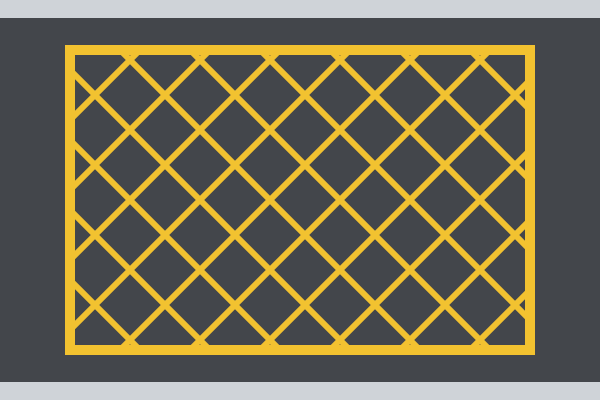
Examiners do not mark you down for being in traffic. Sitting in a queue safely is fine. What they mark is how you manage the queue: do you block a side road, stop on a crossing, roll too close to the vehicle in front, ignore cyclists filtering, or enter a yellow box junction when your exit is not clear? Highway Code Rule 174 covers box junctions: you must not enter until your exit road or lane is clear, except when turning right and prevented from doing so by oncoming traffic or other vehicles waiting to turn right.
Busy conditions also test your judgement at roundabouts. The common serious fault is either taking a gap that is too small or hesitating so long that you confuse following traffic, then suddenly going. Good driving is not about being bold or timid. It is about taking a safe, clear opportunity and showing others what you intend with position, speed and signals.
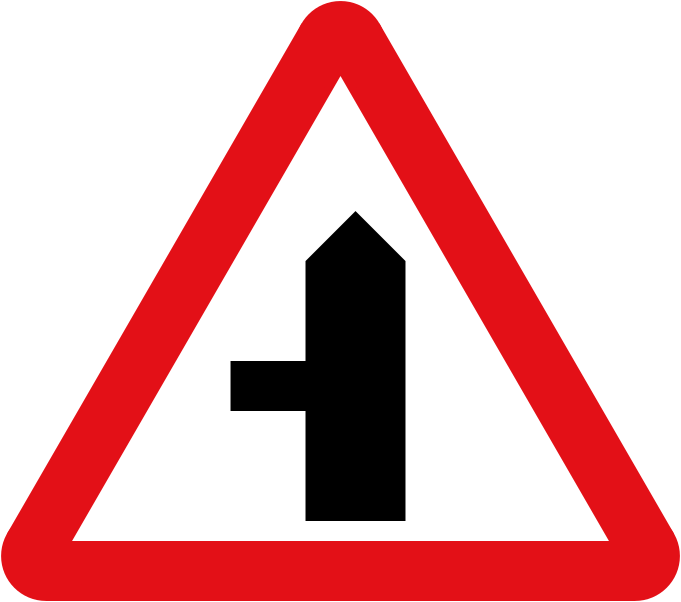
- 8am fault: rushing out of junctions because a driver behind is pressuring you.
- Weekend fault: missing pedestrians in shopping areas because traffic feels light.
- Early fault: failing to demist windows or use lights in poor visibility.
- Quiet-road fault: drifting above the speed limit because there is nobody to follow.
- Busy-road fault: checking mirrors too late before changing lanes or passing obstructions.
How to choose the best test time for you
The best test time is the one that matches your proven driving, not your wishful thinking. If you only ever practise at 2pm on quiet roads, an 8am test is a gamble. If you always drive well in the morning but get tired and irritable later, an early slot may suit you. If you work shifts or have college, consider when your concentration is genuinely strongest.
Ask your instructor for a blunt answer. I often tell learners that their driving is test-standard, but only in certain conditions. That is not an insult. It is useful information. You want to know whether your weakness is roundabouts under pressure, meeting traffic in narrow streets, lane discipline in town, or independent driving when the sat nav gives late-looking instructions.
Do not keep moving your test just because a friend said one time is easier. Test readiness is not proved by a calendar slot. It is proved by repeatedly driving safely on unfamiliar roads, handling mistakes without panicking, and needing very little prompting.
- 1List the times of day you have practised in the last month.
- 2Identify the conditions you avoid, such as rain, rush hour, darkness or busy town centres.
- 3Book a lesson at the same time as your intended test slot.
- 4Ask your instructor to run a mock test with minimal help.
- 5Review the serious-risk moments, not just the final result.
- 6Choose the slot where you can drive consistently, not just comfortably.
Practical preparation for an early, weekend or 8am test
Your preparation should make the test time feel ordinary. If you have an 8am test, do at least some lessons starting around that time. Practise approaching schools, bus routes, multi-lane roundabouts and narrow residential streets when they are actually busy. If you have a weekend test, practise around retail areas and leisure traffic rather than only quiet estates.
On the day, keep the warm-up simple. You do not need to cram every manoeuvre in the hour before your test. In fact, I have seen learners unsettle themselves by trying to fix everything at the last minute. A good warm-up checks the basics: moving away, stopping, normal driving, one or two manoeuvre reminders, and calming your breathing.
Bring your UK photocard driving licence. GOV.UK states you must take your licence to your driving test, and your test may be cancelled without a refund if you do not. Official requirements can change, so check your booking confirmation and GOV.UK before test day.
- Night before: fuel the car if using your own and check insurance, L-plates and an extra interior mirror.
- Morning of test: eat something light and leave enough time for traffic.
- Warm-up drive: focus on smooth control and observations, not last-minute perfection.
- At the centre: listen carefully to the examiner's instructions and ask if you do not understand.
- During the test: if you make a mistake, correct it safely and carry on.
Common questions
Is an 8am driving test a bad idea for nervous learners?
Not automatically, but it can be a poor choice if nerves make you slow to settle. At 8am you may face heavier traffic and quicker decisions straight away. If you are nervous, practise at that time first and see whether your driving stays safe without lots of help.
Are driving examiners more lenient early in the morning?
No. DVSA examiners use the same marking system throughout the day. They may be perfectly friendly, but they cannot ignore a serious or dangerous fault because it is early, quiet or your first test.
Are weekend driving tests worth the extra fee?
They can be worth it if the timing suits your concentration, work or college commitments, and the local weekend traffic suits your experience. GOV.UK lists a higher fee for evenings, weekends and bank holidays, but fees can change. Do not pay extra purely because you think it guarantees an easier route.
What is the easiest time of day to take a driving test in the UK?
There is no official easiest time, and DVSA does not publish a reliable rule saying one slot is easier than another. Mid-morning or early afternoon may feel calmer in some areas, but local roads vary. Your easiest time is the one you have practised and can handle consistently.
Can I change my driving test time after booking?
Usually you can change your test through the official GOV.UK service if suitable slots are available and you meet the notice requirements. The rules and any fees can change, so check your booking confirmation and GOV.UK. Avoid constant changes, as it can become another source of stress.
Should I have a lesson immediately before an early test?
Most learners benefit from a short warm-up before the test, especially early in the day. Keep it calm and familiar rather than trying to learn something new. If a pre-test lesson leaves you tired or overloaded, ask your instructor to shorten it or simplify the plan.
See our pass guarantee
Reading about it only gets you so far. Our instructors drill this with you in the car, on the roads around your test centre.