
You walk out of the test centre with your stomach in knots, your instructor waiting in the car park, and the examiner already moving on to the next booking. That moment feels heavy, but it isn't rare, and it isn't the end of the road. In the UK, a fail is usually a clean data point on a tight pass/fail line, not a verdict on whether you can drive.
What matters next is simple. Get the result confirmed, keep the paperwork, and stop guessing what went wrong based on emotion alone. If you want a practical reminder of what should already be in order around your licence details and paperwork, the DVLA driving licence guide is a useful reference to keep handy before you book again.
Table of Contents
- The Moment You Walk Out of the Test Centre
- How Common Is Failing the UK Driving Test
- Waiting Times and the 10 Working Day Rule
- What a Driving Test Retake Costs
- Reading Your Examiner Feedback and Faults Sheet
- Building a Targeted Plan Before Your Next Attempt
- Common Myths About Failing and What to Do Instead
The Moment You Walk Out of the Test Centre
The examiner usually gives the result as soon as the drive ends, then hands over the DL25 feedback sheet. That sheet matters more than memory. Nerves blur the details, and disappointment fills in gaps that were never there. If you walked out convinced you had failed, you were probably right, but the paper in your hand is the only record that counts.
The UK practical test is passed with 15 or fewer driving faults and no serious or dangerous faults. The boundary is strict, and one awkward junction or a late mirror check can tip a decent drive into a fail. That is why a fail says more about where the drive crossed the line than about your overall ability.
Treat it as a checkpoint. Nothing more.
Practical rule: do not rebook on emotion. Read the sheet, talk to your instructor, then decide what needs fixing.
The next step is paperwork and a proper debrief. A five-minute chat in the car park is not a lesson, and it is not a plan. Keep the DL25 feedback sheet, photograph it if you can, and book time with your instructor while the drive is still fresh. If you need a broader admin refresher while you sort your paperwork, the DVLA driving licence guide is worth checking alongside it.
How Common Is Failing the UK Driving Test
Failing is the median experience for many learners. In Great Britain, the practical car driving test pass rate fell to 48.7% in 2024-25, with 893,609 passes and 942,949 fails out of 1,836,558 tests at 327 DVSA centres (passrates.uk). Nearly one in two attempts ended in a fail.
The wider DVSA figures point the same way. For Great Britain car practical tests in April 2025 to March 2026, there were 1,998,621 tests with 1,000,043 passes, a 50.0% pass rate, while April 2024 to March 2025 sat at 48.7% (DVSA statistics table index). The gap is tight. The test is built to catch mistakes at the edge of competence, so one examiner-recorded error can tip an otherwise decent drive.
Why the boundary is so tight
The pass/fail line is harsh because one serious or dangerous fault ends the test straight away. A single observation at a roundabout, a gap judgement at a junction, or a missed mirror check before a lane change can decide the result. Instructors spend so much time on repeatable habits for that reason.
A fail is a data point on a narrow boundary, not a verdict on your ability. The right response is to work the fault list and fix the weak spots. Stop comparing yourself to friends who passed first time, because the test is a snapshot of one drive, not your identity as a driver.
Waiting Times and the 10 Working Day Rule
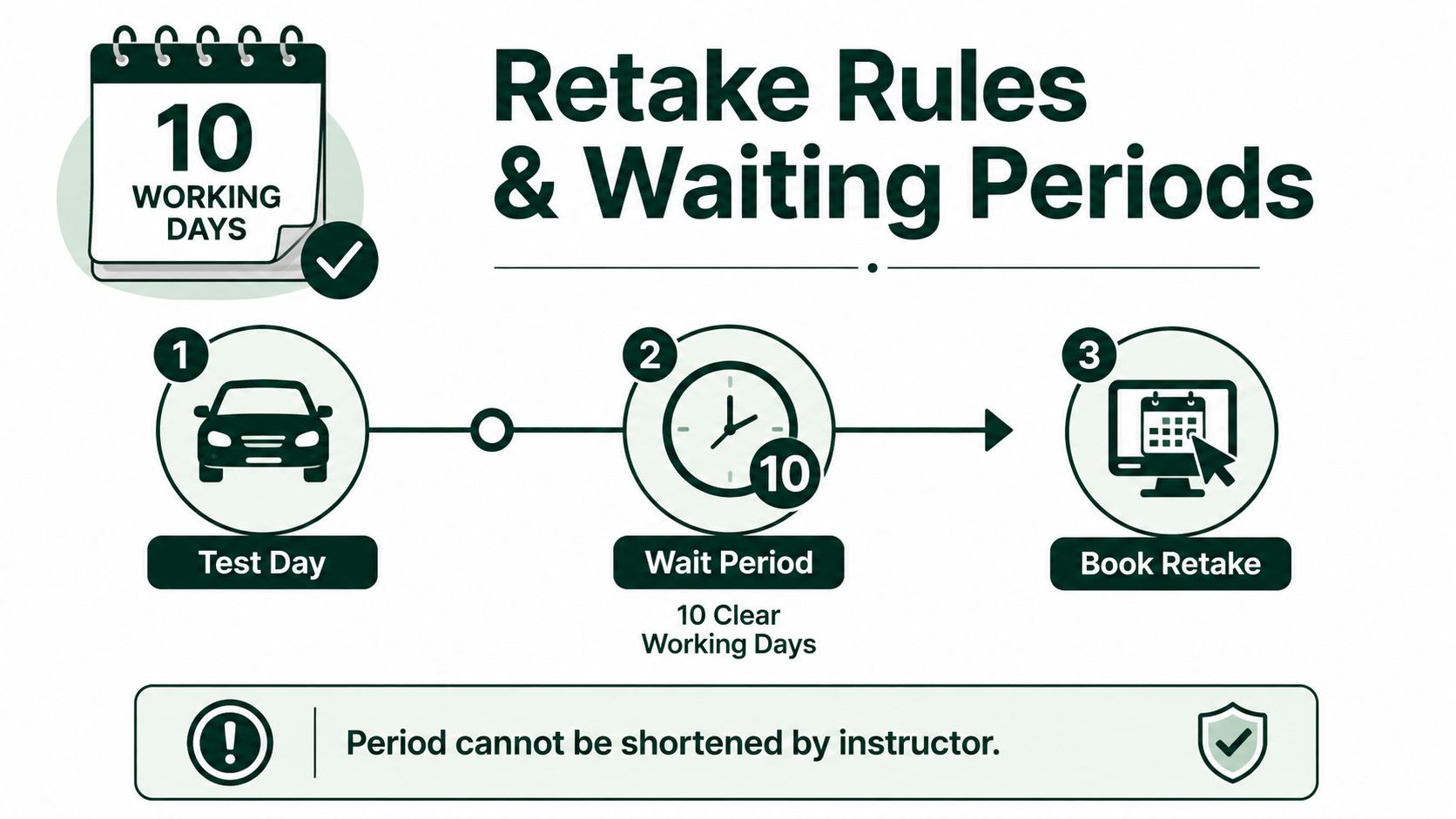
You fail, you leave the test centre, and the clock starts. After a failed practical test in Great Britain, the earliest retake is 10 working days later, not 10 calendar days (ExamRoutes). Weekends and bank holidays do not count, and the test day itself is excluded, so the gap usually feels closer to two and a half weeks.
That waiting period is fixed. An instructor cannot cut it short, and the test centre cannot waive it. The booking system enforces it automatically, so arguing at reception gets you nowhere.
The system is built to stop panic-booking. Use the gap to fix the actual problem.
The harder part is slot availability. BBC reporting in 2023 said candidates who fail would have to wait 28 days instead of 10 before booking another test, while average waiting times had peaked at 24 weeks in November 2022, up from six weeks before 2020 (BBC News). The legal rebook window and actual slot availability often diverge significantly, especially in busy areas. The rule may let you book again, but the local backlog can still keep your next test far away.
That is why planning matters for intensive-course learners. A two-week crash course does not erase a fail, because the booking window becomes the bottleneck. Check cancellation slots early, stay open to other test centres, and use the official DVSA booking system as soon as your window opens. For a practical overview of booking delays and what they mean for planning, this guide on driving test waiting times is useful context.
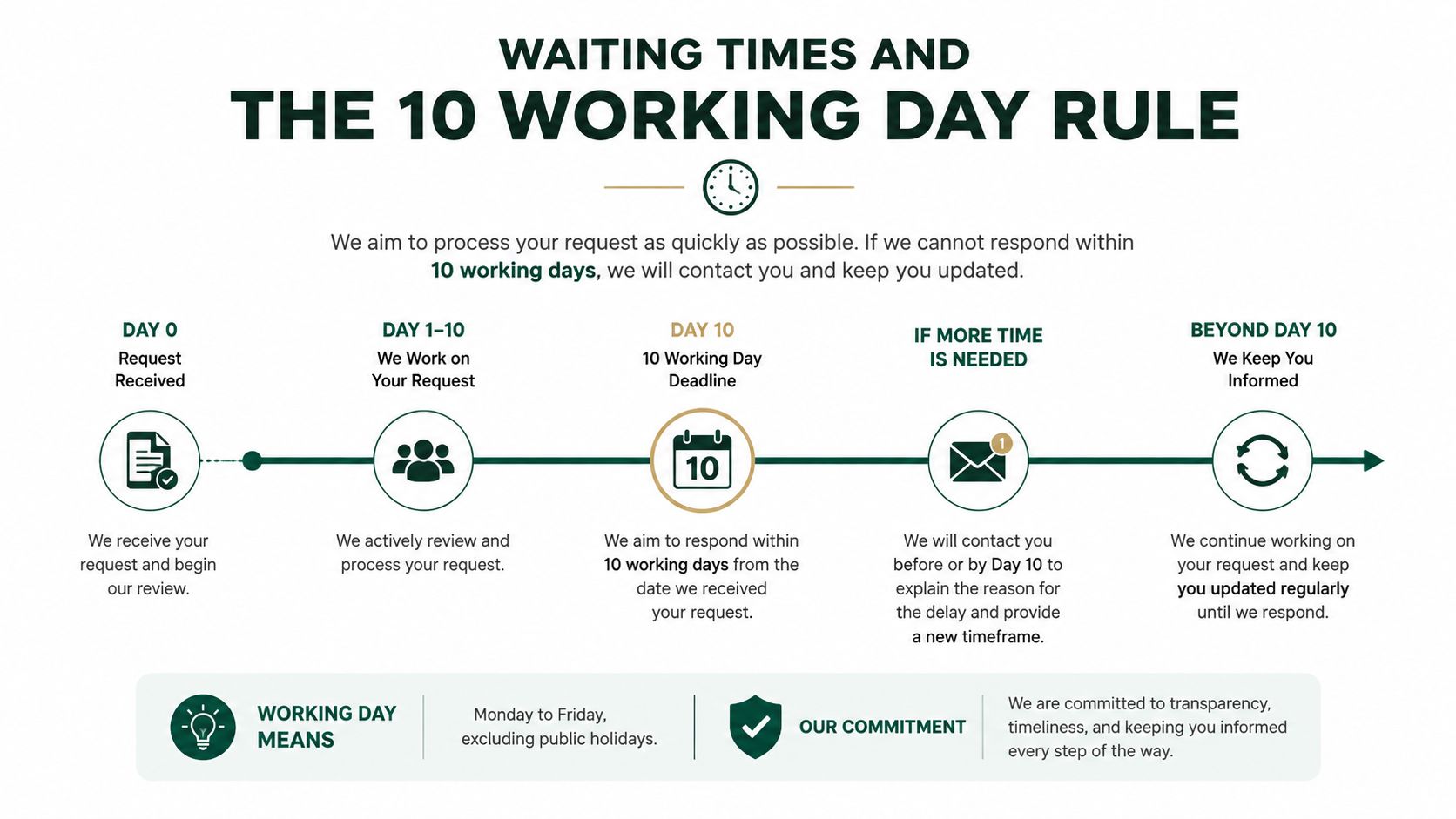
The best cancellation habit is plain and disciplined. Check early, stay ready to travel, and do not pin everything on one test centre. The diagram above shows the timing the booking system already follows.
What a Driving Test Retake Costs
A retake costs more than the test fee, and the bill starts with the extra time you need to fix the faults. The DVSA fee for a car practical test is £62 for a weekday test and £75 for evenings, weekends and bank holidays (driving test prices). That is the straightforward part. The larger cost is usually instructor time, because the same fault that caused the fail needs direct work before you book again.
| Cost breakdown for a driving test retake | Typical amount | Notes |
|---|---|---|
| DVSA weekday car test fee | £62 | Paid again for each attempt |
| DVSA evening, weekend or bank holiday test fee | £75 | Higher rate for those slots |
| Instructor top-up lessons | Varies | Used to correct the faults on the DL25 |
| Theory test renewal | If expired | Only relevant if your theory certificate has run out |
| Vehicle hire or use charges | If applicable | Depends on who supplies the car |
Targeted top-ups beat general lessons every time. If your fail came from one or two clear mistakes, paying for broad mileage is poor use of money. Put the lessons into the problem areas, such as junctions, observations, or timing at roundabouts, and stop paying for practice that does not touch the fault sheet.
The cheapest mistake is repeating the same lesson pattern and hoping confidence will sort it out. It will not. Your spending should follow the fault list, not your feelings.
A second or third attempt turns into a proper budget item fast, because each fail adds another test fee and more instructor time. If you are checking package pricing and lesson structure, the driving test prices guide gives a clear starting point. Use it to compare the direct cost of another attempt against the lesson work you still need.
Reading Your Examiner Feedback and Faults Sheet
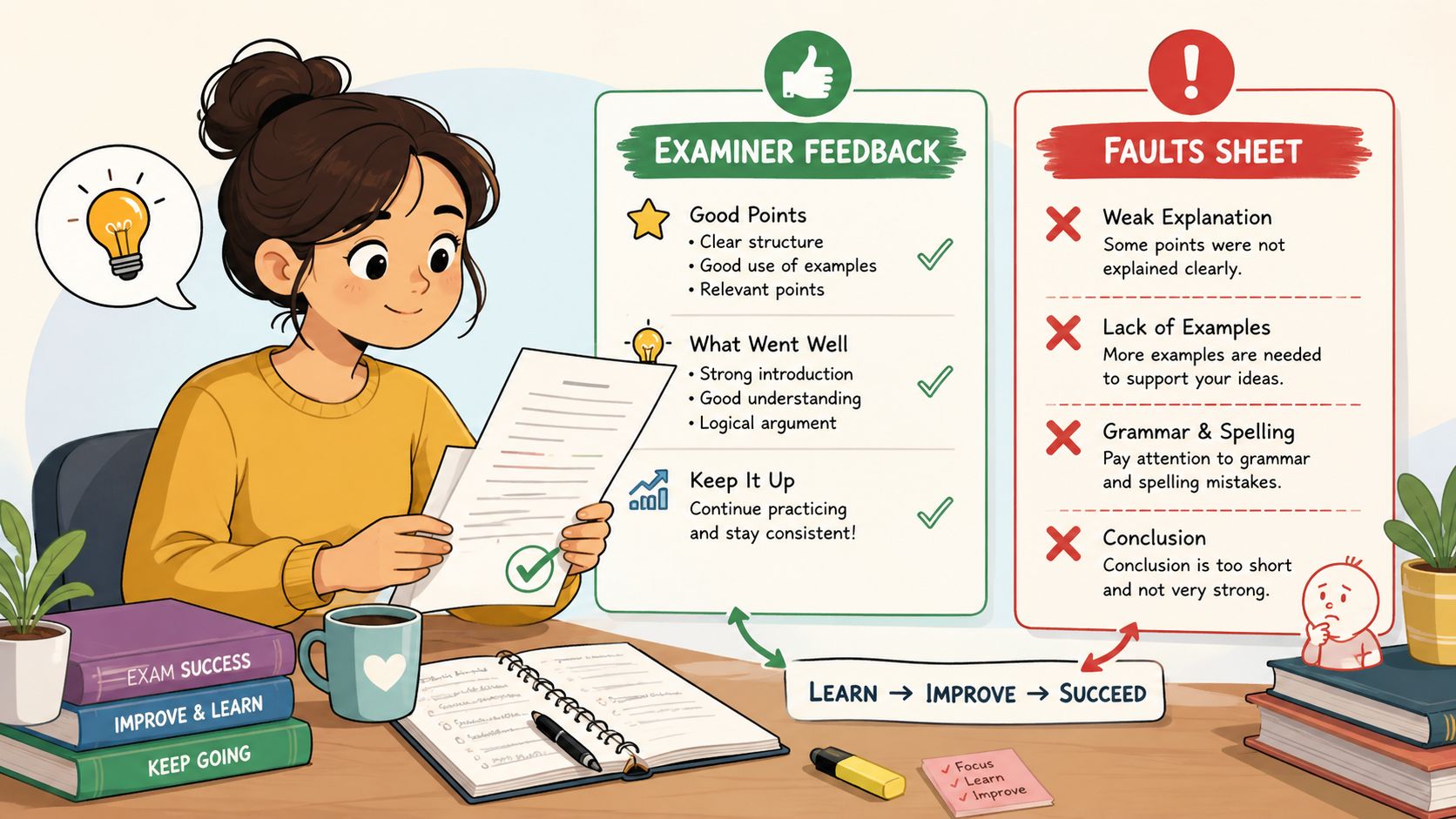
The DL25 is the paper that matters after a fail. It records the test, the examiner's judgement, and the fault pattern that led to the result. Examiners do not write long essays because the sheet is meant to classify what happened, not narrate it.
How the sheet works in practice
A driving test lasts about 40 minutes, and the examiner records faults in three categories, dangerous, serious, and driving faults. One dangerous or serious fault is an automatic fail. Up to 15 driving faults are allowed before the result tips into a fail, as noted earlier. That is why a drive can feel mostly fine and still fail on the sheet.
The written comments section gives context, not a full replay. Look for patterns. A single nervous wobble at a roundabout tells you little on its own, but repeated hesitation at speed-limit changes or missed observations points straight to the habit that broke down.
Instructor rule: do not try to fix every fault on the sheet at once. Find the two or three that repeat, then work on those.
Get a photo of the sheet before you leave if the examiner allows it, and ask for clarification while they are still there. Once you get home, memory blurs and people start over-reading the parts that match their anxiety. The job is not to memorise every mark, it is to identify the fault pattern that will matter on the next attempt.
A blunt debrief saves time and money. It should separate a one-off from a repeat habit, because only the repeat habit belongs in the next lesson plan. For a clear breakdown of how the form is laid out, use the DL25 mark sheet guide and fault sheet breakdown.
Building a Targeted Plan Before Your Next Attempt
Start the day after the fail, not when the next test slot opens. If you wait until booking feels urgent, you have already lost momentum. A fail is a narrow miss at the pass mark, so treat it as a data point and work the exact faults from the DL25 with a plan tight enough to produce change.
The first few sessions should be surgical
Book a one-hour debrief lesson and go through the sheet line by line with your instructor. Focus on the two or three recurring faults. Trying to improve everything spreads lesson time too thin and slows progress. If your issue was route familiarity and road feel rather than a single glaring error, revisit local test roads with an instructor who knows them well. If you want ideas for how road variety shapes confidence, the scenic road guidance from Blade Auto Keys scenic drive tips is a useful read, even if your test routes are much more ordinary.
Then book two or three focused lessons around the exact failure points. If you failed on roundabouts, do roundabouts. If you lost composure near the test centre, practise the roads around the centre. Do not spend those hours just driving about while hoping the problem disappears on its own.
A mock test should come next, in the same format as the actual test. Review the result before buying more lesson time. That stops you throwing good money after bad on habits that have not changed yet.
One habit to drill hard before the retake
Choose one habit to over-train in the final week. It could be mirror checks before signalling, full stops at give-ways, or commentary driving to slow your thinking. One sharp habit matters more than five vague intentions.
Good retake plan
- Debrief immediately: Translate the DL25 into a short fault list.
- Target practice: Use lessons on the same roads where the weakness showed.
- Mock and review: Treat the mock as a decision point, not a formality.
- Book early: Lock in the retake as soon as the 10 working day window opens.
If you want structured help with test preparation, Fast Track Driving Lessons offers intensive and semi-intensive tuition, mock tests, and cancellation support across England, Scotland and Wales. That is the kind of service that makes sense after a fail, because the point is to solve the specific problem, not just add more hours.
Common Myths About Failing and What to Do Instead
A fail is a narrow miss on a tight pass or fail boundary. Treat it that way. The job now is to find the exact fault, fix it, and avoid paying for the same mistake twice.
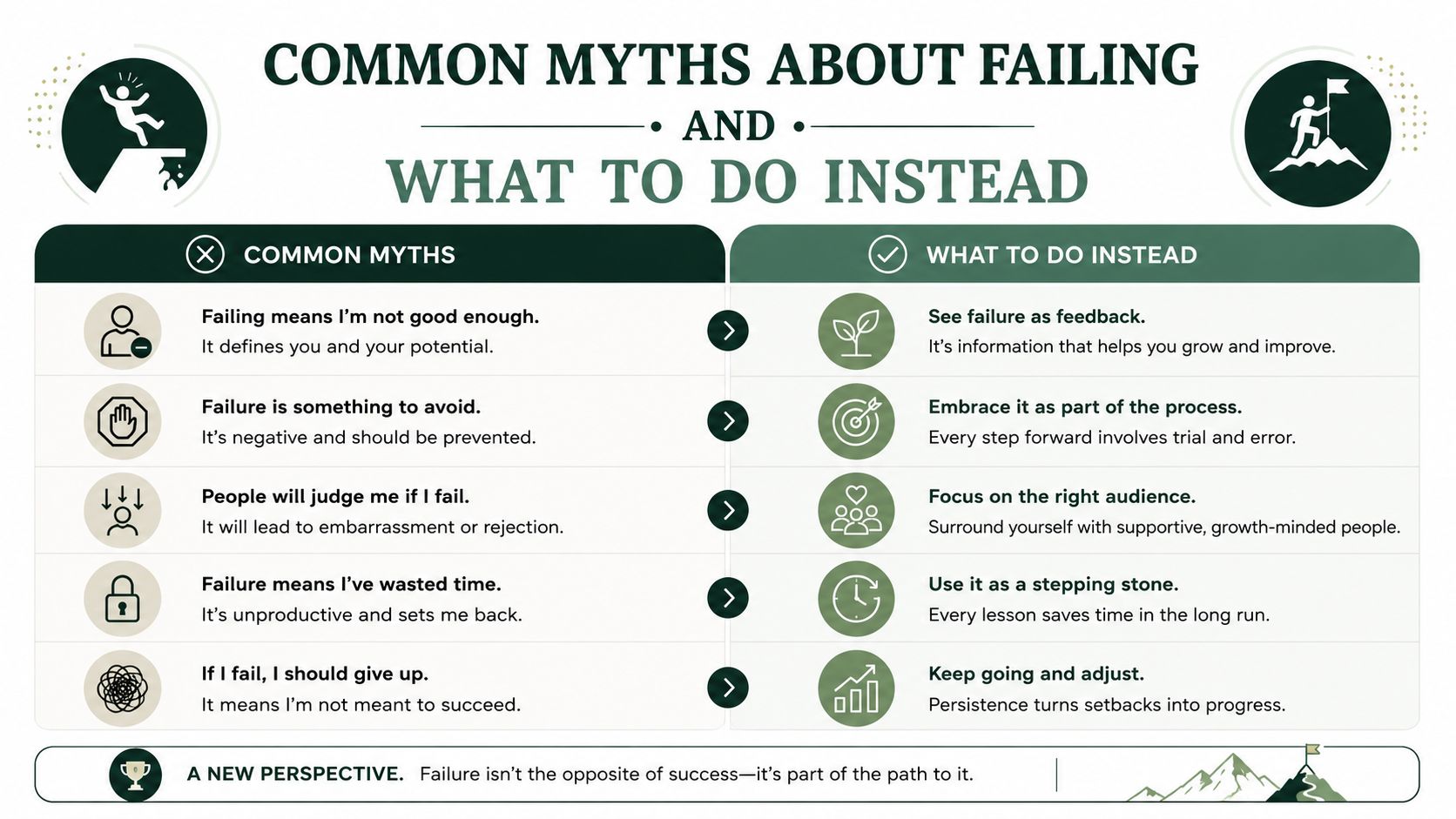
Myth one, more generic lessons will fix it
They usually do not. If the DL25 shows one or two clear weaknesses, focused practice is worth far more than another block of vague driving. Use the lesson to attack the fault, not to rack up more miles.
Myth two, automatic is the easy way out
Automatic cars simplify gear changes, but hesitation, poor observations, and sloppy planning remain regardless of transmission. The underlying decision-making still has to be solid. Changing gearbox may suit some learners, but it does not cure the habits that caused the fail.
Myth three, you must sit and wait in silence
You do not. The 10 working day rule is the minimum gap, not a plan. A retake still needs booking, instructor time, and a clear target list, and that means checking cancellations, staying flexible on test centres, and being ready to move.
Filming practice drives from the passenger footwell and comparing them against the original fault list is one of the most useful habits you can build before a second attempt.
That habit removes memory bias. You can see where you hesitated, where your mirror routine broke down, and where the correction needs to happen. Use the footage, the examiner notes, and your instructor's view together. Then the retake becomes a proper plan, not a guess.
If you've failed and you want a proper reset, Fast Track Driving Lessons can help with targeted lessons, mock tests, and practical retake planning that fits the DVSA rules. Visit Fast Track Driving Lessons and sort the next attempt with a clearer plan, not just more nerves.
Written by Fast Track editorial team.