
You're probably stuck in the same frustrating loop as a lot of learners right now. You book a weekly lesson, then life gets in the way, the gap stretches out, and by the time you're back in the car you've forgotten half of what you did last time. On top of that, the practical test queue can make a learner feel test-ready long before a real slot is anywhere near.
That's why the intensive driving course has become the sensible choice for so many UK learners. Done properly, it keeps momentum high, reduces the stop-start drift of weekly tuition, and gets you ready for test in a way that fits today's booking system. Done badly, it's just a fast way to waste money and build false confidence.
Table of Contents
- Why Learners Are Turning to Intensive Driving Courses
- How Intensive and Semi-Intensive Courses Work
- Choosing the Right Course Package for Your Experience Level
- Timing Your Course Around the UK Test Backlog
- Who Benefits Most from Intensive Tuition
- How to Verify Instructor Quality and Pricing Transparency
- Building a Complete Readiness Plan Beyond the Car
- Common Misconceptions and Your Decision Framework
Why Learners Are Turning to Intensive Driving Courses
A learner turns up for one lesson a week, then misses the next because of work, college, childcare, or a diary clash. Two weeks later, they're back at square one, relearning the same junctions and clutch control they'd already handled. That pattern is draining, and it's exactly why people start looking for a more structured intensive driving course.
The pressure isn't just about learning speed. The National Audit Office said the average waiting time for a practical car driving test in Great Britain was 22 weeks in September 2025, and DVSA didn't expect to hit its seven-week target until November 2027. It also said 70% of test centres were operating at the maximum 24-week wait. Before the pandemic, waits were a little over five weeks in early 2020, so the bottleneck has grown sharply in a short space of time. That's a huge reason condensed tuition now makes more sense for many learners, because the old weekly-routine model no longer matches the booking reality. National Audit Office briefing
Practical rule: if your progress keeps getting interrupted, you're not learning slowly, you're learning inefficiently.
There's another reason demand has shifted. In January 2024, the national average car driving test waiting time was 15.3 weeks, and by February 2024 there were 520,389 car practical tests booked against only 136,295 tests available within the 24-week window. That mismatch is exactly the sort of pressure that pushes learners towards intensive and semi-intensive training, because they want to stay sharp while they wait for a test date. Parliamentary committee evidence
The honest truth is simple. Intensive tuition isn't magic, it's structure. For the right learner, that structure is the difference between drifting for months and getting to test standard with some momentum still left in the tank.
How Intensive and Semi-Intensive Courses Work
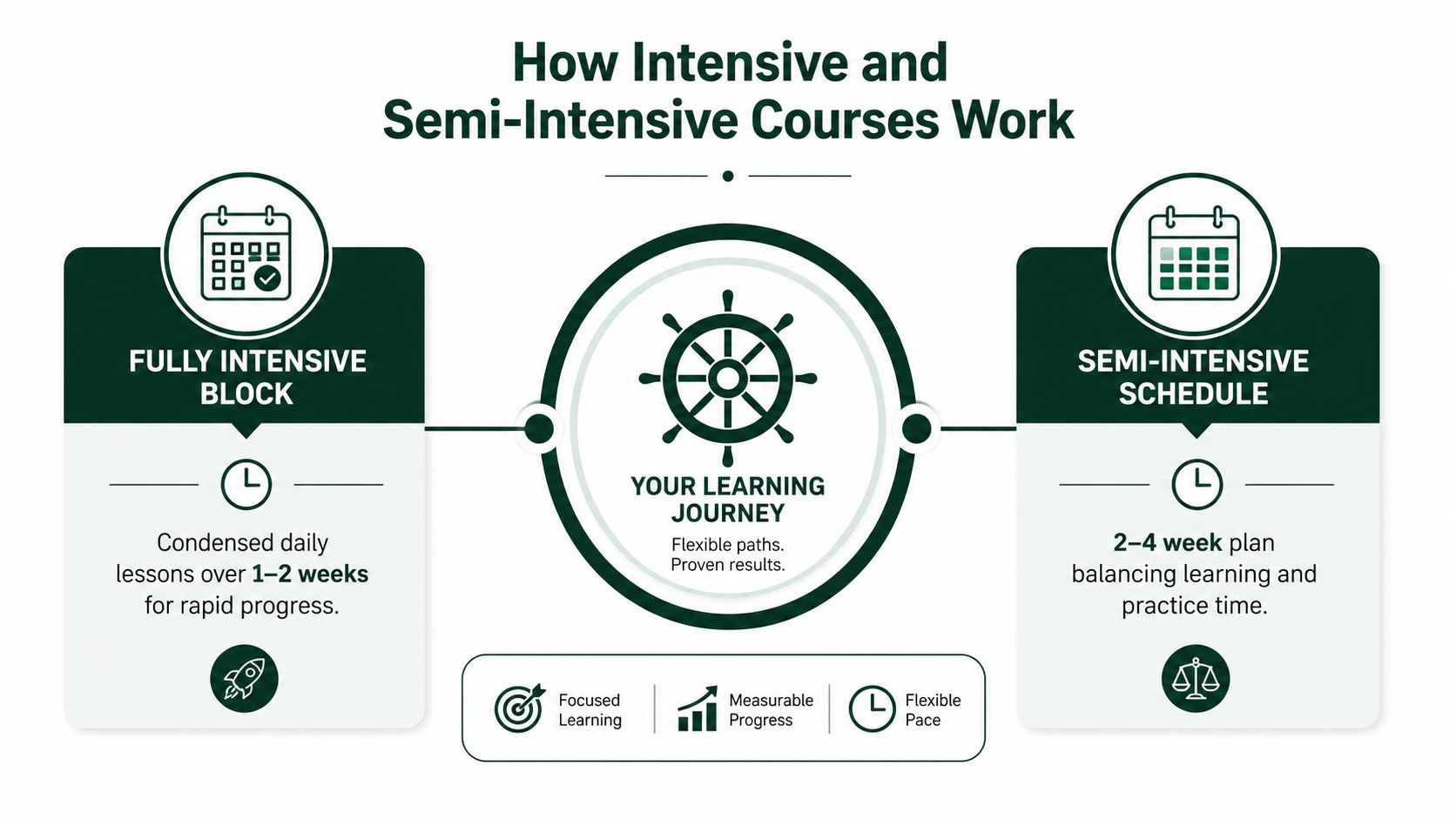
An intensive driving course compresses the same learning into a tighter block. The point isn't to skip content, it's to reduce the gaps between lessons so the same skills stick faster. In a traditional weekly pattern, you spend a lot of time refreshing old ground. In a concentrated block, you spend more time building on the last session.
There are two common formats. A fully intensive course usually means daily or near-daily tuition over a short period, while a semi-intensive course spreads the same focus over a longer window, often two to four weeks. The semi-intensive format suits learners who can absorb a lot but still need time between sessions to reflect, practise, or let confidence catch up with ability. The fully intensive version suits people who want concentrated momentum and can handle a sharper pace. You can also compare the two approaches in this guide to intensive vs weekly lessons.
The vehicle matters too. Good tuition is delivered in dual-control cars that meet DVSA test requirements, with DVSA-approved instructors guiding the learner through the same core competencies tested on the day. Manual and automatic tuition should both be handled in properly equipped cars, because the format shouldn't change the standard expected of the learner.
A course should be built around the learner's stage, not around the school's empty diary slots.
Manual lessons usually focus on clutch control, gear changes, and road position together. Automatic lessons remove the gear-shift load, so the learner can concentrate more heavily on observation, planning, and decision-making. That doesn't make automatic easier in every sense, but it does change where the learner's attention goes.
If you're comparing providers, look for one that explains how the schedule is built, how long sessions last, and what happens if you need to slow the pace. A course that sounds fast but leaves no room for fatigue, reflection, or a test date is usually badly designed.
Choosing the Right Course Package for Your Experience Level
The right package depends on how close you already are to test standard. Too many learners buy the wrong number of hours, then blame the course when the issue is that they picked a package for somebody else's stage. A near-test-standard driver and a complete beginner need very different input, even if both want the same badge on the day.
The clearest way to judge the options is by matching hours to readiness. Fast Track Driving Lessons lists packages from 10 to 40 hours, including Test Booster, Manoeuvre Finisher, Semi-Intensive, Confident Starter, Fast-Track, Beginner Plus, and Complete Beginner. Its crash courses page groups them in a way that makes sense if you're honest about your current ability.
| Course Packages by Experience Level | Hours | Best For | Typical Outcome |
|---|---|---|---|
| Test Booster | 10 | Nearly test-ready learners who need polish | Final sharpening before test |
| Manoeuvre Finisher | 15 | Drivers who only need specific skill work | Cleaner reversing and manoeuvres |
| Semi-Intensive | 20 | Learners with some solid basics | Steady progress with breathing room |
| Confident Starter | 25 | Learners who know the basics but need structure | Stronger control and road awareness |
| Fast-Track | 30 | Learners with mixed experience | More complete test preparation |
| Beginner Plus | 35 | Early-stage learners who still need a lot of repetition | Broader competence and confidence |
| Complete Beginner | 40 | People starting from scratch | Full foundation building |
The mistake I see most often is this. A learner who is almost ready buys too many hours and loses money, or a true beginner buys too few and ends up patching together extra lessons later. Neither outcome is efficient.
Use this rule of thumb. If you're already driving consistently, handling junctions, and only making occasional faults, a shorter package may be enough. If you still hesitate at roundabouts, struggle with road positioning, or need repeated help with control, don't pretend you're a short-course candidate just because you want speed. Speed is only useful if it leads to a proper pass.
Timing Your Course Around the UK Test Backlog
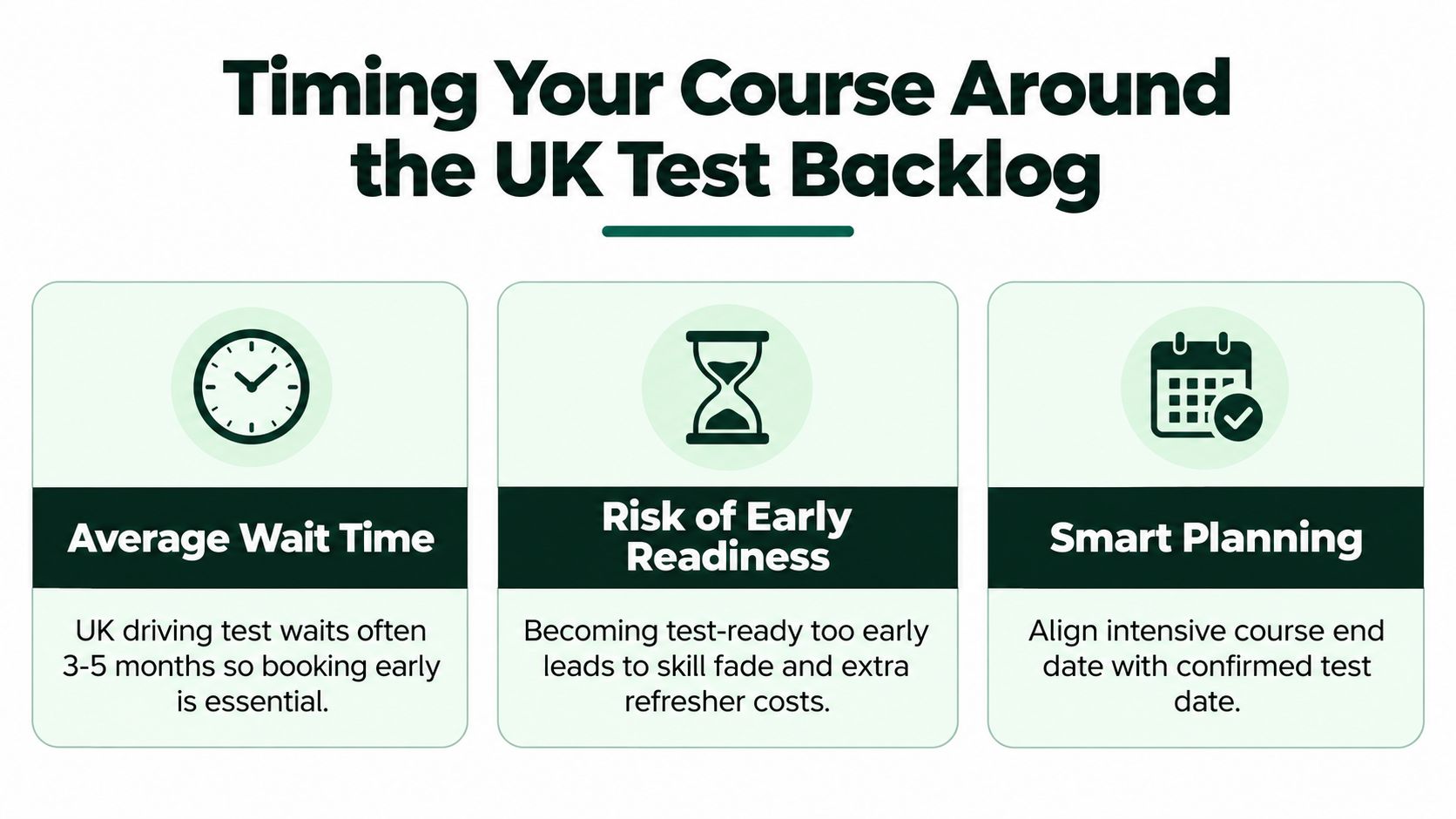
The biggest mistake with an intensive driving course is finishing it too early. Learners love the idea of getting test-ready in a neat block, but if the actual test slot is months away, that neat block can turn into a long stale wait. Confidence drops, habits slip, and some people end up paying for refresher lessons just to hold onto what they learned.
Current waiting-time data makes this impossible to ignore. DVSA's current measure is the median wait between booking and taking a test, and in July 2026 half of all learners who took a test waited no more than 11.1 weeks. DVSA also says there's no waiting list or cancellation list at most centres, so earlier dates usually depend on checking for newly released slots rather than joining a formal queue. That matters because your course timing needs to fit slot availability, not just lesson availability. DVSA appointment guidance
There's also marked regional spread. In December 2024, DVSA said waiting times were about 13 weeks in Wales, over 15 weeks in Scotland, and nearly 21 weeks in England. By April 2026, BBC reporting cited waits of 22.7 weeks in England, 22.9 weeks in Scotland and 17.3 weeks in Wales. A learner choosing a course in one part of Great Britain may face a very different timeline from someone elsewhere, so local test-centre planning isn't optional. Government waiting-time statement BBC coverage
The right move is to finish your course as close as possible to a realistic test date. If you're ready before then, keep your skills fresh with targeted practice, mock tests, and short refreshers rather than letting everything go cold. I'd rather see a learner test a little later at full strength than rush into a slot they can't keep momentum for.
This overview of driving test waiting times is worth reading if you're trying to judge how far ahead to book.
Who Benefits Most from Intensive Tuition
The myth is that an intensive course suits everyone because everyone wants to pass quickly. That's lazy thinking. The learner who gets the most from condensed tuition is the one whose current stage matches the structure, not the one who wants the shortest calendar.
A near-ready driver is the obvious fit. Someone who already handles junctions, mirrors, lane discipline, and independent driving with only the odd fault can use a shorter block to tidy up weak spots and move straight towards the test. The same is true for returning drivers who've had a long break, because the course helps them rebuild habits faster than weekly lessons do.
Automatic learners often do well too, because removing clutch and gear changes frees up attention for observation and road planning. If you're deciding between vehicle types, a useful companion read is the cars for new drivers guide, especially if you're still weighing up whether manual flexibility matters to you.
Who should slow down instead
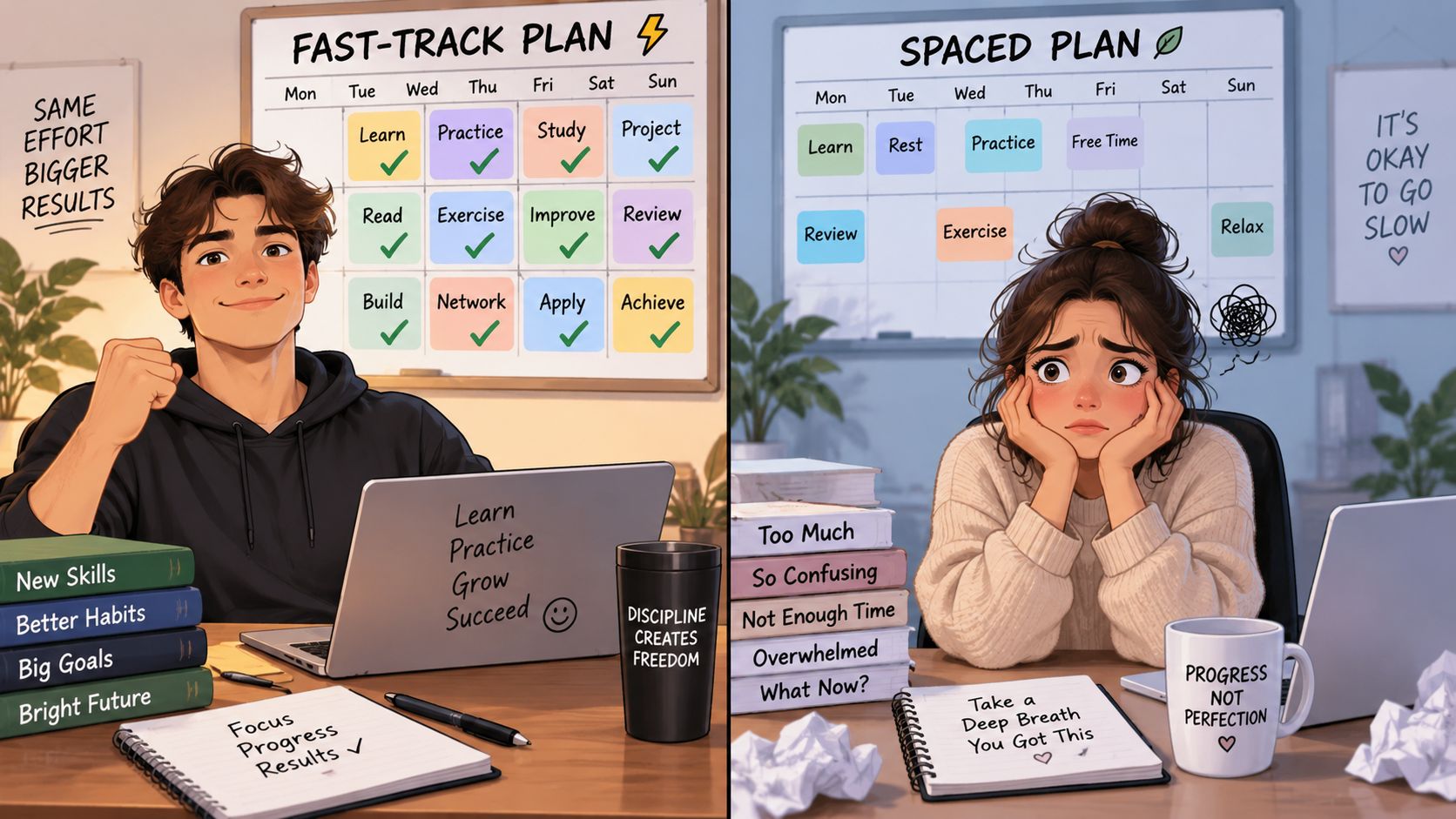
Complete beginners can still benefit, but they're usually better off with a staged approach. A learner starting from scratch often needs time to absorb road sense, control, and test routines without overload. If they rush the process, they often burn through hours without retaining enough to justify the pace.
Theory support matters too. The UK theory test for car learners has 50 multiple-choice questions with a pass mark of 43 out of 50, plus 14 hazard-perception clips with a pass mark of 44 out of 75. The multiple-choice section lasts 57 minutes, and the hazard-perception part takes about 20 minutes, so a learner who hasn't properly prepared for both parts is not ready for a practical course either. UK theory test guide
Simple rule: if the theory test isn't secure, the practical course is built on shaky ground.
That's why I don't recommend blind shortcut thinking. Match the course to your current level, your transmission choice, and your test timing. If those three things line up, an intensive course can be efficient. If they don't, it becomes expensive false speed.
How to Verify Instructor Quality and Pricing Transparency
A shiny website doesn't make a good instructor. The basics still matter, and they matter more on a compressed course because you've got less time to recover from poor tuition. If you're spending a lot of hours in a short period, you need the instructor side of the deal to be solid from day one.
Start with ADI badge validation. A properly qualified instructor should be able to show you that they're approved, and responsible providers should re-check that status rather than assuming it stays valid forever. You should also expect an enhanced DBS check, because you're trusting someone with both your safety and your progress.
Then look at the car itself. The vehicle should have dual controls, valid insurance for tuition, and a proper MOT and maintenance standard. If a school can't explain those basics clearly, walk away. The vehicle is the classroom, and you should know it's fit for purpose before you ever set off.
Fast Track Driving Lessons says it uses ADIs and PDIs, checks badges, DBS, insurance, and vehicle standards, and gives written terms with a 14-day cooling-off period. It also says it publishes a single hourly rate of £61.23, with DVSA fees paid separately and no booking or admin fees. That kind of clarity is what you should look for anywhere you book, even if you're comparing other providers too.
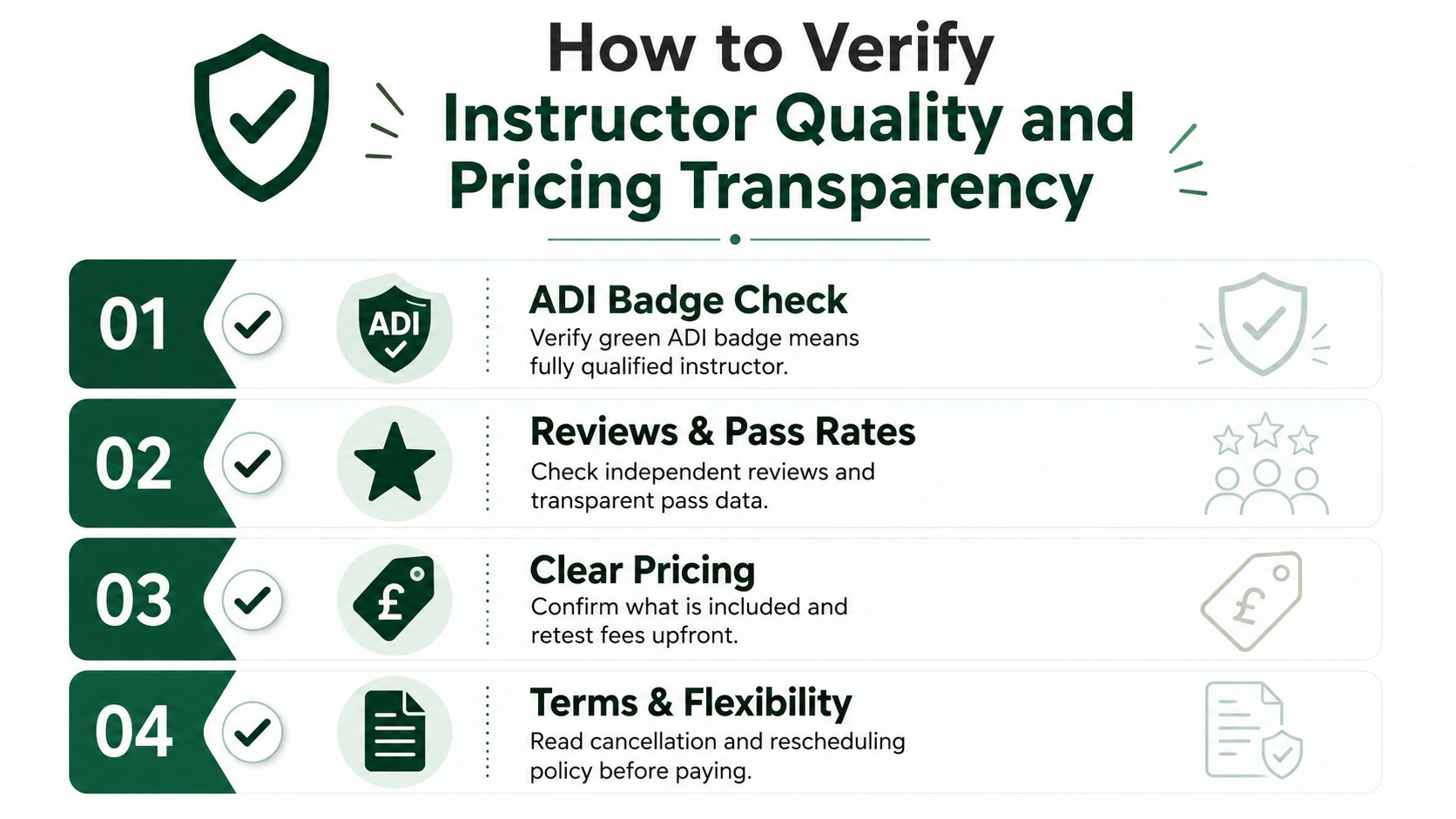
What to ask before you pay
- Badge Check: Ask who the instructor is, whether they're an ADI or PDI, and how their status is verified.
- Reviews and Pass Data: Look for independent reviews and transparent information, not vague claims.
- Clear Pricing: Confirm what's included, what isn't, and whether retest fees are separate.
- Terms and Flexibility: Read the cancellation, rescheduling, and refund terms before you hand over any money.
The best providers don't hide the details. They make it easy to see what you're buying, what the hourly rate is, and how the course will be handled if your instructor becomes unavailable. That transparency matters more on an intensive course than on scattered weekly lessons, because you've got less room for error.
Building a Complete Readiness Plan Beyond the Car
A good driving test result doesn't come from wheel time alone. You can drive neatly and still fail if your theory knowledge is shaky, your route awareness is poor, or you haven't practised the faults that examiners notice most. A proper readiness plan ties all of that together.
Theory revision should cover both parts of the test, not just one. The multiple-choice section tests knowledge recall, while the hazard-perception part tests how quickly you spot developing danger in real time. If either side is weak, the practical side becomes harder because you're trying to learn roadcraft without a stable knowledge base underneath it.
Mock tests are where many learners finally see the whole picture. A realistic mock on or near the chosen test centre route shows how you handle pressure, whether you miss signs, and which manoeuvres still break down under scrutiny. That's why route familiarity matters. The aim isn't to memorise a route, it's to stop local roads from becoming a surprise on test day.
Structured guides and practice materials fill the gaps between lessons. They help with manoeuvres, local junctions, and the kind of test-day routine that steady learners often ignore until it's too late. Used well, they turn an intensive block into a complete preparation plan rather than a pile of driving hours.
If you're going intensive, treat theory, mocks, and practical tuition as one package. Separate them and you lose the benefit.
The smartest learners don't just ask, “How fast can I pass?” They ask, “What needs to be ready by test day?” That shift in thinking is what turns effort into a proper result.
Common Misconceptions and Your Decision Framework
The worst myth is that an intensive course guarantees a faster pass. It doesn't. It gives you concentrated learning, but the test date still depends on local availability, and your pass still depends on whether you're ready.
Another bad assumption is that shorter is always better value. That only works if the learner is already close to test standard. If you're not, a shorter course can leave you needing extra lessons and another booking round, which wipes out the supposed saving.
My decision framework is straightforward. First, judge your current stage. Second, check your local test availability before choosing course length. Third, verify the instructor, the car, and the pricing terms before you pay anything. If those three pieces don't line up, don't book based on hope.
A good intensive driving course should fit your stage, your transmission choice, and your test timing. If it doesn't, it's the wrong course, no matter how persuasive the sales page looks.
Fast Track Driving Lessons matches learners with DVSA-approved instructors for intensive and semi-intensive tuition across England, Scotland and Wales, with manual and automatic options and clear terms. If you want to compare course length against your current stage and the reality of the test backlog, visit Fast Track Driving Lessons and look at the options before you commit.
Written by Fast Track editorial team.