
The standard DVSA car theory test costs £23 when booked through GOV.UK. That single fee covers both the multiple-choice and hazard-perception parts of the test.
The surprising part is that the test fee itself is usually the easy cost to budget for. The bigger financial risks come from booking through an unofficial website, cancelling too late, or allowing a successful theory pass to expire before you pass the practical test. Those mistakes can turn a straightforward government charge into a payment you need to make again.
Table of Contents
- Understanding the Official DVSA Fee
- Booking Your Theory Test Safely
- What Your Theory Test Fee Covers
- Avoiding Unexpected Cancellation Charges
- The Two-Year Validity Rule
- Summary of Total Costs and Planning Tips
Understanding the Official DVSA Fee
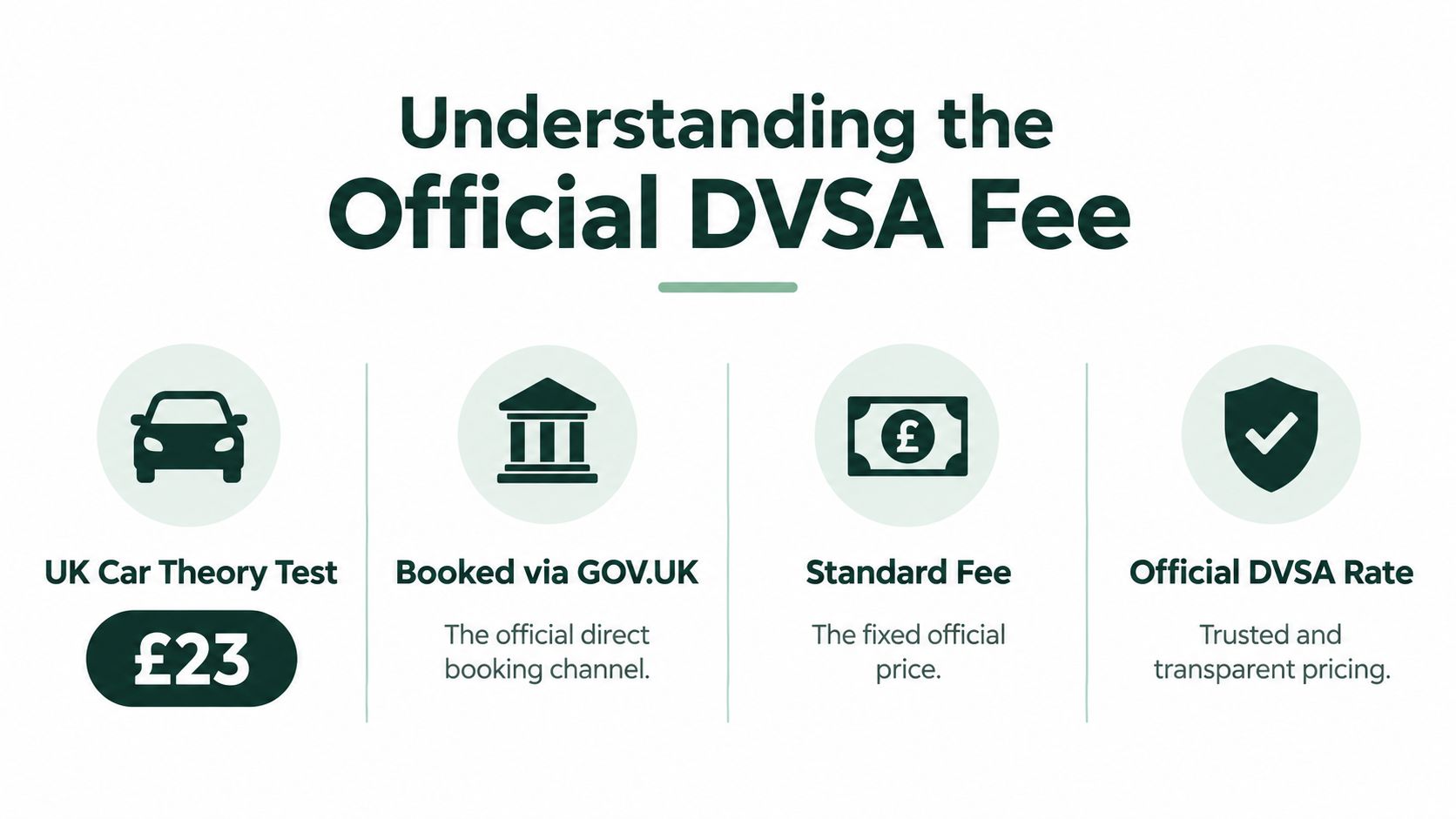
For a standard UK car theory test, the official fee is £23 when booked through GOV.UK's driving-test pricing information. It covers both manual and automatic car candidates in England, Scotland and Wales.
The appointment time does not change the charge. Weekday, evening, weekend and bank holiday slots all carry the same £23 fee. A higher amount shown for a particular time usually indicates an unofficial intermediary or an added service charge, not a DVSA time-based surcharge.
Separate the test fee from preparation
The £23 is the DVSA test booking fee. It does not pay for instructor tuition, books, revision subscriptions, mock tests, travel to the test centre or optional support. List those items separately before setting your budget.
Revision materials or lessons with theory support may be useful, but they remain preparation costs. The government payment secures the appointment and covers the examination itself.
Practical rule: Keep the DVSA fee separate from preparation costs, cancellation risks and any future rebooking cost.
The £23 charge also applies to motorcycle theory tests, but lorry, bus and Driver CPC tests follow different arrangements. Check the relevant category before paying, and use this guide to theory-test booking and fees for further booking and charge information. A careful budget should also leave room for the cancellation window and the two-year validity rule, because overlooking either can lead to paying for another test.
Booking Your Theory Test Safely
The safest route is simple. Start from GOV.UK, use the official theory-test booking service, select the correct vehicle category and pay through that process. Avoid searching for a cheap-looking booking service first and assuming it's connected to the DVSA.
Unofficial booking websites can look convincing. Some use government-style wording, prominent booking buttons and search-friendly pages that make them appear official. They may still add administration or booking fees on top of the statutory charge, so the final amount can be higher than the government price.
A safer booking routine
Use this checklist before entering payment details:
- Start at GOV.UK. Use the official government site rather than relying on a sponsored search result or a third-party advertisement.
- Confirm the vehicle category. A car theory booking isn't the same as a lorry, bus, motorcycle or Driver CPC appointment.
- Review the total before paying. The official car fee is £23. Any additional service charge should make you pause and verify who is processing the booking.
- Use your own contact details. The booking confirmation, appointment changes and cancellation information need to reach you directly.
- Save the confirmation. Keep the appointment date, test-centre details and booking reference somewhere accessible.
The main trade-off with a third-party site is convenience versus control. A company may offer to book on your behalf, but you could pay more and become dependent on its cancellation process or customer service. Booking directly gives you a clear relationship with the official system and makes it easier to understand which rules apply.
If a website makes the £23 official charge difficult to identify, don't enter your card details until you've checked the booking route.
Some driving schools and learner services may offer booking support as part of a wider package. That can be practical if the terms are clear, but ask whether the government fee is included or charged separately. You should be able to distinguish the DVSA payment from any optional administration or preparation charge before committing.
What Your Theory Test Fee Covers
Passing one part does not rescue the appointment. A learner can answer the multiple-choice questions well, then fail because hazard perception performance falls short. The result is still an unsuccessful theory test, with no option to carry the stronger component forward.
The two parts assess different abilities. Multiple choice tests rules, road signs, safe driving practice and the Highway Code. Hazard perception tests whether you spot developing dangers in moving scenes and respond at the right moment. Treating them as separate skills produces more useful preparation than relying on question-bank scores alone.
Use a study routine that exposes the weaker area early:
- Multiple choice: Complete DVSA-style questions and review the explanation for every wrong answer. Understanding why an option is correct is more reliable than memorising its position.
- Hazard perception: Scan the full scene, watch for changes and identify developing hazards when they require action. Practise recognising the difference between a potential hazard and one that is developing.
- Full mock sessions: Complete both parts in one sitting. Switching from written questions to video-based judgement can reveal a weakness that separate practice hides.
The official GOV.UK theory-test guidance sets out how the two components work and the pass requirements for each. Use it to check the test format before choosing practice materials, particularly if an app focuses heavily on one component.
A mock result should guide your next revision session. Repeated mistakes with signs or right-of-way rules call for targeted reading, while late hazard clicks suggest a need for more scene-scanning practice. Booking before either skill is consistent can turn a small preparation gap into the need to repeat the complete appointment.
You cannot pay to retake only the failed component. If either part is unsuccessful, both parts must be taken again. That rule makes balanced preparation more economical, because strong question-bank knowledge alone does not protect against a hazard-perception failure.
Avoiding Unexpected Cancellation Charges
The £23 fee is easy to lose if you treat a theory-test booking as provisional. A late change or cancellation can mean paying for a replacement appointment, even when the reason is a new work shift, an instructor's absence or a change to your course timetable.
The safe rule is to give at least 3 full working days' notice when changing or cancelling. DVSA's appointment guidance explains that Monday to Saturday count as working days, while Sundays and public holidays do not. Count the deadline before you book, rather than assuming you can rearrange later.

Choose a date you can genuinely attend. Check your work or college commitments, travel time, the test-centre location and your likely study readiness before confirming the appointment. If you are arranging intensive tuition, fit the theory test into the wider lesson and practical-test plan instead of selecting the first available slot.
A useful check is to ask, “What could prevent me attending this date?” If the answer includes an uncertain rota, an unresolved college timetable or unreliable transport, delay booking or choose a safer appointment. Put the cancellation deadline in your calendar immediately after booking, with enough time to act.
Missing the deadline usually means the original payment is lost and another fee is due when you rebook. The cancellation window still applies when circumstances outside your preferred schedule change, so contact the official service promptly if your plans shift.
Exceptions may apply to documented unavoidable circumstances, such as illness or injury, bereavement, a school or college examination, or a stolen driving licence. Evidence may be required, and personal inconvenience does not automatically qualify. Review the theory-test cancellation guidance and check the official requirements as soon as a serious problem affects your appointment.
The following video offers another practical explanation of changing or missing a booking:
Treat the notice period as part of the test cost. Good timing protects the £23 payment and prevents a second booking from disrupting your preparation plan.
The Two-Year Validity Rule
Passing the theory test gives you a limited window, not a permanent result. Your pass certificate remains valid for two years from the date you pass, and you must pass the practical driving test before it expires, according to GOV.UK's theory-test result guidance.
That deadline creates a financial risk around the original £23 fee. If practical lessons start much later, your certificate may expire before you are ready, leaving you to pay for another theory appointment and repeat your preparation.
Record the expiry date as soon as you pass. Work backwards from it when planning lessons, your practical test and any likely retest time. Booking a practical test before the certificate expires does not protect the result. The practical test itself must be passed within the two-year period.
If the certificate expires first, you must pass the theory test again before taking the practical test. The repeat appointment adds another £23 government charge, plus revision time and a booking that may conflict with work, lessons or other commitments.
Your timing should match your driving stage:
- Already taking lessons: book theory while your study and practical skills are developing together.
- Starting from scratch: avoid passing theory so early that a long gap separates it from practical preparation.
- Taking an intensive course: coordinate the theory date with lesson availability, practical-test readiness and the time remaining on the certificate.
The practical rule is simple: link your theory booking to a credible route towards the practical test. Do not treat a pass as a standalone milestone. This guide to how long a theory test remains valid can help you record the expiry date and plan each stage before the original fee becomes wasted.
Summary of Total Costs and Planning Tips
The standard UK car theory test costs £23. Add the £62 practical car driving test and the two mandatory government fees total £85, provided you pass both without retaking either test.
| Test Component | Fee |
|---|---|
| Car theory test | £23 |
| Practical car driving test | £62 |
| Combined official test fees | £85 |
That total covers only the official tests. You still need to budget for lessons, revision materials, travel and optional preparation services. It also excludes another theory payment if you cancel too late, fail the test or allow your pass certificate to expire.
Build a budget that reflects the hidden risks
Keep government fees separate from tuition and study costs. This makes the total easier to track and helps you compare instructors or course packages without treating an hourly lesson rate as a test charge.
Use this checklist:
- Book directly: Use GOV.UK, check the details and confirm the final payment before submitting the booking.
- Prepare for both parts: Study the multiple-choice questions and hazard perception. Passing one part does not complete the test.
- Protect the appointment: Avoid changes where possible, and remember that cancellation or rearrangement must be made within the required working-day window.
- Record the expiry date: Note it immediately after passing and plan lessons and the practical test around the two-year certificate period.
- Separate optional spending: Compare lessons, revision tools, mock tests and practical-test support independently.
A fixed-price intensive or semi-intensive course can organise tuition, but it does not replace the DVSA test fees. Ask the provider what the package includes, which charges go directly to the government and whether practical-test support has separate terms. Fast Track Driving Lessons provides intensive and semi-intensive tuition, DVSA-style theory materials through its Learner Hub, mock tests and practical-test scheduling support. Government test fees remain separate from tuition pricing.
The lowest initial payment may not produce the lowest overall cost. A direct booking, preparation matched to your driving progress and careful attention to cancellation deadlines reduce avoidable repeat charges. Check the two-year validity period before booking lessons or a practical test, because an expired certificate means paying for the theory test again.
Fast Track Driving Lessons can match learners with DVSA-approved instructors for manual or automatic intensive and semi-intensive tuition, alongside theory-learning tools and practical-test preparation. Visit Fast Track Driving Lessons to compare the available support and plan lessons around the official DVSA fees and validity deadlines.
Written by Fast Track editorial team.