
You're about to start a driving lesson, or you've just arrived at the test centre, when an amber engine symbol appears on the dashboard. The car still sounds normal, so it's tempting to ignore it and carry on. That's exactly how a small fault becomes a failed MOT, a cancelled practical test, or an unsafe journey.
An engine management light doesn't always mean the engine is about to stop. It does mean the car has detected a fault that needs a proper decision, not a guess. For learner drivers, the key questions are simple: is the light steady or flashing, is the car behaving normally, and is the vehicle legally suitable for the journey or test?
Table of Contents
- What to Do First When the Light Appears
- Understanding Engine Management Warning Severity
- Safe Driving and Immediate Checks Before Repair
- Getting a Professional Diagnostic Fault Code Read
- How Engine Management Lights Affect Your MOT Test
- Booking a Repair or Finding a Reliable Mechanic
What to Do First When the Light Appears
Look at the light before doing anything else. A steady amber engine management light usually means you should arrange a diagnosis promptly and may be able to drive carefully to a garage. A flashing warning light, especially with shaking, loss of power, smoke, or unusual noise, is a different situation. Pull over somewhere safe and arrange professional assistance. RAC guidance treats a flashing engine warning light as a serious fault that needs immediate inspection because continued driving can cause further damage. RAC's dashboard warning light guidance explains the distinction clearly.
Don't stop in a live traffic lane just to inspect the dashboard. Reduce speed smoothly, signal, and move to a safe place such as a marked bay, service area, or suitable side road. If you're on a motorway, follow the normal breakdown procedure and keep yourself away from moving traffic.
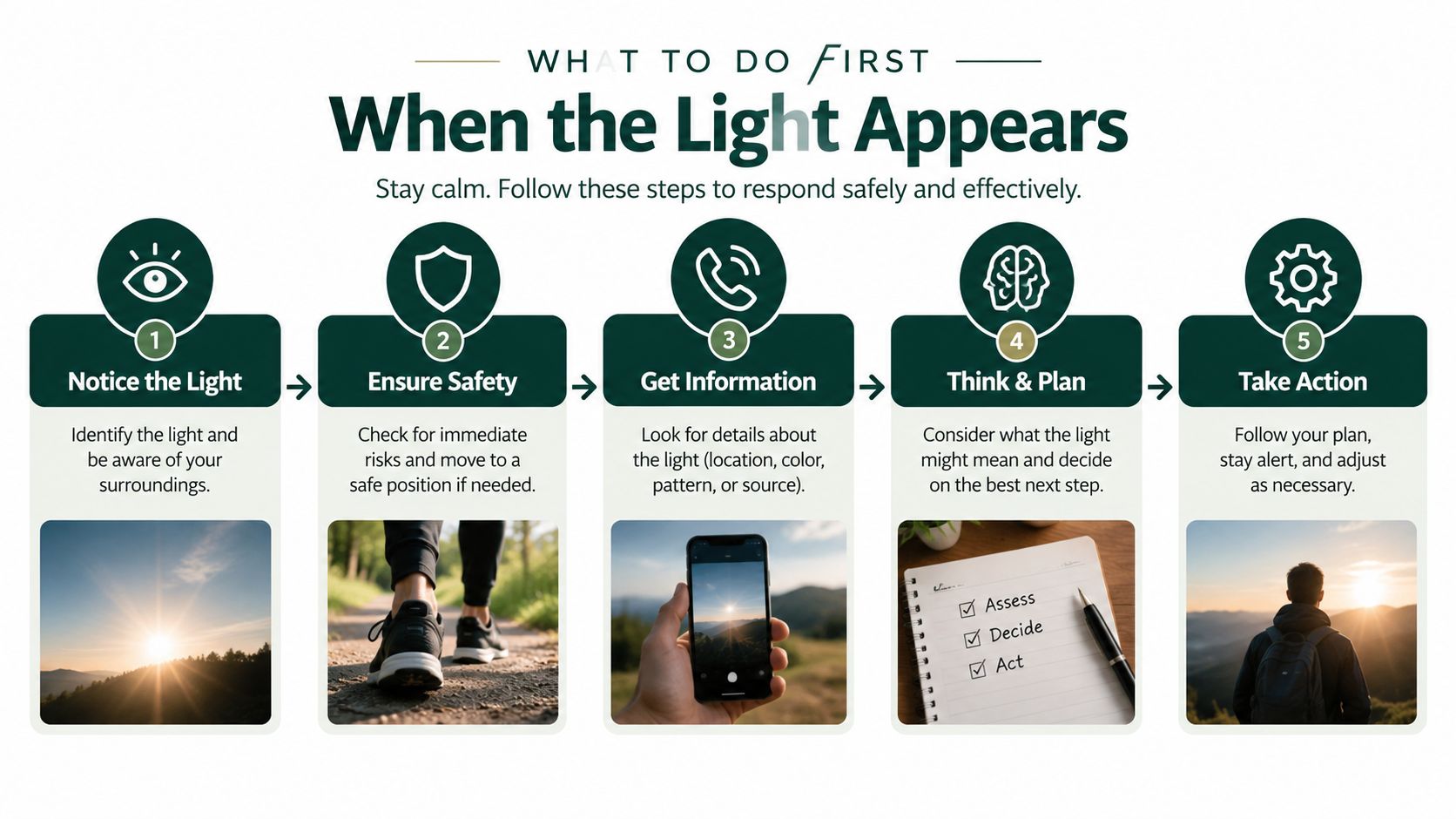
With the engine switched off and the vehicle safely parked, check only obvious items. Make sure the fuel filler cap is secure, look for warning signs such as leaking fluid or smoke, and check whether the car has developed a rough idle or obvious loss of power. Don't open the bonnet beside fast-moving traffic, and don't touch hot engine components.
A fault can have several possible causes, from a sensor problem to an ignition or emissions issue. If you drive an Audi with the EA837 engine, the specialist overview of Audi EA837 check engine causes may help you understand why the same dashboard symbol can represent different underlying faults. It isn't a substitute for diagnosis.
If you're unsure how to position the car or what to do after a breakdown, use this UK car breakdown safety guide. For a learner, the safest decision is always more important than arriving on time.
Understanding Engine Management Warning Severity
The engine management light is a messenger, not a diagnosis. It tells you that the ECU has detected something outside its expected range, but the symbol alone can't identify the failed component. Treat the colour and behaviour of the light as your first severity check.
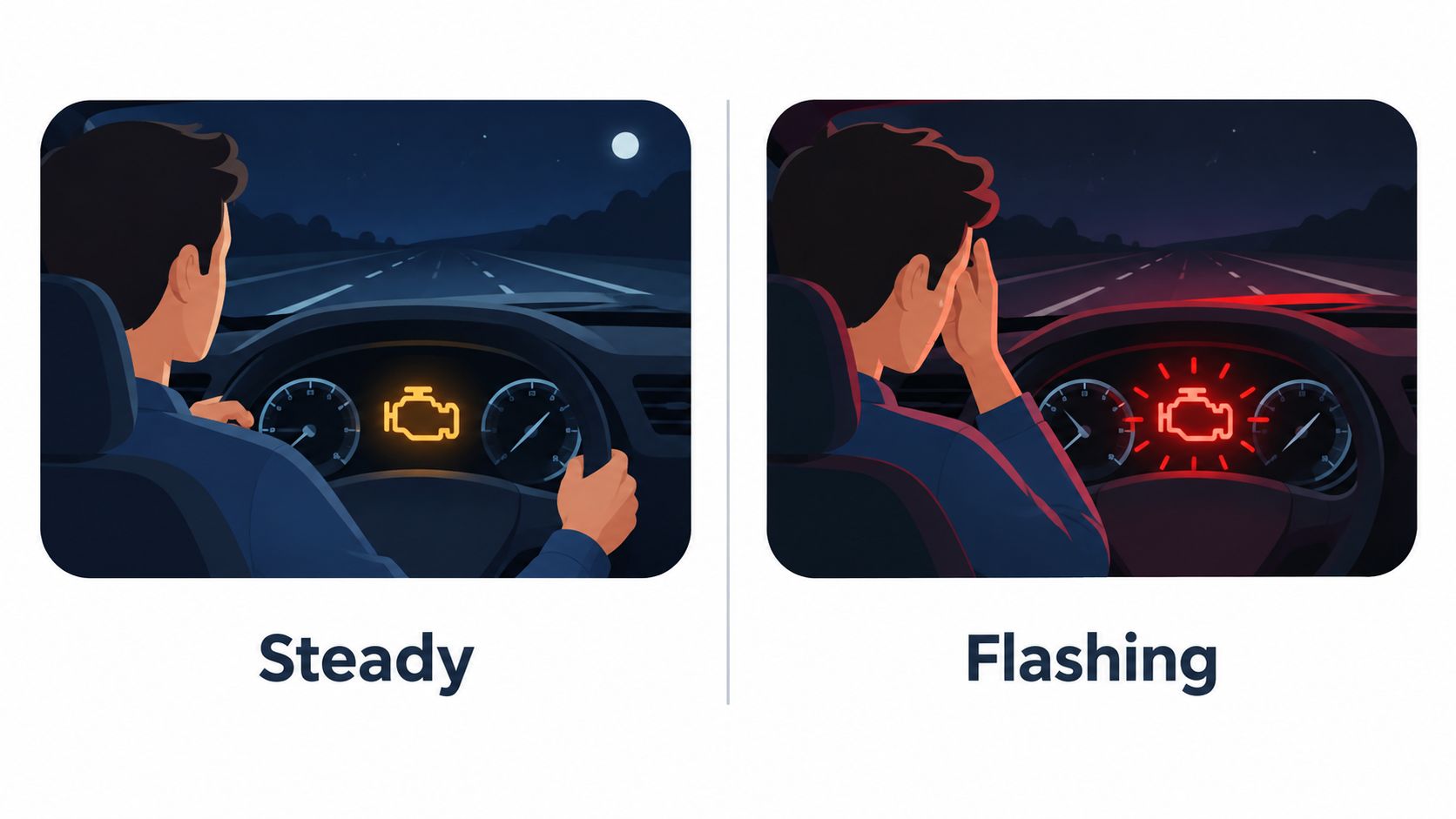
Steady amber versus flashing warning
A steady amber light often allows a short, careful journey to a garage if the vehicle still feels normal. Keep the journey necessary and direct. Don't treat the absence of strange noises as proof that the fault is harmless, because some emissions and sensor problems produce few noticeable symptoms at first.
A flashing light indicates a more urgent problem. RAC identifies this behaviour as more serious than a steady warning and advises immediate professional inspection. A flashing light can be associated with an active misfire, and continuing to drive may damage the engine or related exhaust systems. If the car is shaking, struggling to accelerate, producing smoke, or making a harsh mechanical noise, stop as soon as it's safe.
| Dashboard behaviour | Sensible response |
|---|---|
| Steady amber light, car feels normal | Drive only as needed to arrange diagnosis, using gentle inputs |
| Steady light with poor running or loss of power | Stop somewhere safe and seek advice before continuing |
| Flashing light, especially with shaking or noise | Stop driving and arrange recovery or immediate professional help |
The light can also appear briefly when you switch the ignition on, then go out after the engine starts. That self-check is normal. The concern is a lamp that stays illuminated with the engine running, or one that returns during a journey.
Learners often want a quick answer before a lesson. Use the same practical rule every time: steady does not mean ignore it, and flashing does not mean drive on to see whether it clears. You can practise identifying dashboard symbols with this guide to what the engine warning light means while driving, but a theory explanation can't replace a fault-code read.
Safe Driving and Immediate Checks Before Repair
If the light is steady and the car is running normally, gather useful information while keeping the journey safe. Don't try to diagnose the engine while moving. Your job is to notice changes and report them accurately to the mechanic.
Pay attention to the following:
- Engine feel: Notice whether the engine idles smoothly or feels uneven through the seat and steering wheel.
- Acceleration: Check whether the car responds normally when you apply the accelerator gently. Don't force it up a hill or into a high-speed manoeuvre.
- Sound: Listen for knocking, rattling, hissing, popping, or a change in exhaust noise.
- Temperature: Watch the temperature gauge and stop if it rises unusually or another serious warning appears.
- Smell: A strong fuel, burning, or hot-metal smell is a reason to stop and seek advice rather than continue.
- Fluid evidence: Once parked safely and the engine is cool, look for fresh oil or coolant underneath the car. Don't place your hands near hot components.
Drive as though the car has less reserve than usual. Use gentle acceleration, avoid high engine speeds, don't tow, and avoid unnecessary motorway or long-distance driving until the fault has been checked. If the vehicle loses power, begins to vibrate heavily, overheats, smokes, or develops a flashing warning, end the journey.
Practical rule: A steady light may justify a short trip for diagnosis. A flashing light or badly running engine justifies stopping and recovering the car.
Learners should tell their instructor before the next lesson, not after arriving at the meeting point. Give the mechanic a clear timeline: when the light appeared, whether it flashed, what speed you were travelling at, and whether the car had recently been refuelled, serviced, or driven through deep water. Those details can help the technician reproduce an intermittent fault.
Getting a Professional Diagnostic Fault Code Read
The most useful next step is an OBD-II scan of the ECU. The scanner reads stored diagnostic trouble codes, commonly called DTCs. Those codes narrow the search, but they don't automatically prove that the named sensor or component needs replacing.
A sound diagnostic process follows an order:
- Read the stored codes first. Ask the garage to record the codes and any available freeze-frame information before clearing anything.
- Confirm the code. The technician should relate the code to the vehicle's symptoms, service history, and live readings.
- Inspect the associated system. A code pointing towards an emissions or ignition circuit may involve wiring, connections, air leaks, fuel delivery, or another underlying fault.
- Repair the cause. Replacing the first part named by a scanner is not a proper diagnosis.
- Clear the code after repair. The system can then be checked again to confirm that the fault has been resolved.
The GOV.UK MOT inspection manual guidance on the malfunction indicator lamp supports the practical approach of checking the lamp and using diagnostic information rather than relying on the dashboard symbol alone.
Why clearing the code too early is a mistake
Some drivers borrow a scan tool, delete the warning, and assume the problem has gone. That's poor practice. Clearing the code can remove freeze-frame context, which may show the conditions present when the ECU detected the fault. It can also make an intermittent problem harder to reproduce.
Ask for the following before authorising work:
- The exact code or codes recorded.
- The technician's explanation of the likely cause.
- The checks used to confirm that explanation.
- Whether the proposed repair is a component replacement, wiring repair, cleaning task, or further test.
- What will be checked after the repair.
A code read is particularly useful before a driving test because it turns “the engine management light is on” into a specific conversation. You can tell your instructor that the car has been diagnosed, explain what was repaired, and confirm whether the warning has been cleared correctly. Don't use a cheap scanner as permission to keep driving a car that is running badly.
How Engine Management Lights Affect Your MOT Test
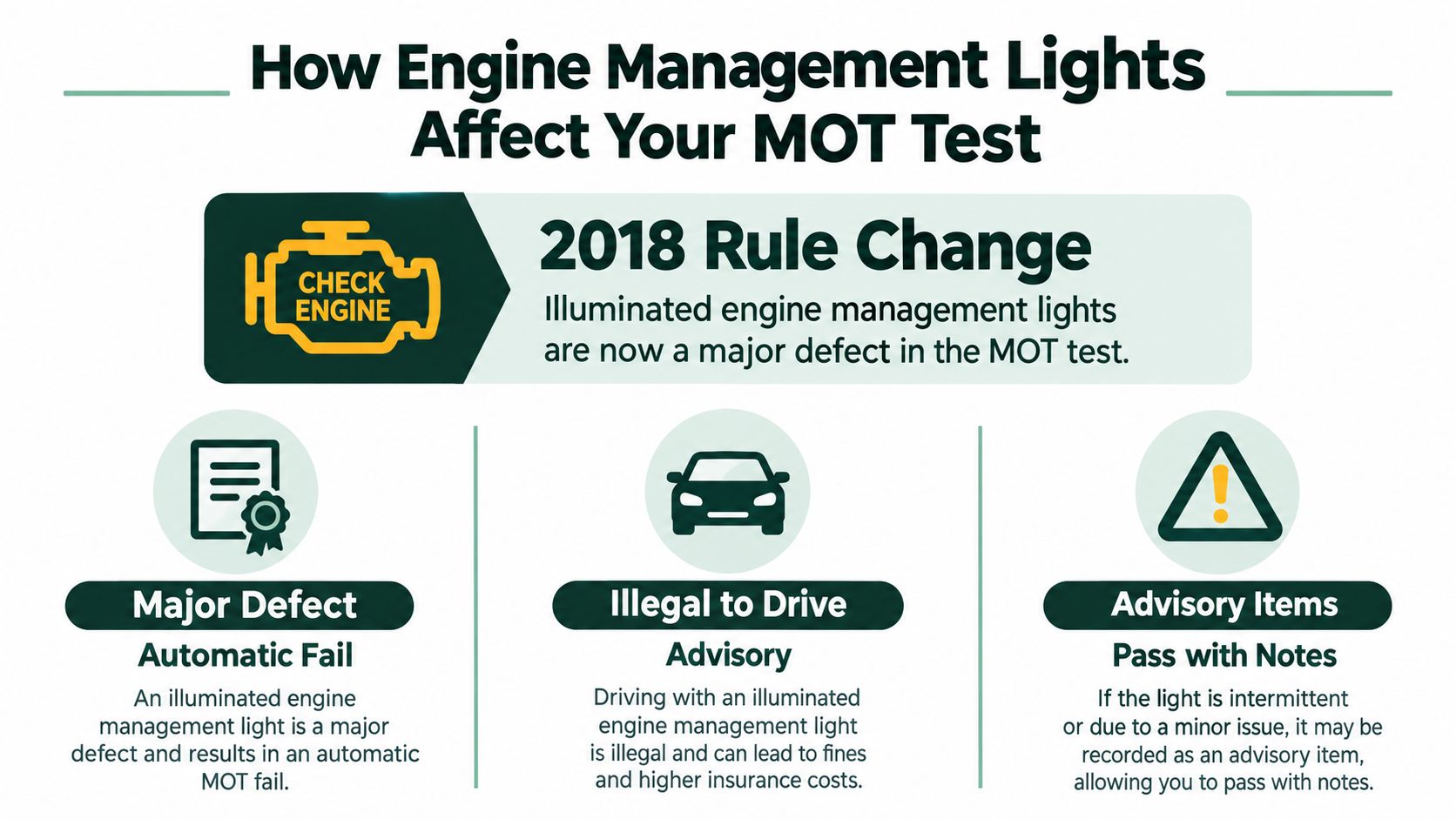
For a learner driver, an illuminated engine management light can stop the car from being used for a practical test. Since the DVSA and MOT rule change introduced in 2018, an engine management light, also called the malfunction indicator lamp or MIL, is treated in Great Britain as a major defect and an automatic MOT failure under the emissions-related check. The car may drive normally, but the illuminated lamp can still fail its MOT.
The check applies to modern petrol cars first used on or after 1 July 2003, and diesel cars first used on or after 1 July 2008, as explained in why the MOT includes an exhaust emissions test and the UK MOT failure guidance on emissions. At the beginning of the inspection, the tester checks the lamp with the ignition switched on. Depending on the vehicle, the engine must then be started to confirm that the lamp goes out.
What this means for a driving test car
Do not take your practical test in a car with the light illuminated. The examiner assesses your driving, but the vehicle must also be suitable and legally compliant. A car with a major defect can create a safety and legal problem, not just an inconvenience on test day.
If a lesson car develops an engine management warning, tell your instructor immediately. Arrange a proper diagnosis before the appointment, then confirm that the fault has been repaired and the lamp operates correctly. Do not switch the light off just before the test. If the cause remains, the warning can return, and deleting the code does not repair the underlying defect.
The consequences can extend beyond one failed appointment. A UK analysis found that 391,384 Class 4 vehicles failed their 2024 MOT on the exact defect wording “Malfunction indicator lamp Engine MIL illuminated indicating a malfunction”. The same analysis reported that 14.8% of those vehicles failed again on that wording in 2025, compared with a 1.00% repeat-failure rate among vehicles that did not fail on that line. That made the repeat rate 14.8 times higher. Read the analysis of UK MOT failure and repeat-failure records for the source wording and comparison.
Check the vehicle's previous tests for repeated warnings or related advisories. The guide to how to read MOT records can help when reviewing a used test car or checking a lesson vehicle's history.
An illuminated MIL is not an advisory. An advisory can allow a pass with a recommendation, while this lamp is treated as a major defect under the stated check. Ask your instructor or garage before driving the car to a lesson or test.
Booking a Repair or Finding a Reliable Mechanic
Once the fault code has been read, choose a repair route based on the seriousness of the symptoms and the competence of the workshop. A reputable independent garage can handle many faults, while a main dealer or marque specialist may be appropriate when the vehicle has complex electronics, a manufacturer-specific issue, or a fault that keeps returning.
Start the conversation with the evidence you already have. Give the garage the registration details, the exact symptoms, the warning-light behaviour, and the diagnostic codes. Ask whether the quoted work is based on confirmed testing or on the part associated with the code.
Questions that protect your budget
Use direct questions before authorising repairs:
- What failed: Ask which system has been tested and what evidence identifies the cause.
- What happens next: Find out whether the repair includes a post-repair scan and road test.
- What is essential: Separate the work needed to make the vehicle safe and compliant from maintenance that can wait.
- What will I pay: Request a written estimate covering diagnosis, labour, parts, and any follow-up testing.
- What if the light returns: Confirm whether the garage will investigate a returning warning and what its diagnostic policy is.
Be wary of anyone who promises that a warning light can be fixed by deleting the code. A proper repair addresses the fault, checks the result, and leaves you with a car that can be trusted.
If the light is flashing, the car is misfiring, or it has lost power, recovery is the sensible option. Saving the cost of a tow isn't worth risking damage, an unsafe roadside stop, or a breakdown during a lesson. For a steady warning on a normally running car, arrange the shortest practical trip to a qualified garage and avoid using the vehicle for unnecessary journeys.
Before your test, confirm three things: the repair is complete, the engine management light behaves normally with the engine running, and the vehicle's MOT position is clear. Keep the diagnostic invoice or repair record. It gives your instructor useful information and helps prove what has been checked if the warning reappears.
Fast Track Driving Lessons helps learners prepare with DVSA-approved instructors, structured intensive and semi-intensive tuition, mock tests, and learner resources. If a dashboard warning threatens to disrupt your lessons or test preparation, visit Fast Track Driving Lessons to find suitable driving support and keep your training organised.
Written by Fast Track editorial team.