
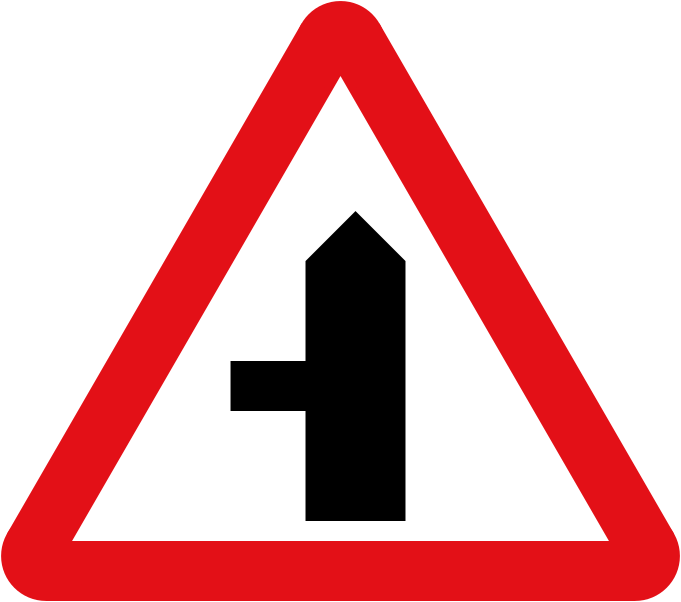
Road markings work alongside signs to communicate rules directly on the road surface, which matters most exactly where you need it, at the point of a hazard or decision. This section covers centre and lane lines, hazard warning lines, box junctions, and directional arrows, all of which are tested through both sign-recognition and hazard perception style questions.
Box junctions in particular are a classic source of confusion in mock tests, since the rule about when you're allowed to enter one is more specific than most learners assume.
Centre and lane line markings
A broken white line down the centre of the road is the normal separator and can be crossed to overtake when safe, while a solid white line means you must not cross or straddle it except in specific circumstances such as passing a stationary vehicle or entering a side road. A hazard warning line, a broken line with longer dashes than the normal centre line, warns of a hazard ahead where you shouldn't overtake.
Box junctions
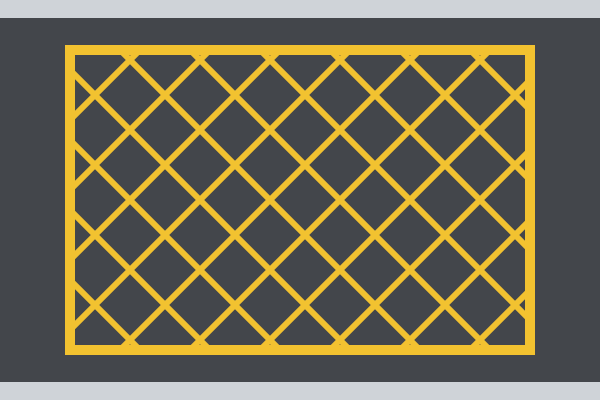
Yellow crosshatched box junctions mark an area you must not enter unless your exit road is clear, with one exception: you may enter to turn right if you're only prevented from completing the turn by oncoming traffic or other vehicles waiting to turn right. Entering and getting stuck in a box junction otherwise is an offence, even if you were simply following queued traffic.
Directional and lane arrows
Arrows painted on the road tell you which direction traffic in that lane must go, and once you're in that lane, you're committed to following the arrow's direction. Getting into the wrong lane too late and trying to cut across at the last moment is both dangerous and against the marked instruction.
Other common markings
You'll also see markings for cycle lanes, bus lanes, and give-way triangles painted on the approach to a junction, which reinforce the corresponding sign. Chevron markings on wide stretches of road, often between opposing carriageways, indicate an area you should not enter except in an emergency.
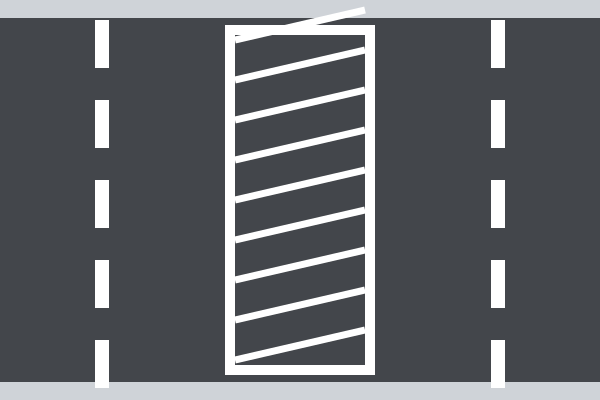
- Broken centre line — normal lane divider, can be crossed to overtake when safe.
- Solid white line — do not cross except in specific allowed situations.
- Yellow box junction — don't enter unless your exit is clear, except when turning right.
- Chevrons between carriageways — keep out except in an emergency.
Frequently asked questions
When can I enter a yellow box junction if my exit isn't clear?
Only if you want to turn right and are prevented from doing so solely by oncoming traffic, or by other vehicles waiting to turn right. Otherwise you must wait until your exit road is clear before entering.
What is the difference between a hazard warning line and a normal centre line?
A hazard warning line has longer dashes than the standard centre line and is used to warn of a hazard ahead, such as a bend or junction, where you shouldn't overtake. The normal shorter-dashed centre line is simply a lane divider.
Can I cross a solid white line to overtake?
Generally no, unless the lane ahead is closed, you're passing a stationary vehicle, or you're entering a side road, in which case brief crossing is allowed. Otherwise, crossing a solid line to overtake is an offence.
What should I do if I'm in the wrong lane at a junction with painted arrows?
You must follow the direction of the arrow for the lane you're in, since changing lanes at the last moment across solid markings or into another vehicle's path is dangerous. Plan your lane position earlier next time by reading signs ahead.
What do chevron markings between two carriageways mean?
They mark an area you should not drive into except in a genuine emergency, usually used to separate opposing traffic flows on a wide road. Treat the area as if it were a solid barrier under normal circumstances.