
The short version
- Move at walking pace and make full all-round observations before each move.
- Use the full width of the road, but do not touch or mount the kerb.
- Look mainly where the car is going, not only at your mirrors or steering wheel.
- It is no longer one of the standard driving test manoeuvres, but it is still useful real-world skill.
- If another road user appears, stop, assess, and only continue when it is safe.
What is a turn in the road?
A turn in the road is the manoeuvre many learners still call a three-point turn. The aim is to turn the car around to face the opposite direction using forward and reverse gears, usually across the width of a quiet road. It does not have to be exactly three movements. If the road is narrow, five or even seven movements may be safer than rushing or climbing the kerb.
Since December 2017, the turn in the road has not been one of the standard manoeuvres tested on the practical driving test in Great Britain. The DVSA test manoeuvres now include parking on the right and reversing, bay parking, parallel parking, and sometimes an emergency stop. That said, your examiner can still assess how you turn the car round during general driving, and the skill is useful when you meet a closed road, take a wrong turn, or need to leave a dead-end safely.
What does not matter is making it look like a perfect textbook three-point turn. What matters is safety, control, observations, and good judgement. In lessons, I still teach it because it develops clutch control, steering timing and proper reversing awareness, which transfer directly into the manoeuvres that are tested.
Choosing a safe place
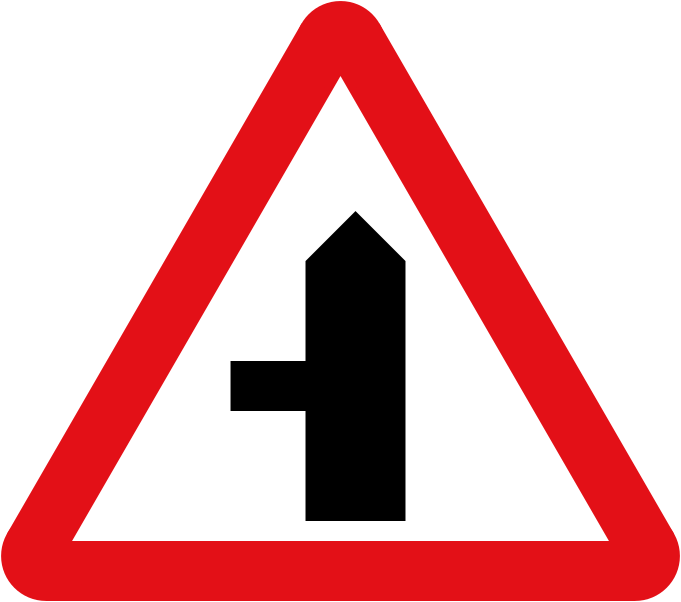
The place you choose is half the manoeuvre. I would normally ask a learner to find a quiet, reasonably wide road with good visibility both ways. Avoid busy through-roads, bends, junction mouths, brow of hills, school entrances, parked vehicles that narrow your view, and anywhere you would cause other traffic to stop suddenly.
In real driving, you may not get the perfect road, so judgement matters. If there is a safer option ahead, such as driving round a block, using a car park, or turning in a side road, use that instead. A turn in the road is not something to force just because you have decided to do it.
Before starting, check your mirrors, signal if it would help anyone, and position close to the left-hand kerb without scraping it. You want as much road width as possible for the first swing. If the road has a strong camber, be ready for the car to roll more easily downhill.
- Pick a quiet road with clear visibility in both directions.
- Do not start near junctions, bends, hills, parked cars or driveways with poor visibility.
- Consider whether a safer alternative is available, such as going round the block.
- Use a signal only if another road user would benefit from it.
Step-by-step: how to do the manoeuvre
These reference points vary slightly between cars, so treat them as a starting point. In many small training cars, the first forward move begins from about a drain’s width from the left kerb. The car should move at walking pace, with the clutch at or just around the biting point if you are driving a manual.
The key is to separate the job: observe, move slowly, steer briskly, then stop under control. Learners often try to steer and accelerate at the same time, which makes the car lurch and steals thinking time. Slow car, quick hands is the phrase I use in the car.
- 1Prepare: select first gear, find the biting point, set a little gas if needed, and make full observations all around, including both blind spots.
- 2Move forward slowly and steer full right as soon as the car starts moving. Keep checking both ways along the road, not just through the windscreen.
- 3As the front of the car approaches the opposite kerb, take off the gas, press the clutch down and brake gently. Stop before the kerb. Avoid touching it.
- 4Apply the handbrake if needed, select reverse, and make full all-round observations again. Look especially over your left shoulder and through the rear window before reversing.
- 5Reverse slowly and steer full left. Keep the car crawling and keep checking both directions because the front of your car will swing out into the road.
- 6As the rear of the car approaches the kerb, clutch down and brake gently. Stop before the kerb, secure the car if needed, then select first gear.
- 7Observe all around again. If clear, move forward slowly and steer right to straighten into your new direction of travel.
- 8Once straight, check mirrors, adjust your position on the road, and continue if it is safe.
Observations: what the examiner and instructor are watching
Observation is where most faults happen. What I see most often from the passenger seat mirror is a learner doing one big look at the start, then driving the rest of the manoeuvre from memory. That is not enough. The road situation can change during every movement, especially when you are broadside across the road.
Before each separate move, you need effective all-round observation: front, both side roads or driveways if present, mirrors, blind spots, and the direction the car will travel. While moving, keep your head active. You do not need dramatic theatre, but the examiner must be able to see that you know where other people are and where your car is going.
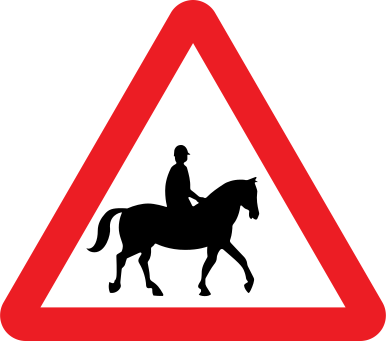
If another vehicle, cyclist, pedestrian or horse rider appears, stop. Do not wave people through unless you are clearly stopped and it is safe; hand signals can confuse. If they wait for you, only continue when you are sure they have stopped and you can complete the next part without putting them at risk.
- Look before each move, not only at the start.
- When reversing, look mainly through the rear window, with regular checks all around.
- Remember the front of the car swings out when reversing.
- Stop if anyone approaches and reassess calmly.
- Do not rely only on mirrors; use direct observation as well.
Control and reference points
The car should be slow enough that you can stop within about a foot or two if needed. In a manual car, this usually means clutch control rather than accelerator. In an automatic, use gentle brake control and avoid letting the car surge. The examiner is not timing you; rushing creates faults.
For the first forward movement, I usually teach learners to steer right briskly as soon as the car moves. As the far kerb comes up the windscreen towards the corner of the bonnet, start preparing to stop. In many cars, when the kerb looks close to disappearing under the front edge of the bonnet, you are close enough. Your instructor will adjust this depending on seating position and vehicle shape.
On the reverse movement, learners often stare at the kerb behind and forget the front right corner. That corner can swing towards parked cars, road signs or waiting traffic. I drill this by getting the learner to say quietly, “back, right front, back, left, right” while reversing. It sounds simple, but it builds a scanning rhythm instead of a single fixed stare.
Common faults and how to fix them
Touching the kerb is not automatically dangerous in every situation, but on test any loss of control or mounting the kerb can be serious. In training, I want you to stop short, reset, and use an extra shunt if needed. Extra movements are not a problem if they are safe and controlled.
Another common fault is dry steering: turning the wheel while the car is completely stationary. Modern cars can tolerate some of it, but it is poor technique and can make the manoeuvre jerky. Let the car creep, then steer quickly. If you need to stop for safety, stop; safety beats neat steering every time.
Hesitation can also become an issue. Some learners stop every time they see a vehicle half a road away, even when there is plenty of time to complete a short movement. Others continue when a car is already close. The right answer is judgement: if your movement would make someone slow, stop, wait and make eye contact through normal road positioning, not hand gestures.
- Too fast: reduce gas, use clutch control or brake control, and keep the car at walking pace.
- Poor steering: steer briskly once moving and unwind as needed before driving away.
- Weak observations: pause before each gear change and deliberately scan all around.
- Kerb contact: stop earlier and accept an extra movement rather than forcing it.
- Panic when traffic appears: stop, secure the car if needed, then decide calmly.
How I would drill this in a lesson
I normally start on a very quiet, wide road and break the manoeuvre into three separate skills: first-move steering, reverse control, and observations. The learner may practise just moving from kerb to kerb at crawling speed before we put the full turn together. Once the hands and feet are calmer, we move to a narrower road where planning matters more.
A useful drill is the “pause and talk” method. Before each movement, I ask the learner to tell me what they have checked and what could change. That might be a driveway behind, a parked van blocking the view, a pedestrian on the opposite pavement, or the downhill camber. This stops the manoeuvre becoming a memorised routine.
For intensive learners with Fast Track Driving Lessons, this often fits into the early control part of a 10 to 40 hour course, depending on experience. Our current course rate is £61.23 per hour, and we include free theory test practice at /theory. The turn in the road itself is not the main test target, but the control and observation habits help with reversing, meeting traffic, parking, and independent driving.
Test reality: will you fail for not knowing it?
You should not be asked to perform a traditional turn in the road as one of the set manoeuvres on a current DVSA practical driving test. The examiner will ask for one of the current manoeuvres, and possibly an emergency stop in around one in three tests. Test content and fees can change, so always check GOV.UK or your instructor for the latest DVSA information before your test.
However, you still need to turn the car around safely in normal driving if the route requires it. For example, if you go the wrong way during independent driving, the examiner may ask you to find a safe place to turn round. They are not looking for a named three-point turn; they are assessing whether your choice, observations and control are safe.
So be honest about its importance. Do not spend five lessons polishing a manoeuvre that is no longer a set test exercise. Do learn it well enough that, on a real road, you can turn round without panic, without mounting the kerb, and without surprising anyone else.
Common questions
Is the turn in the road still in the UK driving test?
It is not one of the standard practical test manoeuvres in Great Britain. Since December 2017, the set manoeuvres have been parking on the right and reversing, bay parking, and parallel parking, with the emergency stop used on some tests. You may still need to turn around safely during general driving.
Does it have to be exactly three points?
No. The old name “three-point turn” is misleading. If the road is narrow, it is better to use five or more controlled movements than to rush, mount the kerb or swing too close to hazards.
Will I fail if I touch the kerb?
It depends on the situation and severity, but touching or mounting the kerb shows poor control and can become a serious fault if it creates danger or loss of control. In training, aim to stop short and take an extra movement if needed. Safety matters more than completing it in fewer moves.
Should I signal before a turn in the road?
Only signal if it would help another road user understand your intention. On a quiet empty road, a signal may add nothing. If someone appears, your position and brake lights often tell them more clearly that you are stopping or manoeuvring.
Where should I look when reversing?
Look mainly in the direction of travel, through the rear window, with regular checks all around. Do not forget that the front of the car swings out as you reverse. Mirrors are useful, but they do not replace direct observation.
Can I do a turn in the road in an automatic car?
Yes. The observations and steering are the same, but you control the speed with gentle brake pressure rather than clutch control. Keep it very slow, because many automatics creep strongly as soon as you release the brake.
Book manoeuvre practice
Reading about it only gets you so far. Our instructors drill this with you in the car, on the roads around your test centre.