
You've booked your practical test, then spotted the clash. Perhaps the date falls during a holiday, an important college exam or a week when your confidence has dipped. Before you touch the booking, check three things: you need 10 full working days' notice to change without losing the fee, you can now change a booking only twice, and only the learner taking the test can manage it. Your instructor, parent or driving school can help you prepare, but they can't make the change for you.
The long queues make this decision more pressured than it used to be. The practical test booking window was 18 weeks before the pandemic, tests were suspended between March 2020 and April 2021, and the average wait in Great Britain reached 22 weeks by September 2025, compared with just over five weeks in February 2020, according to the National Audit Office investigation into driving-test waiting times. That's why a date change needs a plan, not a panic reaction.
Table of Contents
- When You Actually Need to Change Your DVSA Test Date
- How to Reschedule Online Through the GOV.UK Booking Service
- Changing Your Test by Phone and Other Real-World Routes
- Understanding the 10-Working-Day Rule and the Two-Change Cap
- PracticalTest Assist Style Tactics for Finding Earlier Slots
- Refunds, Fees and What Happens If You Miss the Test
- When to Keep Your Date Instead of Changing It
When You Actually Need to Change Your DVSA Test Date
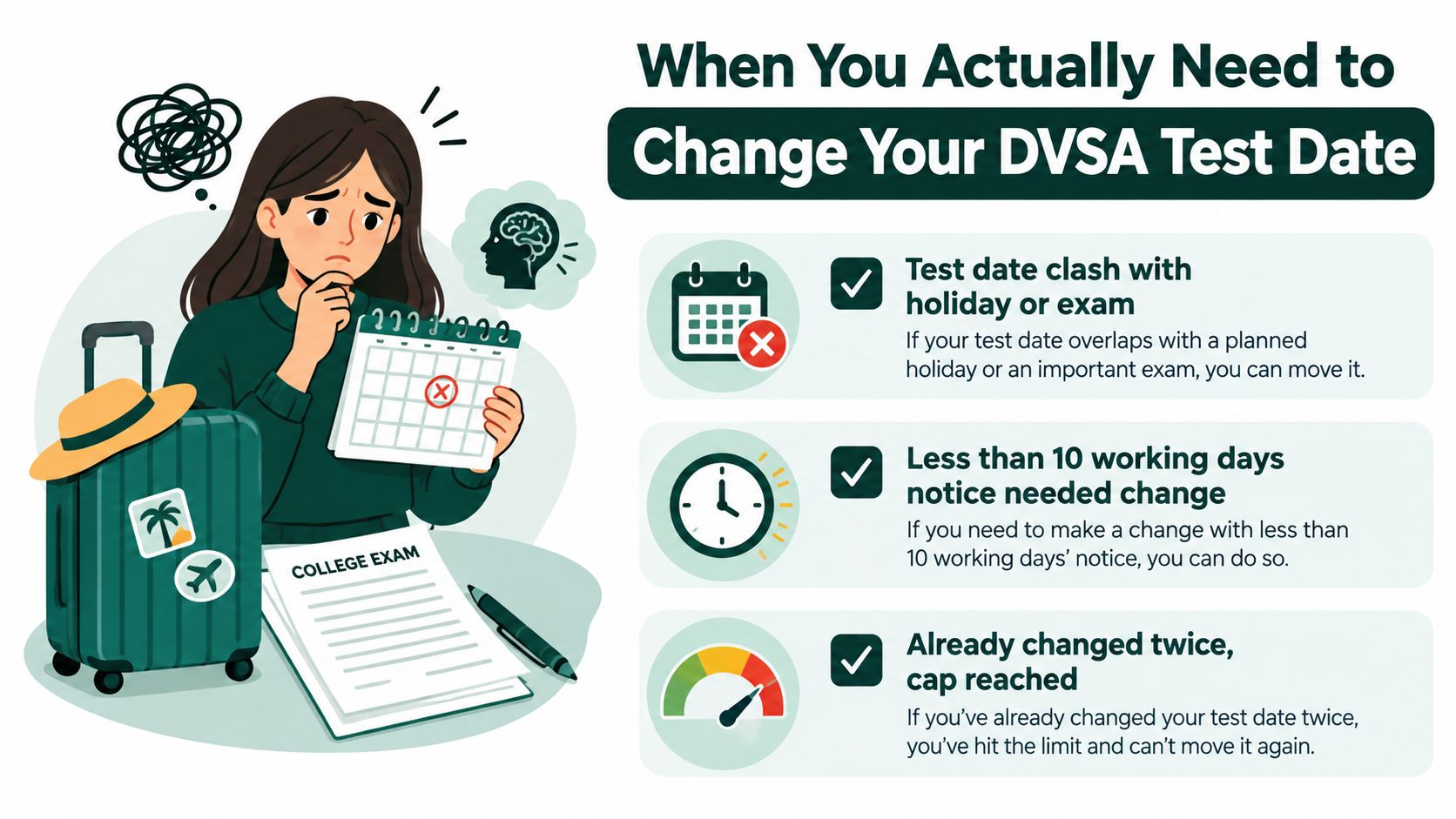
You've got a genuine clash on the calendar. The first question isn't whether an earlier slot might appear. It's whether changing is sensible under the rules currently governing a DVSA driving test date change.
The three rules that decide your next move
Count the working days. From 8 April 2025, you must give DVSA 10 full working days' notice to change or cancel a car practical test without losing the fee, as set out in the official GOV.UK change-test guidance. Weekends and bank holidays don't count, and the test day itself isn't included.
Protect your two changes. Since 31 March 2026, learners can make only two changes to an existing car driving-test booking. Moving the date or time, changing the test centre, and swapping with another learner count as changes under the 2026 booking-rule guidance.
You must make the change yourself. The learner must book, change, swap or cancel their own car test. An instructor, parent or school can sit beside you and help, but they can't complete the transaction on your behalf.
A holiday or immovable exam is a sound reason to move the appointment. A medical problem, bereavement or serious vehicle issue may also justify contacting DVSA about the circumstances, especially if you're inside the normal notice window. Sheer nerves a fortnight before the test usually aren't a good reason to spend one of your two changes. If your instructor says you're close to ready, keep the date and increase your practice instead.
Practical rule: Don't use a change because a friend says a slightly earlier slot might be available. Use it when the new appointment is real, suitable and worth taking.
The next decision is practical. If you're outside the notice deadline, use the official online service and keep your booking reference ready. If you're inside the deadline or have a genuine exceptional circumstance, you may need DVSA's contact route, but don't assume a phone call can create availability that isn't there.
How to Reschedule Online Through the GOV.UK Booking Service
The online route is normally the cleanest way to change your test. It's available without a telephone queue, and the system shows only appointments that are available for the details you enter.
Start at the GOV.UK service for changing a driving test. Use the same details and booking reference connected to your appointment. Once the booking is located, open Manage your booking, then choose Change test date. Don't choose Cancel unless you're deliberately ending the appointment.
Search carefully before committing
The service will ask you to search for another appointment. Depending on the booking journey, you'll select or review:
- Test centre, including the centre attached to your existing booking.
- Date range, so you can look for an earlier or more suitable appointment.
- Time of day, which matters if you need to fit the test around lessons, work or school.
Search with a realistic range rather than assuming the first result is automatically best. An earlier test at a centre you don't know can be a poor trade if you've prepared on local roads and your instructor can't support you there. You also need to check the new date against your availability before confirming it.
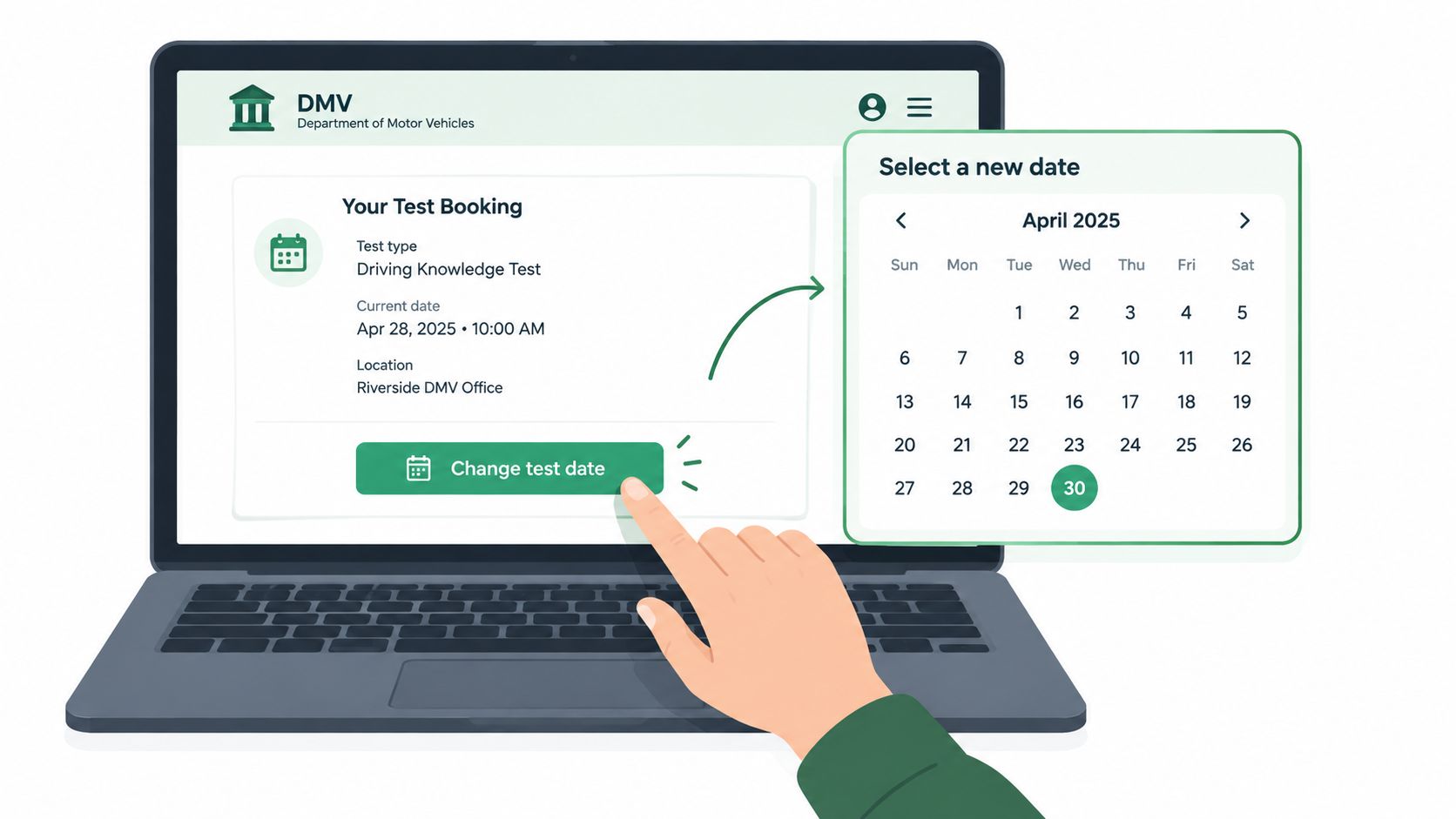
If the appointment is inside the 10-working-day window, the service may prevent the change. It can also block the transaction once you've used both permitted changes. Don't keep refreshing in the hope that the warning will disappear. At that point, check whether cancellation within the applicable notice period protects your refund, or contact DVSA about a documented medical or compassionate reason.
Confirm the new appointment
Review the centre, date and time on the final screen. Submit the change only when you're sure, then look for the confirmation email and save it. The email is your evidence of the current booking, so don't rely on memory or an old calendar entry.
The online service is faster for ordinary changes because you avoid the contact-centre queue. The phone route is for learners who need help with a blocked booking, a genuine exceptional circumstance or an arranged swap, not for holding a slot while you decide.
Changing Your Test by Phone and Other Real-World Routes
The telephone route is useful, but it isn't a shortcut to a better appointment. Call 0300 200 1122 if the online service can't handle your situation, you need to discuss a genuine medical or compassionate circumstance, or you're arranging a permitted swap that requires DVSA to verify both learners.
Have your booking reference, personal details and preferred outcome ready. The contact-centre team may help with a date change, a test-centre change or cancellation, but they can't reserve an appointment while you think about it. If you're calling about an earlier slot, decide your acceptable date and centre before the call starts.
What the headline wait really means
Many learners see a figure such as 22 weeks and assume it describes the typical person's actual wait. It doesn't necessarily. GOV.UK explains that the headline waiting-time measure is based on how many weeks pass before at least 10% of weekly appointments remain available, rather than being a straightforward average.
That distinction matters. DVSA said in June 2026 that the national median was 9.7 weeks, while the 10% availability measure was 21.8 weeks, as explained in its clearer picture of driving-test waiting times. Later summer data showed a national median of 11.1 weeks, while the 10% availability measure improved to 20.7 weeks, so the answer depends heavily on which measure you're reading.
Your local picture matters more than a national headline. In April 2026, average waits were 22.7 weeks in England, 22.9 weeks in Scotland and 17.3 weeks in Wales, according to BBC reporting on DVSA figures. Treat those figures as regional context, not a promise that a slot will appear at your centre.
Use the online service as your default. Live chat, when available, may help with general service questions, while DVSA's feedback and complaints route is appropriate for a genuine service problem, not for demanding a preferred date. An MP's caseworker may assist with an exceptional unresolved case, but they can't manufacture examiner capacity or bypass the booking rules.
Understanding the 10-Working-Day Rule and the Two-Change Cap
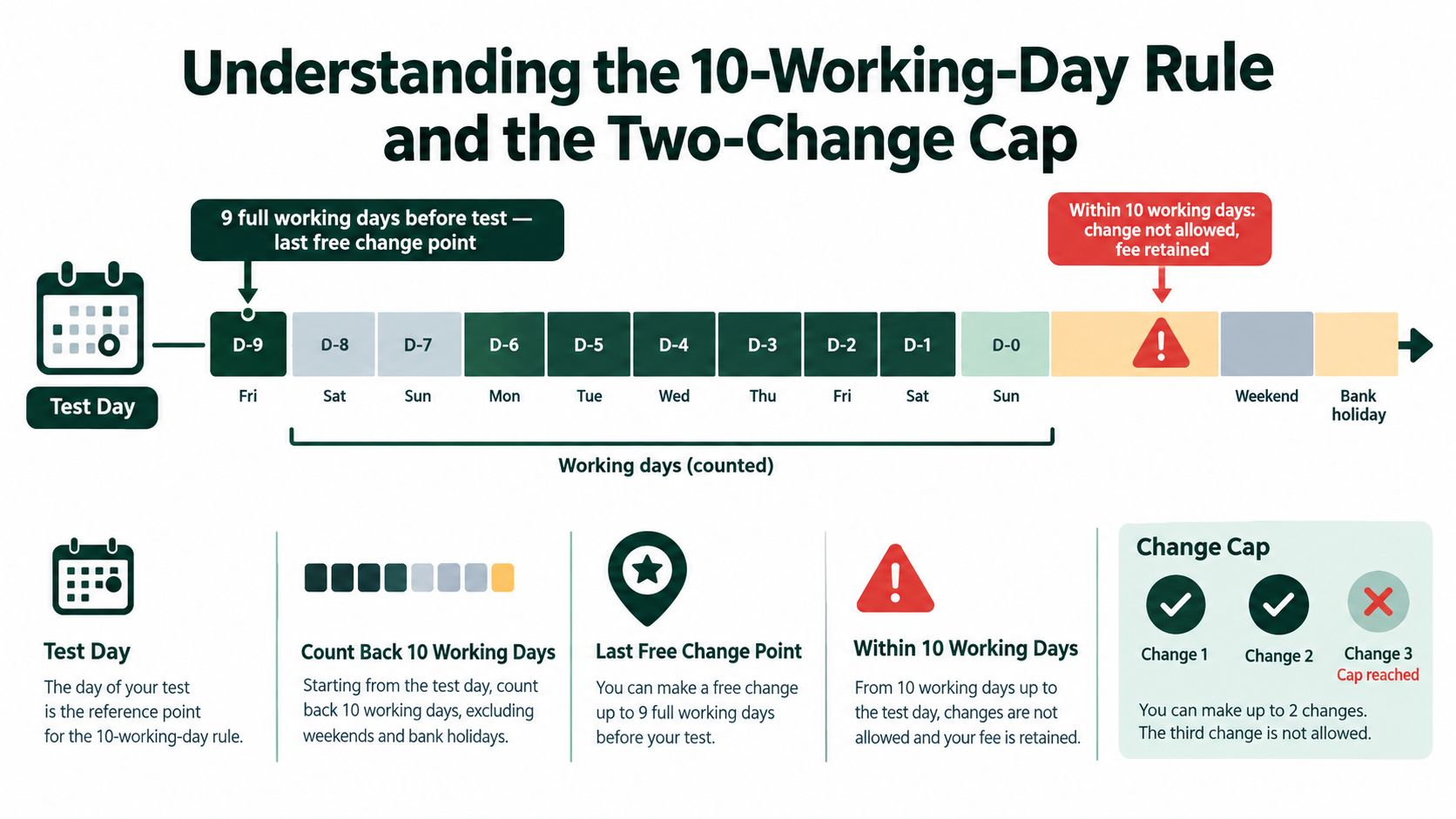
The rules are simple, but booking mistakes are costly. The 10-working-day rule determines when you can change an appointment without risking the test fee. The two-change cap limits how many times you can alter the booking.
For a standard change, count backwards from the test date. Exclude the test day, weekends and bank holidays. You need 10 full working days' notice, so treat the point described operationally as 9 full working days before the test as the final safe point. Once you are inside that window, the online service may prevent a normal date change.
Cancellation has a separate consequence. A cancellation made with 3 working days' notice or less can mean losing the practical-test refund, according to GOV.UK cancellation guidance. A documented medical or compassionate reason may be considered separately. Deciding that you no longer fancy the appointment is not a dependable basis for a refund.
Spend changes like a limited resource
A date, time or test-centre move can use one of your two permitted changes. Treat each one as a decision, not a trial run. Moving to an acceptable slot may leave you unable to take a better cancellation later.
Keep one change available for the appointment you actually want.
Check the official service regularly, then commit only when the slot fits your centre, timing and preparation. There is no dependable release timetable. Earlier appointments can appear when learners change bookings or examiner capacity becomes available, so consistent manual checking beats guessing.
The widely reported 22-week figure represents a 10% availability measure, not the typical learner's actual wait. That distinction makes the right strategy clear: do not panic and spend both changes chasing a headline. Use the current booking screen and your instructor's availability to judge a real opportunity. The guide to driving-test waiting times provides useful context, while the official booking service remains the authority for live appointments.
PracticalTest Assist Style Tactics for Finding Earlier Slots
Since May 2026, paying a third party to monitor cancellations is not a compliant option. DVSA does not permit unofficial cancellation-finder services, so use the GOV.UK booking service yourself. Never share login details with a service promising a guaranteed slot.
Use a clear acceptance rule before you search. Decide which dates, times and centres fit your training and transport, then act only when a slot meets those conditions. Keep one change available for the appointment you want, because the two-change cap makes trial-and-error expensive.
A practical search routine is:
- Check at varied times: Look before work, after lessons and at weekends. Earlier appointments can appear when another learner changes a booking or examiner capacity is released.
- Search suitable centres: Consider nearby locations only if your instructor can prepare you properly. The driving-test-centre guide helps you compare locations before widening the search.
- Refresh manually: Do not use bots, automated scripts or cancellation services. A claim of guaranteed availability is a warning sign.
- Confirm first: Check your instructor and suitable vehicle are available before committing to a new date.
Green and amber bands in the calendar show availability at that moment. They do not reserve a slot while you discuss it. Another learner may confirm it first, so be ready to choose when an acceptable appointment appears.
The widely reported 22-week wait also needs context. It represents a 10% availability figure, not the median learner experience. Use the live booking screen, your test centre options and your instructor's readiness to judge the opportunity, rather than reacting to that headline.
Why cancellation arithmetic matters
BBC coverage of DVSA test data reported 1,998,608 driving tests were booked in the UK in 2025, alongside 64,500 no-shows, or 3.2% of bookings wasted. Those missed appointments form a pool that cannot be reused, but no-show patterns do not guarantee a convenient cancellation for you.
An earlier date helps only if you can drive safely and independently by then. Compare the shorter wait with your preparation, travel and vehicle arrangements before using a change. Manual checking is the only compliant way to chase cancellations after the third-party finder ban.
Refunds, Fees and What Happens If You Miss the Test
An earlier appointment isn't automatically a better appointment. If you cancel too late, fail to attend or move before you're ready, the saving in calendar time can become a financial and training setback.
The driving-test prices information gives learners a useful place to check current pricing, but refund eligibility is governed by DVSA's rules and the circumstances of the cancellation. For ordinary cancellations, notice is the deciding factor.
| Scenario | Notice Given | Refund / Fee Outcome |
|---|---|---|
| Cancel or change within the normal safe window | 10 full working days' notice | Refund eligibility is generally preserved under DVSA rules |
| Cancel close to the appointment | 3 working days' notice or less | You can lose the practical-test refund |
| Don't attend and don't cancel | No notice | The booked slot is wasted and the fee may be lost |
| Genuine medical or compassionate circumstance | Evidence may be available | DVSA may consider the circumstances through its stated process |
Illness, bereavement and a vehicle breakdown can have evidence routes where the circumstances are genuine. A change of mind, ordinary nerves or discovering that you'd rather test later doesn't carry the same weight.
The no-show figure should change your behaviour, not frighten you into taking an unsuitable date. If you can't attend, act as soon as you know. Leaving the booking untouched deprives another learner of a slot and gives DVSA less opportunity to reuse it.
Don't gamble with the appointment. If you know you can't attend, deal with the booking while you still have options.
When to Keep Your Date Instead of Changing It
An earlier appointment is not automatically a better appointment. Keep your current date if your mock drives still reveal serious faults, your manoeuvres remain unreliable, or you have had a long break from practice. A rushed test can cost confidence, money and another opportunity to book.
Keep the booking if the alternative is an unfamiliar test centre that you cannot practise around properly. Local knowledge matters. You need time to learn the centre's approach roads, junctions, roundabouts and likely hazards, not just a vacant slot on the booking system.
The headline 22-week wait needs context. It represents a 10% availability figure, not the median experience of every learner. That gap matters when deciding whether to chase an earlier date. Treat the figure as a warning about capacity, not a reason to accept a test before you are ready. The investigation into car driving-test waiting times shows why holding a workable booking can be more sensible than gambling on a supposedly better one.
Use this readiness check before changing:
- Can you complete several mock drives without serious or repeated faults?
- Are your manoeuvres reliable under pressure?
- Is the earlier appointment confirmed and practical?
- Can your instructor and suitable vehicle attend?
- Have you practised around the new test centre?
- Will changing leave you with enough flexibility if another suitable slot appears?
Your instructor should be able to give a clear yes, not polite encouragement. Change only when you are ready and the earlier date works. Otherwise, keep the booking and use the lead time to practise.
Fast Track Driving Lessons provides intensive and semi-intensive tuition, mock tests near your chosen centre and practical test scheduling support. Visit Fast Track Driving Lessons if you need structured preparation around a difficult test date.
Written by Fast Track editorial team.