
You're sitting at the wheel, trying to remember the mirror routine, with traffic building behind you and your left leg already tense before you've even moved. That moment is exactly why so many learners are looking at driving lessons in automatic and asking a very practical question, not a fashionable one. If the gearbox can take one layer of pressure away, does that make the whole learning journey calmer, clearer, and better suited to the car you'll drive?
The honest answer is, sometimes yes, sometimes no. Automatic tuition can remove the clutch from the equation, but it doesn't remove judgement, observation, or responsibility. In the UK, it now sits at the centre of a real market shift, and the decision is less about whether automatics are “easier” and more about whether they fit your driving future.
Table of Contents
- Why Automatic Lessons Are Becoming the Normal Choice
- What Automatic Tuition Actually Teaches You
- Automatic vs Manual in Real UK Driving
- Licence Code 78 and What It Means for You
- Automatic Test Pass Rates and What They Really Show
- UK Pricing for Automatic Lessons and Intensive Courses
- Choosing an Automatic Instructor You Can Trust
- Is Automatic the Right Path for Your Driving Future
Why Automatic Lessons Are Becoming the Normal Choice
A learner stuck twice on a Sheffield hill junction used to be a familiar kind of frustration, feet dancing between clutch and accelerator while an instructor stayed calm beside them. A week later, in an automatic, that same junction can feel far less like a test of nerves and more like a normal bit of road driving. That difference matters, because it explains why automatic tuition has moved from an unusual option to a mainstream one.
DVSA-reported data show automatic practical car tests rose from 87,844 in 2012/13, which was 6.1% of all car tests, to 479,556 in 2024/25, or 26% of the 1,839,815 Category B tests taken across Great Britain, a near-fivefold rise over 12 years (The AA on UK driving tests shifting gears). That isn't a small preference change. It points to a deeper shift in how learners think about daily driving, especially in towns and cities where stop-start traffic can make clutch control feel like extra work rather than extra skill.
The old stereotype no longer fits
For years, automatics carried a narrow image, something chosen by nervous drivers, older drivers, or people who wanted an “easy option”. That view doesn't hold up well now. Electric vehicles are pushing the market towards automatic driving, and many learners expect their first car to work without a gear lever and clutch pedal.
Practical rule: if your daily route is mainly traffic, junctions, parking bays, and short trips, automatic tuition is no longer a niche choice. It's often the more realistic one.
That doesn't make manuals obsolete. It does mean the automatic decision should be treated as a normal, adult choice about how you'll drive, not as a shortcut to avoid learning. For many people, the key question is not whether automatic lessons are easier, but whether they're the right fit for the car they'll own after the test.
| Metric | Manual | Automatic |
|---|---|---|
| Share of UK practical car tests in 2024/25 | 74% | 26% |
| UK practical car tests in 2024/25 | 1,360,259 manual tests, by subtraction from the total | 479,556 |
| UK practical car tests in 2012/13 | Not given here as a separate figure | 87,844 |
What Automatic Tuition Actually Teaches You
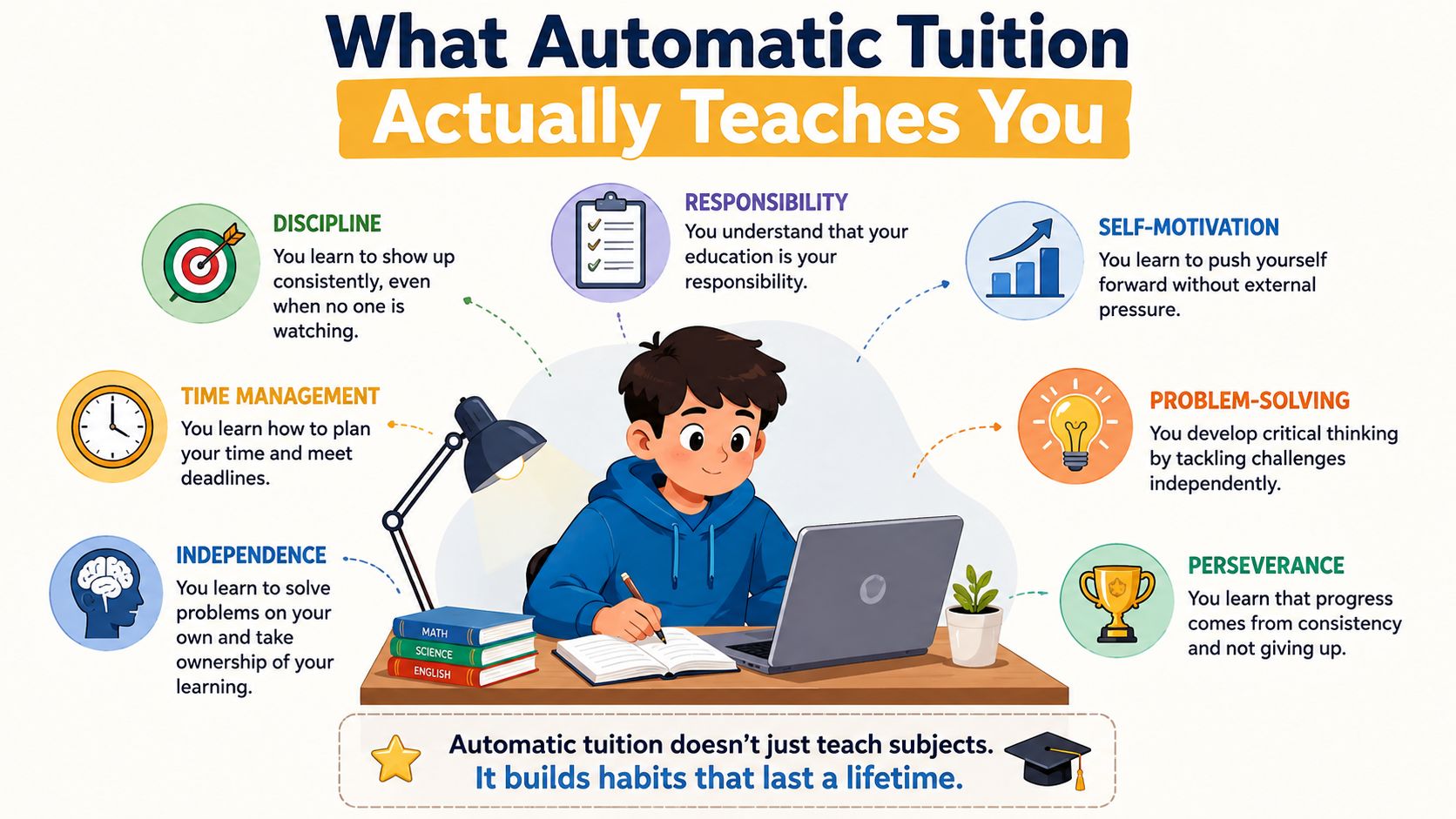
A proper automatic lesson still feels like driving lessons, not a passenger ride with the instructor doing all the work. You're usually in a dual-control automatic car, often a small hatchback or a hybrid such as a Toyota Yaris, and the lesson follows the same DVSA driving syllabus as manual tuition. That means mirror checks, junctions, roundabouts, dual carriageways, independent driving, and all the normal road habits still matter.
What changes, and what stays the same
The gearbox changes for you, which removes clutch control and gear selection from the learning load. What doesn't change is the rest of driving, the parts that decide whether you'll be safe and calm on your own. You still need to steer cleanly, brake smoothly, judge gaps, build good observation habits, and learn when to accelerate decisively.
Early lessons often feel surprisingly freeing. You can creep towards junctions without worrying about stalling, manage hill starts without a handbrake routine, and learn how kickdown helps with merging or faster acceleration when needed. That extra mental space is useful, because a nervous learner usually spends too much energy on the mechanics and too little on the road around them.
You're not learning less. You're learning with one fewer control to coordinate.
Some instructors teach in electric vehicles, and those can feel different at low speed because of regenerative braking and the immediate response from the motor. That doesn't make them harder in a dramatic way, but it does mean the feel of slowing down and lifting off the accelerator can be unfamiliar at first. A good instructor explains those differences early, so you're not guessing at how the car will behave.
A short video can help you visualise the learning habits that build alongside the driving itself.
In practice, automatic lessons are about freeing attention, not reducing standards. The best sessions still feel structured, because the goal is the same as with manual tuition, independent, confident road driving.
Automatic vs Manual in Real UK Driving
The comparison isn't “which is better”, it's “which suits your week”. If your life is mostly stop-start traffic, school runs, short trips, or heavy city routes, an automatic often takes a layer of fatigue out of the day. If your driving is more varied, or you enjoy the extra control that a manual gives on hills, bends, and gear choice, manual still has real value.
City roads, motorway use, fuel, and EVs
In dense urban traffic, automatic driving tends to feel calmer because your left foot is no longer doing repeated clutch work. That matters on busy routes in places like London, Birmingham, or Edinburgh, where creeping, stopping, and starting can drain concentration. On longer motorway-style journeys, the gearbox's behaviour matters less than your anticipation and lane discipline, so the choice there is usually about comfort rather than pure capability.
Fuel economy used to be a simple win for manuals, but modern automatic gearboxes often narrow that gap enough that the old assumption no longer carries the same weight. The bigger shift is the EV transition. If your long-term plan includes an electric car, then automatic control is the default rather than the exception.
What manuals still offer
Manuals still give you more direct driver engagement, a wider choice of older used cars, and, for now, more flexibility in the second-hand market. Some learners also like the sense that a manual licence leaves every option open. That's a fair reason, especially if you might drive classics, tow abroad, or want the broadest possible vehicle choice later.
The driving test itself is identical in purpose and standard. The syllabus doesn't become softer just because you're in an automatic, and that's the key point many learners miss. Your route to passing still depends on test readiness, good instruction, and familiarity with real road conditions.
Simple filter: if your future car is probably electric or automatic, the argument for learning automatic gets stronger. If you want the widest possible licence flexibility, manual still deserves serious consideration.
Licence Code 78 and What It Means for You
Licence code 78 is the automatic-only restriction that appears when you pass a UK Category B practical test in an automatic car. In plain English, it means your licence lets you drive automatics, but not manuals unless you later pass a separate manual test. The DVLA restriction code list makes that distinction explicit, and it's the single biggest long-term trade-off in automatic tuition (DVLA restriction codes).
What code 78 allows and limits
If you pass in an automatic, you can drive automatic cars and other automatic vehicles that fit your entitlement. If you want to drive a manual car later, you'll need to take a manual practical test and remove the restriction. That part is straightforward, but it does mean the choice you make at lesson stage carries licensing consequences beyond test day.
The practical impact depends on the kind of life you're building around your driving. If you plan to stay in automatics, code 78 is largely a non-issue. If you expect to borrow, rent, or buy manual vehicles in the future, it becomes a real limit that should be weighed before you book your first lesson.
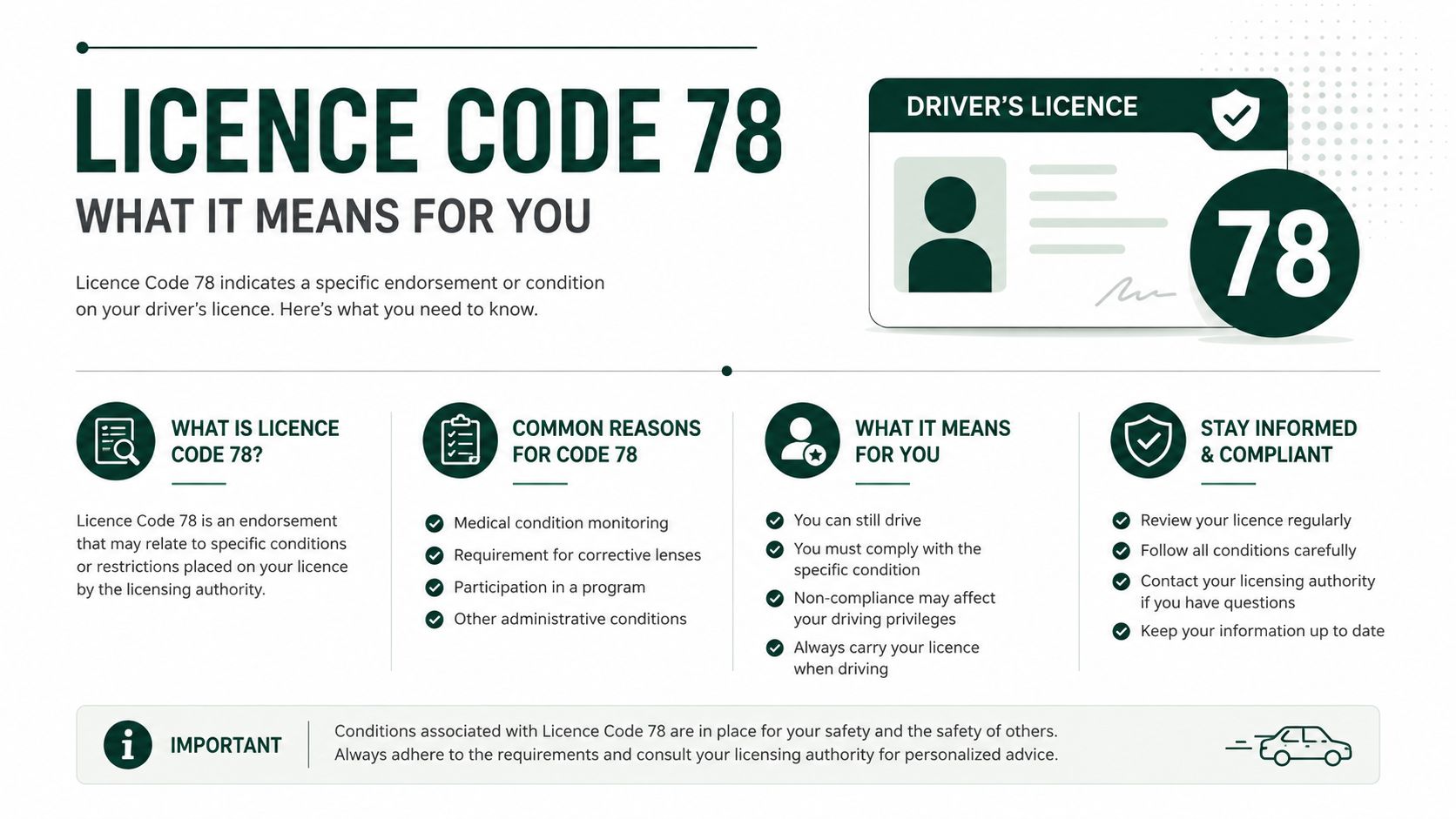
For a quick reference, use this checklist.
- What it is: the automatic-only restriction added after passing your test in an automatic car.
- What you can drive: any automatic vehicle without a clutch pedal.
- What you cannot drive: manual transmission vehicles until you pass a separate manual test.
- How to remove it: pass a practical driving test in a manual car to get a full, unrestricted licence.
If you want to check how driving licence categories sit alongside other licence details, this guide is useful, driving licence categories and documents explained.
The sensible question isn't “is code 78 bad”. It's “will code 78 matter to me in real life?” That's the sort of decision worth making before you commit to one training route.
Automatic Test Pass Rates and What They Really Show
DVSA-reported UK test data show a consistent gap between manual and automatic pass rates. In 2024-25, manual Category B tests passed at 48.4% while automatic tests passed at 43.1% (manual vs automatic driving test pass rates). That gap is real, but it shouldn't be treated as proof that automatics are harder or worse. It usually says more about preparation than gearbox type.
Why the gap appears
Automatic learners can sometimes spend less time on the finer habits that manual drivers build while coordinating clutch and gears. That doesn't mean automatic drivers are less capable. It does mean some learners arrive at test day with slightly weaker routine discipline, weaker route familiarity, or less practised hazard perception because the car felt easier to manage.
What closes the gap
A good automatic instructor doesn't leave that to chance. Mock tests help, especially when they mirror local test-centre roads and the learner is already close to ready. Focused mirror work also matters, because automatic cars remove one task, and some learners let that extra headroom drift into casual habits.
A few realistic habits make a difference:
- Mock tests: use them to expose weak junction choices, hesitation, and poor commentary on mirrors.
- Route practice: drive in the kinds of roads and traffic patterns you're likely to meet on test day.
- Dual-control repetition: build smooth braking, steady positioning, and decisive move-offs without panic.
- Instructor feedback: ask for blunt, specific corrections rather than vague praise.
The cleanest takeaway is simple. Automatic training isn't a shortcut to a pass, and the pass-rate gap shows that clearly. It can still be the right choice, but only if the teaching is solid and the learner treats it seriously.
UK Pricing for Automatic Lessons and Intensive Courses
Automatic tuition is often priced at the same level as manual lessons, or a little above it, because the car, insurance, instructor time, and local demand still shape the hourly rate. In most UK cities, learners usually see rates in the £35 to £45 range, with London commonly sitting higher. For a clear comparison of course structures and published terms, this pricing page is the place to start, automatic lesson pricing and course options.
How course pricing usually works
Intensive courses are normally built around blocks of hours rather than single weekly lessons. You'll see short refresher-style bookings at one end and full-licence programmes at the other, with 10-hour, 15-hour, 20-hour, 25-hour, 30-hour, 35-hour, and 40-hour formats commonly used in the market. The exact right length depends on your experience, how often you can practise, and how far you are from test standard.
Transparent pricing matters more than many learners realise. Some firms quote an attractive lesson rate and then add charges for admin, test booking, or extra travel. Others keep the headline simple but blur what's included. A fixed, written price is easier to compare because you can see the whole cost structure before you pay.
What to check before booking
- Block discounts: ask whether the rate changes when you book a course rather than individual lessons.
- Test fees: check whether practical and theory fees are included or paid separately.
- Travel charges: confirm whether the instructor charges extra for collection outside the usual area.
- Retest planning: ask how extra lessons are handled if your test date changes.
- Payment terms: make sure you know whether you're paying in one block or over time.
The hidden costs are the ones that often unsettle a learner's budget, not the lesson itself. Theory test fees, practical test fees, and any retest can all affect what the full journey feels like financially. If you're comparing automatic tuition properly, look at the whole path to test day, not just the hourly rate.
A cheap lesson that stretches for months can cost more than a clear, structured course with honest terms.
Choosing an Automatic Instructor You Can Trust
Picking an instructor is not really about browsing adverts. It's about checking whether the person in the passenger seat is properly approved, insured, and organised enough to teach you safely. If you're booking automatic tuition, the same rule applies as with manual, only the car type changes.
What to verify before you pay
Start with ADI registration. A qualified Approved Driving Instructor should be on the DVSA register, and you should be able to see the orange ADI badge. If the instructor is a trainee, they should say so clearly rather than blur the distinction.
Then look at the vehicle and the paperwork. The car should be dual-control and covered for tuition use with the right business insurance. A DBS check and a written hourly rate are also sensible signs that the instructor works professionally rather than casually.
The details matter as much as the badge.
- ADI status: verify it, don't assume it.
- Vehicle insurance: make sure tuition is properly covered.
- Lesson notes: ask whether they'll track progress in writing.
- Automatic experience: check whether they teach in automatics regularly, not occasionally.
- Course cover: ask who steps in if they're ill or the car breaks down.
If you're comparing options, you can also check how an instructor is approved by reading the guidance on how to check an instructor is approved. One company that offers automatic tuition within this sort of structured setup is Fast Track Driving Lessons, which matches learners with DVSA-approved instructors and publishes clear terms.
A trustworthy automatic instructor will answer direct questions without irritation. They'll explain lesson plans, tell you how they handle mock tests, and give you a fair sense of progress after the first hour. If someone pushes a big block of lessons before you've even driven with them, that's not confidence, it's pressure.
Is Automatic the Right Path for Your Driving Future
The right choice comes down to three honest questions. First, where will you drive most weeks. If it's urban traffic, short trips, school runs, or regular stop-start roads, automatic tuition often fits better because it reduces routine strain. If your driving is mostly open roads and you like the feel of a manual, that's a different answer.
Second, think about your long-term car budget. Automatics now dominate a lot of everyday driving, but the used market still contains many manual vehicles and some gearbox variants carry a premium. So the cost question isn't just the lesson rate, it's the kind of car you're likely to own after you pass.
Third, be honest about licence flexibility. Code 78 limits you to automatics, but it also leaves the door open to a manual test later if your needs change. That means automatic tuition isn't a dead end, it's a choice with a defined trade-off.
If your answers centre on city convenience, predictable lesson pricing, and a likely move towards an EV, automatic tuition is often the simpler path. If you want maximum flexibility for towing, older cars, or future manual ownership, manual still earns its place. Either way, the smartest next move is to book one trial hour before committing to a full course.
If you're ready to learn in a calm, structured way, Fast Track Driving Lessons can help you compare automatic and manual options, understand pricing clearly, and match with an instructor who suits your area and your goals. Visit Fast Track Driving Lessons to look at automatic lesson options and take the first practical step with a setup that fits the way you want to drive.
Written by Fast Track editorial team.