
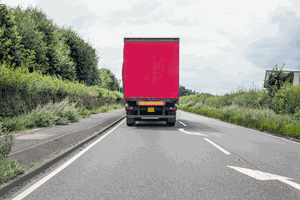
The answer options
- Your view ahead will be restrictedCorrect
- Your brakes will overheat
- Your engine may overheat
- Your fuel consumption will increase
Why the other options are wrong
- “Your brakes will overheat” is a distractor. It does not meet the standard the question is testing, which your view ahead will be restricted does. Picking it in the real test costs a mark you cannot get back, and with a pass mark of 43 out of 50 you only have seven to spare.
- “Your engine may overheat” is a distractor. It does not meet the standard the question is testing, which your view ahead will be restricted does. Picking it in the real test costs a mark you cannot get back, and with a pass mark of 43 out of 50 you only have seven to spare.
- “Your fuel consumption will increase” is a distractor. It does not meet the standard the question is testing, which your view ahead will be restricted does. Picking it in the real test costs a mark you cannot get back, and with a pass mark of 43 out of 50 you only have seven to spare.
Why that is the answer
Following a large vehicle too closely severely restricts your view of the road ahead. You will not be able to see potential hazards, traffic signals, or oncoming vehicles, which makes planning ahead or overtaking extremely dangerous. Dropping back expands your vision and increases your safety margin. While braking frequently might wear your brakes, the primary hazard of tailgating a large vehicle is losing your view of the road ahead.
What attitude covers
- · Safe following distances and what to do when tailgated
- · Reacting to aggressive, hesitant or inconsiderate drivers
- · Emergency and slow-moving vehicles and how to let them pass
- · Use of the horn and headlight flashes as warnings, not invitations
Mistakes learners repeat on this topic
- · Flashing headlights to tell another driver to proceed
- · Braking sharply to discourage a tailgater
- · Sounding the horn in a built-up area at night out of frustration
- · Speeding up when a driver tries to overtake you
Instructor tip: When two answers are both polite, choose the one that increases the gap rather than the one that communicates.
How this comes up in the real test
Questions from attitude appear throughout the 50-question multiple-choice section, and the wording changes between versions. Learn the rule rather than the sentence: the DVSA can ask the same point from the opposite direction, and a memorised answer falls over the moment the phrasing moves.
The pass mark is 43 out of 50, so seven wrong answers is your entire margin. If a whole category is shaky, run the topic practice below until you are getting every question right for the right reason, then go back to full mocks under the clock.
More attitude questions
- A blue flashing beacon is used by which vehicle?
- A green flashing beacon is fitted on what type of emergency vehicle?
- A long, heavily laden lorry is taking a long time to overtake you. What should you do?
- A person herding sheep has asked you to stop. What should you do?
- At a puffin crossing, which colour follows the green signal?
- At which type of crossing are cyclists permitted to ride across while pedestrians are crossing?